
Introduction
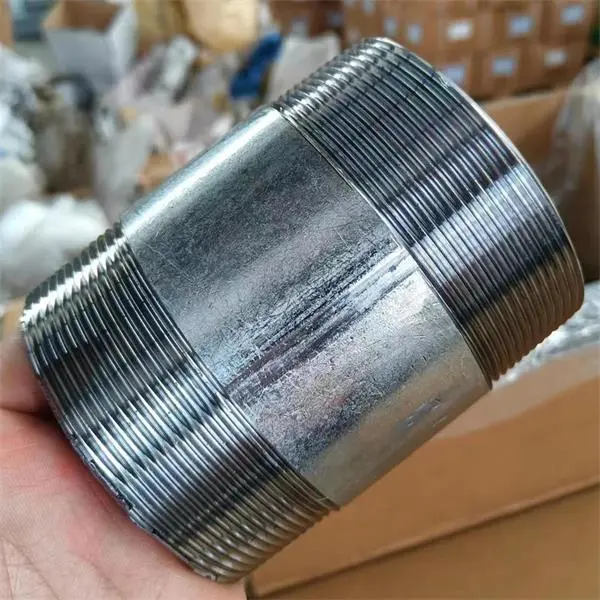
Schedule 8 steel pipe, commonly referred to as standard weight steel pipe, represents a foundational element in numerous industrial applications, including fluid transport, structural support, and mechanical systems. This designation, governed by ANSI/ASME standards, defines the internal diameter and wall thickness of the pipe. Its position within the industry chain is critical, bridging raw material production (steel billets) to fabrication and end-use installation. Core performance characteristics revolve around its pressure-bearing capacity, corrosion resistance (dependent on material grade), and weldability. Understanding the nuances of Schedule 8 steel pipe is paramount for engineers, procurement specialists, and maintenance personnel seeking reliable and cost-effective solutions in demanding environments. A key industry pain point stems from inconsistent material certifications and the challenge of verifying adherence to specified chemical compositions and mechanical properties, leading to potential structural failures and costly downtime.
Material Science & Manufacturing
Schedule 8 steel pipe is typically manufactured from carbon steel grades such as A53 Grade B, A106 Grade B, and API 5L X42. The primary raw material is steel billets, which undergo a hot rolling process to form seamless or welded pipes. Seamless pipes are produced by piercing solid billets, offering superior strength and resistance to pressure. Welded pipes, conversely, are created by rolling and welding steel strips or plates. The chemical composition significantly influences performance; carbon content determines hardness and weldability, while manganese enhances strength. Key parameters during manufacturing include controlled heating and cooling rates to achieve desired grain structure, precise dimensional control during rolling and welding, and rigorous non-destructive testing (NDT) such as ultrasonic testing (UT) and radiographic testing (RT) to detect defects. Heat treatment processes, such as normalizing and quenching, are employed to refine the metallurgical structure and enhance mechanical properties. Surface finishing, including pickling and coating, further improves corrosion resistance. Manufacturing inconsistencies, particularly in weld quality and heat treatment, are primary sources of failure. Proper control of sulfur and phosphorus levels is vital to prevent hydrogen-induced cracking during welding.
Performance & Engineering
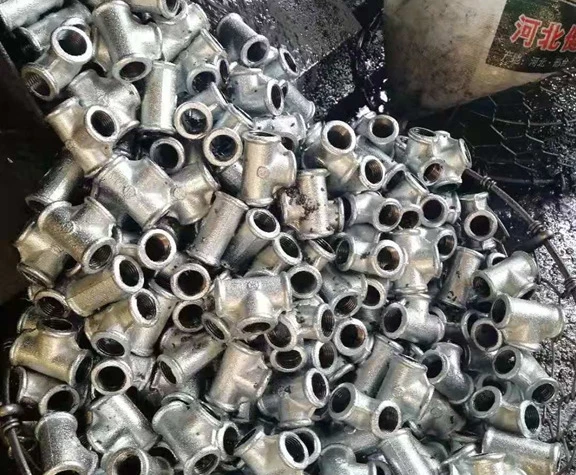
The performance of Schedule 8 steel pipe is fundamentally governed by its ability to withstand internal and external pressures, tensile stresses, and bending moments. Force analysis relies heavily on established formulas from ASME B31.3 (Process Piping) and ASME B31.1 (Power Piping). Wall thickness is a critical parameter, directly influencing burst pressure and hoop stress. Environmental resistance is determined by the steel grade and any applied coatings; exposure to corrosive substances like chlorides or sulfuric acid necessitates corrosion-resistant alloys or protective linings. Compliance requirements depend on the application. Oil and gas pipelines must adhere to API 5L standards, while pressure vessels follow ASME Section VIII Division 1. Functional implementation often involves welding, threading, or flanging for connections. Welding procedures must be qualified according to AWS D1.1, and welders must be certified. Fatigue analysis is crucial for cyclic loading conditions, considering stress concentration factors at welds and geometric discontinuities. Galvanic corrosion, arising from dissimilar metal contacts, must be addressed through proper material selection and insulation. Proper support design is also essential to prevent excessive bending stresses and potential buckling.
Technical Specifications
| Nominal Pipe Size (inches) | Outside Diameter (inches) | Wall Thickness (inches) | Internal Diameter (inches) |
|---|---|---|---|
| 1/2 | 0.625 | 0.065 | 0.531 |
| 3/4 | 0.840 | 0.083 | 0.674 |
| 1 | 1.050 | 0.095 | 0.860 |
| 1 1/2 | 1.660 | 0.120 | 1.420 |
| 2 | 2.375 | 0.154 | 2.067 |
| 3 | 3.068 | 0.218 | 2.632 |
Failure Mode & Maintenance
Common failure modes in Schedule 8 steel pipe include corrosion (general, pitting, and galvanic), fatigue cracking (particularly at welds), stress corrosion cracking (SCC), erosion, and mechanical damage. Corrosion is accelerated by exposure to moisture, chemicals, and temperature fluctuations. Fatigue cracking initiates from stress concentrators and propagates under cyclic loading. SCC occurs due to the combined action of tensile stress and a corrosive environment. Erosion results from abrasive particles in the fluid stream. Mechanical damage can arise from impacts, dents, or over-tightening of connections. Preventive maintenance involves regular inspection for signs of corrosion, cracks, and deformation. Non-destructive testing (NDT) methods like visual inspection, ultrasonic testing (UT), and radiographic testing (RT) are crucial for detecting subsurface defects. Coatings and linings provide a barrier against corrosion. Cathodic protection can be employed in buried pipelines. Periodic hydrostatic testing verifies the pipe's pressure-bearing capacity. Proper support and anchoring prevent excessive stress. For cracking identified, weld repair procedures adhering to ASME Section IX are necessary. Consideration must be given to the potential for hydrogen embrittlement during welding, and post-weld heat treatment may be required.
Industry FAQ
Q: What is the difference between seamless and welded Schedule 8 steel pipe, and when would I choose one over the other?
A: Seamless pipe is manufactured from a single billet of steel, offering superior strength, particularly under pressure, and enhanced resistance to cracking. Welded pipe is produced by rolling and welding steel strips, generally resulting in lower production costs. Seamless pipe is preferred for critical applications like high-pressure systems, pipelines carrying corrosive fluids, and applications requiring exceptional fatigue resistance. Welded pipe is suitable for less demanding applications, such as low-pressure fluid transfer and structural support.
Q: How does the material grade (e.g., A53 Grade B vs. A106 Grade B) affect the performance of Schedule 8 steel pipe?
A: A106 Grade B typically exhibits higher tensile strength and lower temperature toughness compared to A53 Grade B. A106 is commonly used for high-temperature and high-pressure applications, such as steam lines and oil pipelines. A53 is suitable for lower-temperature and lower-pressure applications, like water lines and general industrial piping. The choice depends on the specific operating conditions and fluid being conveyed.
Q: What types of coatings are commonly used to protect Schedule 8 steel pipe from corrosion?
A: Common coatings include epoxy coatings, polyurethane coatings, polyethylene coatings, and galvanized coatings. Epoxy and polyurethane coatings provide excellent chemical resistance. Polyethylene coatings offer robust protection against corrosion in buried pipelines. Galvanized coatings (zinc coating) provide sacrificial protection. The selection depends on the corrosive environment and the desired level of protection.
Q: What Non-Destructive Testing (NDT) methods are typically employed to ensure the quality of Schedule 8 steel pipe?
A: Common NDT methods include visual inspection (VT), ultrasonic testing (UT), radiographic testing (RT), magnetic particle inspection (MT), and liquid penetrant inspection (PT). UT is used to detect internal flaws. RT provides a permanent record of internal defects. MT and PT are used to detect surface cracks. Visual inspection is the first line of defense.
Q: What are the key considerations when welding Schedule 8 steel pipe?
A: Key considerations include selecting the appropriate welding process (e.g., SMAW, GTAW, GMAW), using qualified welding procedures (AWS D1.1), ensuring welder certification, preheating the pipe to reduce the risk of cracking, using proper shielding gas, and performing post-weld heat treatment (PWHT) to relieve residual stresses and improve ductility. Careful control of heat input and interpass temperature is also crucial.
Conclusion
Schedule 8 steel pipe remains a vital component in diverse industrial sectors due to its established performance characteristics, cost-effectiveness, and versatility. A comprehensive understanding of its material science, manufacturing processes, and potential failure modes is paramount for ensuring reliable operation and minimizing downtime. Careful consideration of application-specific requirements, including pressure, temperature, corrosive environment, and cyclical loading, is essential for selecting the appropriate steel grade, coating, and welding procedures.
Looking ahead, advancements in steel alloys, coating technologies, and NDT methods will continue to enhance the performance and longevity of Schedule 8 steel pipe. The increasing focus on sustainability will drive demand for more environmentally friendly coatings and corrosion prevention strategies. Maintaining strict adherence to industry standards (ANSI/ASME, API, AWS) and implementing robust quality control programs are critical for optimizing the lifecycle cost and maximizing the value of this essential industrial component.
