Introduction
Carbon steel pipe represents a fundamental material in fluid transport systems across numerous industries, including oil and gas, petrochemicals, water treatment, and construction. Its pricing is a complex function of raw material costs (primarily iron ore and coal), manufacturing processes, supply and demand dynamics, geographical location, pipe dimensions (diameter and wall thickness), and specified grade. This guide provides an in-depth analysis of carbon steel pipe pricing, encompassing material science, manufacturing techniques, performance characteristics, potential failure modes, and relevant industry standards. Understanding these factors is critical for procurement professionals, engineers, and project managers aiming to optimize costs and ensure the integrity of their piping systems. The price volatility of carbon steel is directly linked to global economic conditions and geopolitical events impacting raw material supply chains, necessitating a nuanced understanding beyond simple market quotations.
Material Science & Manufacturing
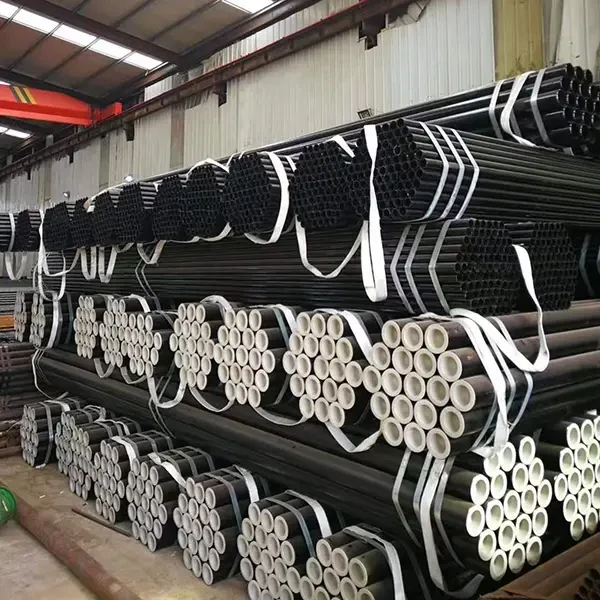
Carbon steel pipes are predominantly composed of iron with a carbon content ranging from 0.05% to 2.1% by weight. Other alloying elements, such as manganese, silicon, and sulfur, are added to modify mechanical properties. Common grades include A53, A106 (Grade B, Grade C), and API 5L (X42, X52, X60, X65, X70). The manufacturing process significantly influences price. Seamless pipes are produced through extrusion or piercing methods, offering superior strength and pressure-bearing capacity but at a higher cost. ERW (Electric Resistance Welded) pipes are formed by rolling steel plates and welding the seam using electric current, offering a more cost-effective solution for lower-pressure applications. DSAW (Direct Submerged Arc Welded) pipes are used for large-diameter, high-pressure pipelines and involve forming plates and welding them underwater with an arc. Heat treatment processes, such as normalizing, quenching, and tempering, are applied to achieve desired mechanical properties, impacting production costs. Precise control of chemical composition and manufacturing parameters is paramount to ensure compliance with industry standards and prevent material defects like inclusions, porosity, and segregation. The raw material's origin and quality also affect price; domestically sourced steel typically commands a premium over imported materials.
Performance & Engineering
Carbon steel pipe performance is dictated by several key engineering properties. Yield strength and tensile strength determine the pipe’s ability to withstand internal pressure and external loads. Ductility, measured by elongation and reduction of area, indicates the material’s capacity to deform without fracturing. Impact toughness, assessed through Charpy V-notch testing, defines resistance to brittle fracture at low temperatures. Corrosion resistance, particularly in aggressive environments, is a critical consideration; coatings (epoxy, polyurethane, polyethylene) and cathodic protection are commonly employed to mitigate corrosion. Force analysis, including hoop stress and longitudinal stress, is essential for designing piping systems that can safely operate at specified pressures and temperatures. Relevant codes and standards, such as ASME B31.3 (Process Piping) and ASME B31.4 (Pipeline Transportation Systems), provide guidelines for design, fabrication, and inspection. Environmental factors, including temperature fluctuations, seismic activity, and soil conditions, must be accounted for in the engineering design to ensure long-term reliability and prevent failures. The selection of appropriate pipe schedule (wall thickness) is crucial for maintaining structural integrity and minimizing the risk of burst or collapse.
Technical Specifications
| Grade | Yield Strength (MPa) | Tensile Strength (MPa) | Wall Thickness (mm) |
|---|---|---|---|
| A53 Grade B | 240 | 370 | 2.6 – 13.7 |
| A106 Grade B | 250 | 400 | 2.6 – 13.7 |
| API 5L X42 | 345 | 485 | 3.2 – 25.4 |
| API 5L X52 | 415 | 530 | 3.2 – 25.4 |
| API 5L X60 | 485 | 580 | 3.2 – 25.4 |
| API 5L X70 | 550 | 690 | 3.2 – 25.4 |
Failure Mode & Maintenance
Carbon steel pipes are susceptible to several failure modes. Corrosion, both uniform and localized (pitting, crevice corrosion, galvanic corrosion), is a primary cause of failure, particularly in corrosive environments. Erosion, caused by abrasive particles in the fluid stream, can wear away the pipe wall. Fatigue cracking, resulting from cyclic loading, can initiate and propagate over time, leading to catastrophic failure. Hydrogen embrittlement, induced by atomic hydrogen diffusion into the metal lattice, can reduce ductility and promote cracking. Weld defects, such as porosity, slag inclusions, and incomplete fusion, can weaken the pipe and initiate failure. Regular inspection programs, utilizing non-destructive testing (NDT) methods like ultrasonic testing (UT), radiographic testing (RT), and magnetic particle inspection (MPI), are essential for detecting defects and preventing failures. Preventative maintenance, including coating repairs, cathodic protection system monitoring, and pressure testing, can extend the service life of the pipeline. Proper storage practices, preventing corrosion and physical damage, are also critical. Detailed failure analysis, involving metallurgical examination and fracture surface analysis, can identify root causes and inform future design and maintenance strategies.
Industry FAQ
Q: What is the primary driver of carbon steel pipe price fluctuations?
A: The primary driver is the cost of raw materials, specifically iron ore and metallurgical coal. Global steel production rates, supply chain disruptions, and geopolitical events also significantly impact pricing. Demand from construction, infrastructure projects, and the energy sector plays a crucial role.
Q: How does pipe diameter and wall thickness affect the price?
A: Larger diameter pipes and thicker wall thicknesses require more material and energy to manufacture, resulting in higher prices. The manufacturing process complexity also increases with size and thickness.
Q: What is the difference in price between seamless and welded pipes?
A: Seamless pipes are generally more expensive than welded pipes due to the more complex and energy-intensive manufacturing process. Seamless pipes offer superior strength and are preferred for critical applications.
Q: What role do import tariffs play in carbon steel pipe pricing?
A: Import tariffs can significantly increase the price of imported carbon steel pipes, making domestically produced pipes more competitive. Changes in trade policies and tariff rates can cause substantial price fluctuations.
Q: How do different coating options impact the overall cost of carbon steel pipe?
A: Coating options, such as epoxy, polyurethane, or polyethylene, add to the overall cost. More durable and specialized coatings, offering superior corrosion resistance, command a higher price. Application costs also contribute to the total expense.
Conclusion
The pricing of carbon steel pipe is a multifaceted issue deeply intertwined with material science, manufacturing processes, and global economic factors. Understanding the interplay of these elements is essential for informed procurement decisions and effective project cost management. The selection of the appropriate grade, manufacturing method, and protective coating must be aligned with the specific application requirements and operational environment to ensure both economic viability and long-term reliability.
Future trends suggest continued price volatility driven by evolving geopolitical landscapes and increasing demand for sustainable materials. Proactive risk management, including long-term supply agreements and diversification of sourcing, will be crucial for mitigating price fluctuations. Continued research and development in advanced coating technologies and improved manufacturing processes will also play a role in optimizing cost and performance.
