
Introduction
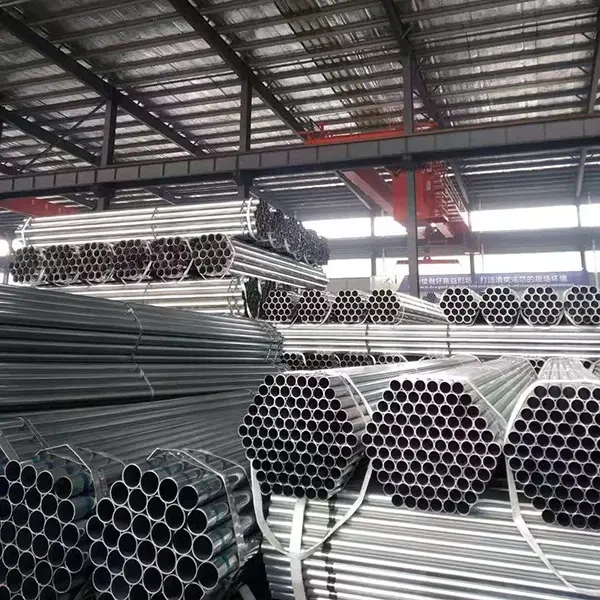
Chromoly pipe, short for chromium-molybdenum pipe, is a high-strength, low-alloy steel pipe widely utilized across diverse industrial applications. Positioned within the material supply chain as a refined product of steel manufacturing, it serves as a critical component in systems demanding high pressure, temperature resistance, and structural integrity. Its core performance characteristics center around its superior weldability, impact toughness, and resistance to corrosion compared to standard carbon steels. This technical guide provides an in-depth exploration of chromoly pipe, covering its material science, manufacturing processes, performance metrics, failure modes, and relevant industry standards. The increasing demand stems from its critical role in industries such as aerospace, automotive, oil and gas, power generation, and motorsport, where performance and safety are paramount. A key pain point in material selection is consistently balancing cost with the required performance envelope; chromoly pipe addresses this by providing a robust solution without the extreme expense of more exotic alloys.
Material Science & Manufacturing
Chromoly pipe is typically produced from AISI 4130, 4140, or similar alloy steels. The primary alloying elements – chromium (typically 0.8-1.1%) and molybdenum (0.15-0.25%) – significantly enhance the steel’s properties. Chromium contributes to corrosion resistance and increased hardness, while molybdenum improves hardenability, strength, and creep resistance at elevated temperatures. Carbon content typically ranges between 0.28-0.33%. Manufacturing begins with the production of seamless or welded tubes. Seamless pipe is created through processes like piercing and drawing, where a solid billet is heated and forced over a mandrel to create a hollow tube. Welded pipe is manufactured by rolling steel plates into cylindrical shapes and welding the seam, commonly using electric resistance welding (ERW) or submerged arc welding (SAW). Key parameter control during manufacturing includes precise control of chemical composition, heating and cooling rates during heat treatment (annealing, normalizing, quenching and tempering), and weld parameters (current, voltage, travel speed). Heat treatment is crucial for achieving the desired microstructure – a fine-grained martensitic structure for high strength and toughness. Post-welding heat treatment (PWHT) is commonly employed to relieve residual stresses and improve weld integrity. Surface finishing often involves pickling or passivation to remove scale and enhance corrosion resistance. The raw materials undergo rigorous quality control, including spectroscopic analysis to verify chemical composition, and non-destructive testing (NDT) such as ultrasonic testing (UT) and radiographic testing (RT) to detect internal flaws.

Performance & Engineering
The performance of chromoly pipe is heavily influenced by its mechanical properties and environmental resistance. Yield strength typically ranges from 550-700 MPa, with ultimate tensile strength reaching 650-850 MPa, depending on the specific alloy and heat treatment. Its elongation at break is generally around 15-20%, indicating good ductility. Charpy impact testing is crucial, particularly for applications in low-temperature environments, where impact toughness needs to be maintained. Force analysis is vital in designing systems utilizing chromoly pipe, accounting for internal pressure, external loads, bending moments, and torsional stresses. Finite element analysis (FEA) is commonly employed to model stress distributions and optimize pipe dimensions. Environmental resistance is a critical consideration, particularly in corrosive environments. While chromoly pipe exhibits superior corrosion resistance compared to carbon steel, it can still be susceptible to localized corrosion, such as pitting and crevice corrosion, in aggressive environments. Protective coatings, such as epoxy or polyurethane, are often applied to enhance corrosion resistance. Compliance requirements vary depending on the application. For example, pipelines transporting oil and gas are subject to stringent regulations from organizations like ASME (American Society of Mechanical Engineers) and API (American Petroleum Institute). Aerospace applications require adherence to standards set by organizations like SAE International. Proper welding procedures, employing qualified welders and appropriate filler metals, are crucial to maintain the pipe's integrity and performance characteristics.
Technical Specifications
| Property | AISI 4130 | AISI 4140 | ASTM A53 Grade B (Carbon Steel - for comparison) |
|---|---|---|---|
| Yield Strength (MPa) | 580-690 | 620-760 | 240-280 |
| Ultimate Tensile Strength (MPa) | 690-820 | 760-900 | 400-550 |
| Elongation (%) | 18-22 | 16-20 | 20-25 |
| Charpy Impact Energy (20°C, J) | 40-60 | 50-70 | 20-30 |
| Chromium Content (%) | 0.8-1.1 | 0.8-1.1 | ≤0.30 |
| Molybdenum Content (%) | 0.15-0.25 | 0.15-0.25 | ≤0.30 |
Failure Mode & Maintenance
Chromoly pipe, despite its robust properties, is susceptible to several failure modes. Fatigue cracking, initiated by cyclic loading, is a common concern, particularly in applications involving vibration or pressure fluctuations. This often originates at stress concentration points like welds or imperfections in the material. Corrosion-induced cracking, specifically stress corrosion cracking (SCC), can occur in the presence of corrosive environments and tensile stress. Hydrogen embrittlement can also contribute to cracking, especially in high-strength chromoly steels. Weld defects, such as porosity, inclusions, or incomplete fusion, can significantly reduce the pipe’s strength and toughness. Oxidation at high temperatures can lead to material degradation and loss of section thickness. Maintenance practices are crucial for preventing these failures. Regular non-destructive testing (NDT), including visual inspection, ultrasonic testing (UT), and radiographic testing (RT), should be conducted to detect cracks, corrosion, and other defects. Protective coatings should be inspected and maintained to ensure their effectiveness. Proper welding procedures, with qualified welders and appropriate filler metals, are essential for repairs. For systems operating at high temperatures, regular inspections for oxidation and scale buildup are necessary. Routine pressure testing and leak checks are also recommended to ensure system integrity. Maintaining detailed records of inspections, repairs, and maintenance activities is crucial for tracking the pipe’s condition and predicting potential failures.
Industry FAQ
Q: What is the primary advantage of using chromoly pipe over carbon steel in high-pressure applications?
A: The primary advantage lies in its significantly higher yield and tensile strength. Chromoly’s alloying elements (chromium and molybdenum) enhance its strength, allowing it to withstand higher pressures and stresses without deformation or failure compared to carbon steel. It also exhibits improved toughness and weldability, crucial for reliable high-pressure systems.
Q: How does the heat treatment process affect the mechanical properties of chromoly pipe?
A: Heat treatment is critical. Processes like quenching and tempering control the microstructure of the steel. Quenching hardens the steel, while tempering increases its toughness and ductility. Properly executed heat treatment results in an optimal balance of strength, toughness, and weldability. Incorrect heat treatment can lead to brittle fractures or reduced strength.
Q: What specific corrosion concerns should be addressed when using chromoly pipe in a saltwater environment?
A: While chromoly offers better corrosion resistance than carbon steel, it's still susceptible to pitting and crevice corrosion in saltwater. Chloride ions can penetrate the passive layer and initiate localized corrosion. Implementing cathodic protection, applying corrosion-resistant coatings (epoxy, polyurethane), and utilizing inhibitors are crucial preventative measures.
Q: What non-destructive testing (NDT) methods are most effective for detecting subsurface flaws in chromoly pipe?
A: Ultrasonic testing (UT) is highly effective for detecting internal flaws like cracks, voids, and inclusions. Radiographic testing (RT) – using X-rays or gamma rays – also provides excellent subsurface imaging. Liquid penetrant testing (PT) is useful for detecting surface cracks. The choice of method depends on the type of flaw being sought and the pipe geometry.
Q: What filler metals are recommended for welding chromoly pipe, and why?
A: AWS E7018 or similar low-hydrogen electrodes are commonly recommended. The filler metal should match the base metal's chemical composition and mechanical properties to ensure weld integrity and avoid creating weaker zones. Low-hydrogen electrodes minimize the risk of hydrogen-induced cracking. Proper preheating and post-weld heat treatment are also essential.
Conclusion
Chromoly pipe represents a critical engineering material where a combination of high strength, weldability, and reasonable corrosion resistance are required. Its unique alloy composition and controlled manufacturing processes deliver performance exceeding that of conventional carbon steel, making it indispensable in demanding applications across multiple industries. Understanding the nuances of its material science, potential failure modes, and the importance of rigorous maintenance protocols is vital for ensuring long-term reliability and safety.
Continued research and development are focused on enhancing the corrosion resistance of chromoly alloys, optimizing welding techniques, and exploring new applications in emerging fields like hydrogen transportation and carbon capture. A proactive approach to materials selection, coupled with consistent adherence to industry best practices and relevant standards, will continue to unlock the full potential of chromoly pipe as a cornerstone of modern industrial infrastructure.
