
Introduction
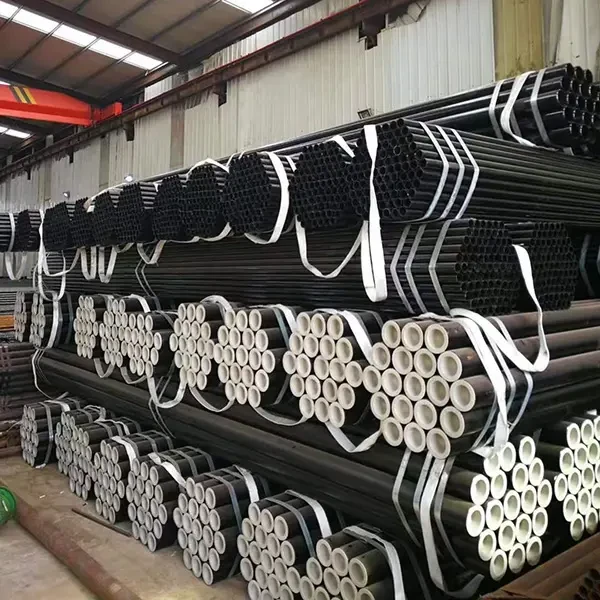
Electric Resistance Welded (ERW) steel pipe is a longitudinally welded pipe manufactured from steel strip or sheet. The process utilizes high-frequency electric current to heat the edges of the steel, fusing them together to create a weld seam. ERW pipes occupy a critical position in the industry chain, serving as a cost-effective alternative to seamless pipes for a wide range of applications including structural support, fluid and gas transportation, and mechanical tubing. Core performance characteristics revolve around pressure containment, dimensional accuracy, weld seam integrity, and corrosion resistance, which are dictated by the steel grade, manufacturing parameters, and post-weld treatments applied. ERW pipe’s proliferation stems from its ability to be produced in various sizes and thicknesses, offering tailored solutions to diverse industrial needs. A primary industry pain point centers on weld seam quality control, ensuring consistent strength and preventing premature failure in critical applications.
Material Science & Manufacturing
ERW pipe production begins with steel strip, commonly utilizing carbon steels such as A53 Grade B, X42, X52, or API 5L grades, although stainless steel and alloy steels are also employed. The raw material’s chemical composition directly impacts weldability, ductility, and corrosion resistance. Key physical properties include yield strength, tensile strength, elongation, and impact toughness, all rigorously controlled according to material specifications. Manufacturing begins with forming the steel strip into a tubular shape. This is followed by the ERW welding process, where high-frequency alternating current is passed through the edges of the steel, generating heat due to resistance. Precise control of frequency, current density, and welding speed is vital. Post-welding, pipes undergo normalizing heat treatment to relieve stress and refine the grain structure, improving mechanical properties. Non-destructive testing (NDT) methods like ultrasonic testing (UT) and radiographic testing (RT) are crucial for detecting weld defects. Critical parameters include maintaining precise strip width tolerances, consistent edge preparation, controlled welding temperature gradients, and effective quenching/cooling rates during heat treatment. The strip surface must be free from scale, rust, and contaminants to ensure optimal weld fusion. A significant challenge is managing residual stresses induced during welding, requiring carefully designed heat treatment cycles.
Performance & Engineering
ERW pipe performance is dictated by its ability to withstand internal and external pressure, axial loads, bending moments, and torsional stresses. Force analysis relies on established engineering principles, utilizing equations derived from thin-walled cylinder theory and beam bending theory. Environmental resistance encompasses corrosion protection, operating temperature limits, and resistance to erosion. Compliance requirements vary based on intended application and are governed by standards such as ASME B31.3 (Process Piping), API 5L (Line Pipe), and ASTM A53 (Welded Steel Pipe). Functional implementation often requires specifying appropriate coatings (epoxy, polyethylene, galvanizing) for corrosion resistance and ensuring dimensional accuracy for compatibility with connecting components. Weld seam strength is paramount, assessed through tensile testing, bend testing, and fracture toughness testing. Fatigue analysis is crucial for applications involving cyclic loading, predicting the pipe’s lifespan under repeated stress. The weld seam's microstructure, particularly the heat-affected zone (HAZ), requires careful attention, as it is often the weakest point in the pipe. Engineering designs must account for potential hydrostatic testing pressures to verify leak-tightness and structural integrity.
Technical Specifications
| Parameter | ASTM A53 Grade B | API 5L X42 | ASTM A106 Grade B | EN 10217-1 S235JR |
|---|---|---|---|---|
| Outside Diameter (inches) | 0.5 – 24 | 6 – 48 | 0.5 – 8.625 | 10.2 – 660 |
| Wall Thickness (inches) | 0.083 – 0.5 | 0.125 – 0.5 | 0.083 – 0.5 | 2 – 30 |
| Yield Strength (psi) | 36,000 | 42,000 | 35,000 | 235 |
| Tensile Strength (psi) | 58,000 | 58,000 | 60,000 | 360 – 530 |
| Elongation (%) | 23 | 20 | 20 | 16 – 23 |
| Hydrostatic Test Pressure (psi) | Variable, based on diameter & thickness | Variable, based on grade & size | Variable, based on diameter & thickness | Variable, based on diameter & thickness |
Failure Mode & Maintenance
Common ERW pipe failure modes include fatigue cracking at the weld seam, corrosion-induced pitting and perforation, stress corrosion cracking (SCC), and hydrogen embrittlement. Fatigue cracking arises from repeated cyclic loading, often initiated at weld defects or stress concentrations. Corrosion occurs due to exposure to corrosive environments, accelerating material degradation. SCC is a specific form of corrosion driven by tensile stress and a corrosive environment. Hydrogen embrittlement, particularly in high-strength steels, results from the diffusion of hydrogen into the metal, reducing ductility and promoting cracking. Maintenance involves regular inspection for signs of corrosion, cracks, or deformation. Protective coatings should be inspected and reapplied as needed. Periodic hydrostatic testing verifies the pipe’s integrity. For in-service repairs, welding procedures must be carefully controlled to avoid introducing new defects. Non-destructive testing (UT, RT, magnetic particle inspection) is essential for evaluating weld integrity and detecting cracks. Cathodic protection can mitigate corrosion in underground pipelines. Proper selection of materials and coatings based on the operating environment is crucial for preventing premature failure. Regular monitoring of operational stresses and pressures can help identify potential fatigue issues.
Industry FAQ
Q: What is the primary difference between ERW and seamless pipe, and when would you choose one over the other?
A: Seamless pipe is manufactured without a weld seam, offering superior strength and resistance to pressure. ERW pipe is more cost-effective, but the weld seam represents a potential weakness. Seamless pipe is typically preferred for high-pressure applications, critical services, and corrosive environments. ERW pipe is suitable for lower-pressure applications, structural support, and general-purpose piping where cost is a significant factor.
Q: How does the heat-affected zone (HAZ) in ERW pipe influence its mechanical properties?
A: The HAZ is the area surrounding the weld seam that experiences altered microstructure due to the welding heat. This can lead to reduced hardness, decreased ductility, and increased susceptibility to cracking. Proper heat treatment (normalizing) is crucial for refining the HAZ microstructure and mitigating these negative effects.
Q: What are the key NDT methods used to ensure ERW pipe weld quality?
A: Ultrasonic testing (UT) is the most common NDT method, detecting internal flaws like cracks and porosity. Radiographic testing (RT) provides a visual image of the weld seam, revealing defects. Magnetic particle inspection (MPI) is used to detect surface cracks. Liquid penetrant testing (LPT) is also used for surface flaw detection.
Q: What role does coating play in extending the service life of ERW pipes?
A: Coatings provide a barrier between the pipe material and the corrosive environment, significantly extending its service life. Common coatings include epoxy, polyethylene, galvanizing, and various specialized polymer coatings. The coating type must be selected based on the specific corrosive agents present in the operating environment.
Q: What is the significance of hydrostatic testing in ERW pipe acceptance?
A: Hydrostatic testing involves pressurizing the pipe with water to a specified test pressure, typically 1.5 times the design pressure. This verifies the pipe’s structural integrity, detects leaks, and confirms its ability to withstand operating pressures. Successful completion of hydrostatic testing is a critical acceptance criterion.
Conclusion
ERW steel pipe remains a fundamental component in numerous industrial sectors due to its cost-effectiveness and versatility. However, achieving reliable performance necessitates a thorough understanding of its material science, manufacturing processes, and potential failure modes. Diligent quality control, rigorous NDT procedures, and appropriate protective measures are paramount for ensuring long-term integrity and preventing catastrophic failures.
Continued advancements in welding technologies, steel metallurgy, and non-destructive testing techniques are driving improvements in ERW pipe quality and performance. Future trends include the development of high-strength, corrosion-resistant ERW pipes for demanding applications, as well as the implementation of advanced monitoring systems for real-time assessment of pipe condition.
