
Introduction
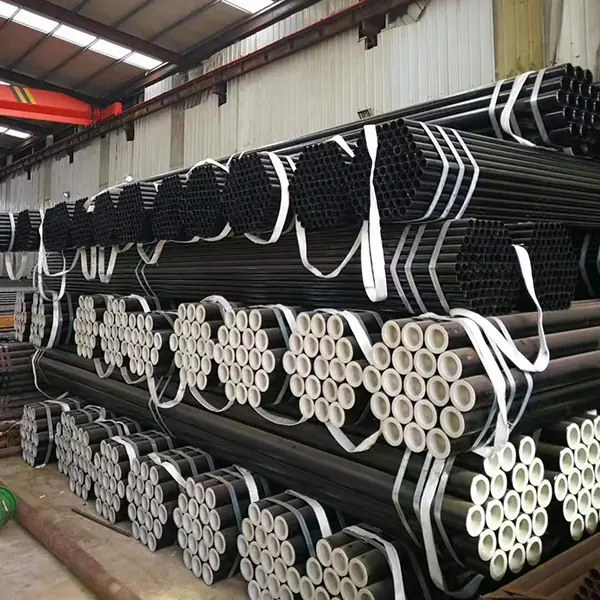
Galvanized steel pipe, encompassing both hot-dip galvanized and electrogalvanized varieties, is a widely utilized carbon steel pipe protected by a zinc coating. Its primary function is to prevent corrosion and oxidation of the underlying steel, extending its service life in challenging environments. Positioned within the broader piping and tubing industry, galvanized steel pipe serves critical roles in potable water distribution, fire suppression systems, structural supports, and industrial fluid conveyance. Core performance characteristics revolve around corrosion resistance, mechanical strength (yield strength, tensile strength), and pressure-bearing capacity, all dictated by factors like zinc coating thickness, steel grade, and pipe dimensions. A key challenge within the industry lies in balancing cost-effectiveness with long-term durability, particularly in aggressive chemical or marine environments, leading to continuous research into improved galvanizing techniques and alloy compositions.
Material Science & Manufacturing
The base material for galvanized steel pipe is typically carbon steel, commonly AISI 1018 or similar grades, chosen for their weldability and formability. The steel’s composition influences its inherent corrosion resistance and mechanical properties. Manufacturing begins with the production of seamless or welded steel pipes. Seamless pipes are created via extrusion or piercing processes, resulting in a uniform structure without weld seams. Welded pipes are formed by rolling steel plates and subsequently welding the seam, often utilizing Electric Resistance Welding (ERW) or Double Submerged Arc Welding (DSAW) for high-strength applications. The critical stage is galvanization. Hot-dip galvanizing involves immersing the steel pipe in a molten zinc bath (typically 98% pure zinc with aluminum, silicon, and lead additions to improve coating characteristics) at temperatures around 450°C (842°F). This creates a metallurgical bond between the zinc and the steel, forming several alloy layers (zeta, delta, gamma, and alpha) with varying zinc and iron compositions, providing robust corrosion protection. Electrogalvanization employs an electrolytic process, depositing a zinc layer onto the steel surface using an electric current and zinc salt solution. Parameter control – bath temperature, immersion time, steel surface preparation (pickling, fluxing), and cooling rate – significantly impacts coating thickness, adhesion, and uniformity. Surface preparation is paramount; residual scale or contaminants prevent proper zinc bonding, leading to premature coating failure.
Performance & Engineering
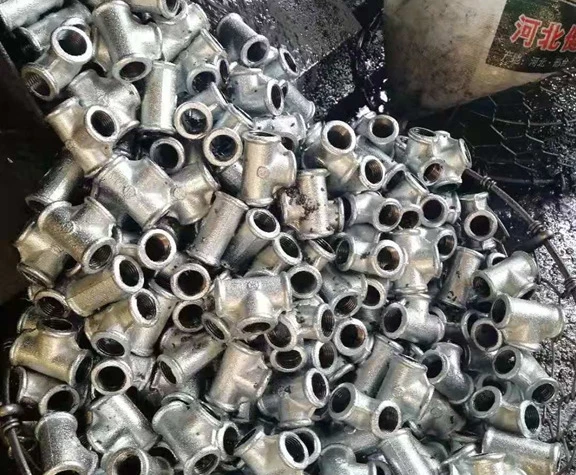
The performance of galvanized steel pipe is governed by several engineering principles. Corrosion resistance relies on the sacrificial protection provided by the zinc coating – zinc corrodes preferentially, protecting the steel. The rate of zinc corrosion is influenced by environmental factors like pH, humidity, and salinity. Mechanical strength is determined by the steel grade and pipe wall thickness. Force analysis considers tensile stress (resistance to pulling forces), compressive stress (resistance to crushing forces), and bending stress (resistance to deformation). Pressure-bearing capacity is calculated using Barlow’s formula (P = 2St/D, where P is pressure, S is tensile strength, t is wall thickness, and D is diameter) and accounts for safety factors. Galvanized steel pipe must comply with industry standards like ASTM A53 (for general-purpose piping) and ASTM A153 (for zinc coating specifications). In seismic zones, engineering designs must account for pipe flexibility and resistance to earthquake-induced stresses. The impact of temperature fluctuations on pipe expansion and contraction also necessitates careful consideration, often requiring expansion joints or flexible couplings. Furthermore, galvanic corrosion – the accelerated corrosion due to contact with dissimilar metals – must be mitigated through appropriate insulation or the use of compatible fittings.
Technical Specifications
| Parameter | ASTM A53 Grade B (Typical) | ASTM A153 (Zinc Coating) | Units |
|---|---|---|---|
| Yield Strength | 36,000 | N/A | psi |
| Tensile Strength | 58,000 | N/A | psi |
| Zinc Coating Weight (Hot-Dip Galvanizing) | N/A | 0.5 - 2.0 oz/ft² | oz/ft² |
| Minimum Wall Thickness | Schedule 40: 0.237 in | N/A | in |
| Outside Diameter | 1/2 in to 6 in | N/A | in |
| Corrosion Resistance (Salt Spray Test) | N/A | 24 - 100+ hours (depending on coating thickness) | hours |
Failure Mode & Maintenance
Galvanized steel pipe is susceptible to several failure modes. Uniform corrosion occurs when the zinc coating corrodes evenly over the entire surface. Localized corrosion, including pitting corrosion (small holes due to chloride attack) and crevice corrosion (corrosion within confined spaces), is more aggressive. White rust (zinc carbonate) can form in humid environments, reducing coating effectiveness. Mechanical damage, such as dents or scratches, exposes the underlying steel, initiating corrosion. Hydrogen embrittlement can occur during the pickling process (used for surface preparation), weakening the steel. Fatigue cracking can develop under cyclic loading. Maintenance involves regular inspection for signs of corrosion, damage, or leaks. Minor corrosion can be addressed with zinc-rich paints or coatings. Damaged sections should be repaired or replaced. Periodic cleaning to remove debris and contaminants prevents accelerated corrosion. Cathodic protection, using sacrificial anodes or impressed current, can be implemented in highly corrosive environments. Avoiding direct contact with dissimilar metals (e.g., copper) is crucial to prevent galvanic corrosion. For long-term preservation, periodic re-galvanizing may be necessary.
Industry FAQ
Q: What is the primary difference between hot-dip galvanizing and electrogalvanizing in terms of corrosion protection?
A: Hot-dip galvanizing provides a thicker, more durable zinc coating with superior metallurgical bonding to the steel substrate, offering enhanced corrosion resistance, especially in harsh environments. Electrogalvanizing yields a thinner, smoother coating with less metallurgical bonding, suitable for applications requiring a more aesthetically pleasing finish or tighter dimensional tolerances, but generally with reduced corrosion protection compared to hot-dip galvanizing.
Q: How does the steel substrate's composition affect the galvanizing process and the resulting coating quality?
A: The silicon content in the steel is critical. Higher silicon content can lead to thicker, more brittle zinc alloy layers during hot-dip galvanizing, potentially reducing coating ductility and increasing the risk of cracking. Phosphorus and manganese also influence the formation of alloy layers and coating adhesion. Steel with excessive impurities can inhibit proper zinc bonding, resulting in a less protective coating.
Q: What are the limitations of galvanized steel pipe in highly acidic or alkaline environments?
A: While galvanized steel provides excellent corrosion resistance in many environments, it is susceptible to attack in strongly acidic (pH < 6) or alkaline (pH > 12) solutions. Acids dissolve the zinc coating, while alkalis can form soluble zincates, leading to coating degradation and underlying steel corrosion. In such environments, alternative materials like stainless steel or plastic piping are recommended.
Q: What is the impact of pipe thread sealant on the corrosion resistance of galvanized steel pipe?
A: Certain pipe thread sealants, particularly those containing chlorides or aggressive chemicals, can accelerate corrosion of the zinc coating at the threaded joints. It's essential to use thread sealants specifically formulated for galvanized steel pipe, such as those based on PTFE or polyethylene, which are chemically inert and do not promote corrosion.
Q: What are the key considerations for welding galvanized steel pipe, and how can you mitigate potential issues like zinc fumes?
A: Welding galvanized steel releases zinc fumes, which are hazardous to human health. Adequate ventilation and respiratory protection are crucial. Before welding, remove the zinc coating from the weld area to prevent fume generation and ensure proper weld fusion. Use appropriate welding techniques (e.g., GMAW or FCAW) and filler metals compatible with galvanized steel. Post-weld cleaning and coating repair are necessary to restore corrosion protection in the weld area.
Conclusion
Galvanized steel pipe remains a cornerstone material in various industries due to its robust corrosion protection, cost-effectiveness, and mechanical strength. The effectiveness of this protection is intrinsically linked to the galvanization process, the underlying steel’s composition, and diligent maintenance practices. Understanding the nuances of material science, manufacturing processes, and potential failure modes is paramount for ensuring the long-term reliability and performance of galvanized steel piping systems.
Future advancements will likely focus on enhancing galvanizing techniques, exploring new alloy compositions with improved corrosion resistance, and developing more sustainable and environmentally friendly coating processes. Continued research into non-destructive testing methods for coating integrity and predictive modeling for corrosion rates will further optimize the utilization and lifespan of galvanized steel pipe in demanding applications.
