
Introduction
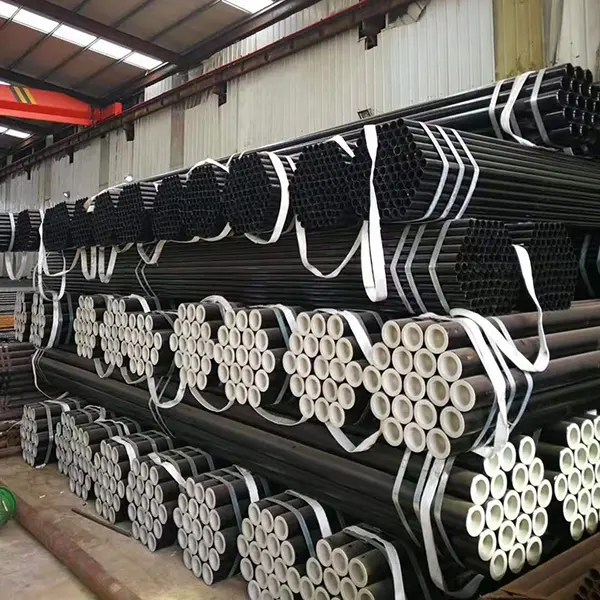
Hollow metal tubes, encompassing a wide range of alloys including steel, aluminum, and titanium, represent a fundamental structural element across diverse industrial sectors. Positioned within the supply chain as semi-finished products, they serve as critical components in applications ranging from construction and automotive manufacturing to aerospace and fluid conveyance systems. Their defining characteristic – a hollow cross-section – provides a high strength-to-weight ratio, making them superior to solid bars in many load-bearing applications. Core performance characteristics include tensile strength, yield strength, corrosion resistance, weldability, and dimensional accuracy. Addressing the prevalent industry pain point of material consistency and predictable performance under stress is paramount, as is understanding the interplay between alloy selection, manufacturing process, and end-use application. This guide provides an in-depth analysis of hollow metal tubes, covering material science, manufacturing, performance engineering, failure modes, and relevant industry standards.
Material Science & Manufacturing
The material science of hollow metal tubes begins with the selection of the base alloy. Carbon steel (ASTM A53, A500) is prevalent due to its cost-effectiveness and weldability, but exhibits lower corrosion resistance. Stainless steel (304, 316 – ASTM A312) offers superior corrosion protection, essential in chemical processing and marine environments. Aluminum alloys (6061, 6063 – ASTM B221) provide excellent weight-to-strength ratios and are commonly used in aerospace and transportation. Titanium alloys (Grade 5 – ASTM B861) deliver the highest strength-to-weight ratio and corrosion resistance, but at a significantly higher cost. Manufacturing processes predominantly involve Electric Resistance Welding (ERW), which is cost-effective for high-volume production but can introduce residual stresses; Seamless tube production, through processes like hot extrusion or mandrel rolling, eliminates the weld seam, enhancing structural integrity and corrosion resistance. Cold drawing further refines the dimensions and improves mechanical properties. Key parameter control includes maintaining precise temperature during welding to prevent defects, controlling reduction ratios during cold drawing to avoid work hardening and cracking, and implementing rigorous quality control checks for dimensional accuracy (wall thickness, diameter, ovality) and weld integrity (NDE testing – Radiographic, Ultrasonic). The metallographic structure, particularly grain size and phase composition, directly influences mechanical performance. Heat treatment (annealing, normalizing) is often employed to refine the microstructure and enhance ductility and toughness.
Performance & Engineering
Performance engineering of hollow metal tubes centers on their ability to withstand various loads – axial tension/compression, bending, torsion, and internal/external pressure. Force analysis, employing Finite Element Analysis (FEA), is crucial for optimizing tube geometry (diameter, wall thickness) and material selection for specific applications. Buckling is a critical failure mode under compression, and is mitigated through increased wall thickness or the introduction of internal supports. Environmental resistance is paramount; corrosion, particularly localized corrosion like pitting and crevice corrosion, significantly degrades structural integrity. Coatings (epoxy, galvanizing) and cathodic protection are employed to enhance corrosion resistance. Compliance requirements vary by industry. In aerospace, stringent standards (AMS, ASTM) dictate material traceability, mechanical properties, and non-destructive testing protocols. The automotive industry requires adherence to standards like SAE J523 for hydraulic tubing. Pressure vessels must comply with ASME Boiler and Pressure Vessel Code Section VIII Division 1. Functional implementation details include considerations for weldability, formability, and machinability. Welding processes (SMAW, GMAW, GTAW) must be qualified according to relevant codes (AWS D1.1 for structural steel). Formability dictates the tube’s ability to be bent, flared, or otherwise shaped without cracking. Machinability influences the ease with which the tube can be modified for specific connections or features.
Technical Specifications
| Parameter | Steel (ASTM A53 Grade B) | Aluminum (6061-T6) | Stainless Steel (304/304L) | Titanium (Grade 5) |
|---|---|---|---|---|
| Tensile Strength (MPa) | 450-550 | 310 | 500-700 | 895-1035 |
| Yield Strength (MPa) | 250-350 | 276 | 205-275 | 828 |
| Wall Thickness Range (mm) | 2-25 | 1-10 | 1-15 | 0.5-5 |
| Outer Diameter Range (mm) | 10-660 | 10-250 | 10-660 | 10-150 |
| Corrosion Resistance | Low (requires coating) | Moderate (requires coating) | High | Excellent |
| Weldability | Excellent | Good | Good | Difficult (requires shielding) |
Failure Mode & Maintenance
Hollow metal tubes are susceptible to various failure modes. Fatigue cracking, initiated by cyclic loading, typically occurs at stress concentrators (weld seams, dents, notches). Delamination can occur in multi-layered tubes or tubes with coating imperfections. Corrosion, as previously noted, is a pervasive threat, leading to material loss and reduced load-bearing capacity. Oxidation, particularly at elevated temperatures, degrades the surface layer and reduces mechanical properties. Creep, time-dependent deformation under sustained load, is a concern in high-temperature applications. Galvanic corrosion occurs when dissimilar metals are in contact in the presence of an electrolyte. Maintenance solutions include regular visual inspections for signs of corrosion, cracking, or deformation. Non-destructive testing (NDT) – ultrasonic testing (UT), radiographic testing (RT), eddy current testing (ECT) – can detect subsurface defects. Protective coatings should be regularly inspected and repaired. For critical applications, scheduled replacement based on service life prediction models is recommended. Proper storage is essential to prevent corrosion; tubes should be stored in a dry, well-ventilated environment. Welded joints should be periodically inspected for weld defects and corrosion.
Industry FAQ
Q: What is the impact of grain size on the fatigue life of a hollow steel tube?
A: Finer grain sizes generally improve fatigue life. A finer grain structure increases the number of potential crack initiation sites but reduces the rate of crack propagation due to increased resistance to dislocation movement. Heat treatments like normalizing can refine grain size and improve fatigue resistance.
Q: How does the welding process affect the corrosion resistance of stainless steel hollow tubes?
A: Improper welding can significantly reduce corrosion resistance. Weld heat-affected zones (HAZ) can experience sensitization, leading to intergranular corrosion. Using low-heat input welding techniques, proper shielding gas, and post-weld heat treatment (PWHT) can minimize sensitization and maintain corrosion resistance.
Q: What are the key considerations when selecting a hollow aluminum tube for aerospace applications?
A: Weight is paramount. Aluminum alloy 6061-T6 is a common choice due to its high strength-to-weight ratio. Fatigue resistance, corrosion resistance (particularly to galvanic corrosion), and fracture toughness are also crucial. Material traceability and compliance with aerospace standards (AMS) are non-negotiable.
Q: How can I prevent buckling in a long, thin-walled hollow steel tube subjected to axial compression?
A: Increasing the wall thickness is the most direct solution. Alternatively, adding internal supports or stiffeners significantly increases the buckling resistance. Ensuring the tube is perfectly straight and free of imperfections is also critical.
Q: What is the role of non-destructive testing (NDT) in ensuring the quality of hollow metal tubes?
A: NDT methods, such as ultrasonic testing (UT) and radiographic testing (RT), are used to detect internal and surface defects that are not visible to the naked eye. These defects can include cracks, porosity, inclusions, and weld imperfections, which can compromise the structural integrity of the tube.
Conclusion
Hollow metal tubes represent a versatile and critical component in numerous industries, offering a compelling combination of strength, weight efficiency, and cost-effectiveness. Understanding the interplay between material selection, manufacturing processes, and application-specific performance requirements is crucial for ensuring structural integrity and long-term reliability. The careful consideration of potential failure modes, coupled with proactive maintenance strategies, is essential for mitigating risks and maximizing service life.
Future advancements in hollow metal tube technology will likely focus on the development of novel alloys with enhanced corrosion resistance and strength-to-weight ratios, the refinement of manufacturing processes to improve dimensional accuracy and reduce residual stresses, and the implementation of advanced NDT techniques for more comprehensive quality control. Furthermore, the integration of digital twins and predictive maintenance algorithms will enable more accurate assessment of tube health and optimized maintenance schedules.
