

Introduction
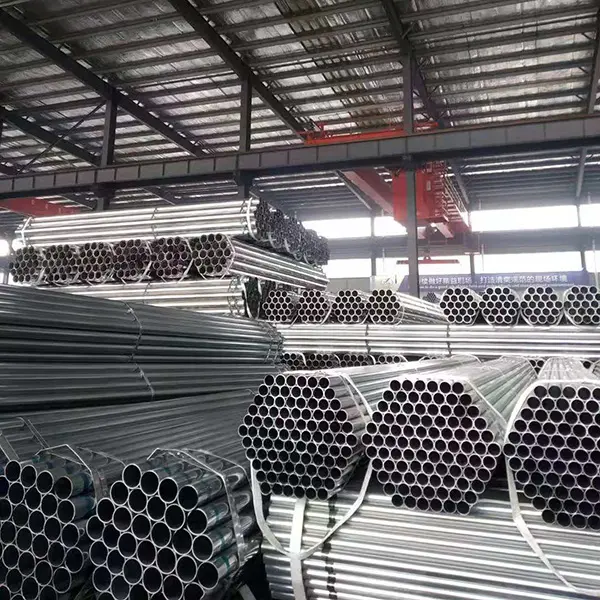
Hollow structural sections (HSS), commonly referred to as hollow steel pipe, represent a fundamental construction material within the broader steel industry. These tubular sections are manufactured from steel and are characterized by their hollow cross-section, typically circular, square, or rectangular. Their position within the industry chain is as a semi-finished product, often undergoing further fabrication such as welding, bending, and connection to form complete structures. Core performance characteristics include high strength-to-weight ratio, uniform cross-sectional properties beneficial for multi-axial loading, and ease of fabrication. This makes them integral to applications spanning construction (bridges, buildings, scaffolding), infrastructure (pipelines, pylons), mechanical engineering (chassis, support frames), and the automotive industry. A key industry pain point lies in ensuring consistent weldability across varying steel grades and maintaining dimensional tolerances during manufacturing to facilitate precise assembly.
Material Science & Manufacturing
The primary raw material for hollow steel pipe is carbon steel, although alloy steels (containing elements like chromium, molybdenum, and vanadium) are employed for enhanced properties like corrosion resistance and strength. Carbon steel’s physical properties vary significantly with carbon content. Lower carbon steels (less than 0.25%) exhibit good ductility and weldability but lower tensile strength, typically around 400-550 MPa. Higher carbon steels (greater than 0.6%) demonstrate increased strength (600-800 MPa) but reduced ductility and weldability. Manufacturing processes predominantly include Electric Resistance Welding (ERW) and seamless pipe production. ERW involves forming steel strip into a tubular shape and welding the seam using high-frequency electric current. Key parameter control focuses on welding current, frequency, and strip edge preparation to minimize defects like porosity and incomplete fusion. Seamless pipe production utilizes processes like piercing and rolling, starting with a solid billet heated to high temperatures. Critical parameters here include billet temperature, piercing mandrel speed, and roller die profile. Post-manufacturing, heat treatment (normalizing, annealing) is often employed to refine the microstructure and improve mechanical properties. Chemical compatibility must be considered; for example, exposure to chlorides can induce pitting corrosion in carbon steel, necessitating protective coatings or alloy selection. The microstructure—grain size and phase composition—significantly impacts toughness and corrosion resistance.
Performance & Engineering
Performance analysis of hollow steel pipe centers on its structural behavior under load. Force analysis considers axial loads, bending moments, and torsional stresses. The section modulus (a geometric property relating to a cross-section's resistance to bending) is paramount in design calculations. Environmental resistance is a crucial factor; prolonged exposure to moisture, temperature fluctuations, and corrosive atmospheres can degrade the material. Galvanization, epoxy coatings, and specialized alloy selections are utilized to mitigate these effects. Compliance requirements are dictated by industry-specific standards and building codes (see footer). For example, in structural applications, designs must adhere to load and resistance factor design (LRFD) principles, ensuring adequate safety factors against failure. Functional implementation requires detailed consideration of connection methods – welding, bolting, or adhesive bonding. Welding introduces residual stresses and potential distortion, necessitating post-weld heat treatment in critical applications. Fatigue performance is another key consideration, particularly in cyclically loaded structures. Corrosion fatigue—the combined effect of corrosion and cyclic stress—can significantly reduce fatigue life.
Technical Specifications
| Material Grade | Outer Diameter (mm) | Wall Thickness (mm) | Yield Strength (MPa) |
|---|---|---|---|
| ASTM A53 Grade B | 50.8 | 3.2 | 250 |
| ASTM A500 Grade C | 101.6 | 4.5 | 345 |
| EN 10210-2 S235J2H | 159.0 | 6.3 | 235 |
| ASTM A36 | 219.1 | 8.0 | 250 |
| EN 10210-2 S355J2H | 323.9 | 10.0 | 355 |
| API 5L X42 | 406.4 | 12.7 | 345 |
Failure Mode & Maintenance
Hollow steel pipe is susceptible to several failure modes in practical applications. Corrosion, as previously mentioned, is a primary concern, manifesting as uniform corrosion, pitting, or galvanic corrosion. Fatigue cracking can occur under cyclic loading, initiating from stress concentrations (weld defects, scratches) and propagating until catastrophic failure. Delamination, particularly in coated pipes, involves the separation of the coating from the steel substrate, accelerating corrosion. Creep—time-dependent deformation under sustained stress—is relevant at elevated temperatures. Oxidation at high temperatures can lead to scaling and loss of material. Maintenance strategies include regular inspection for corrosion and defects using non-destructive testing (NDT) methods like ultrasonic testing (UT) and radiographic testing (RT). Protective coatings should be reapplied when damaged. Proper drainage should be ensured to prevent water accumulation and subsequent corrosion. For high-stress applications, periodic stress relieving may be necessary to mitigate fatigue. Welded joints require particular attention, with regular inspection for cracks and porosity. The use of corrosion inhibitors can further extend service life.
Industry FAQ
Q: What is the impact of sulfur content on the weldability of hollow steel pipe?
A: Increased sulfur content generally reduces weldability. Sulfur forms iron sulfide inclusions at grain boundaries, which can lead to hot cracking during welding. Lower sulfur content steels (typically less than 0.02%) are preferred for applications requiring extensive welding. Specific welding procedures and preheating may be necessary for higher sulfur content steels.
Q: How does the manufacturing process (ERW vs. Seamless) affect the mechanical properties of the pipe?
A: Seamless pipe generally exhibits superior mechanical properties, particularly in terms of longitudinal strength and resistance to crack propagation. The absence of a weld seam eliminates a potential stress concentration point. ERW pipe, however, can achieve comparable properties with careful process control and post-weld heat treatment.
Q: What are the key considerations for selecting a coating system for offshore applications?
A: Offshore environments are particularly corrosive due to seawater exposure. Coating systems must provide excellent barrier protection, cathodic protection, and resistance to abrasion. Epoxy coatings, polyurethane coatings, and thermal spray aluminum are commonly used. Regular inspection and maintenance of the coating are crucial.
Q: How do dimensional tolerances impact the assembly of structures using hollow steel pipe?
A: Tight dimensional tolerances are essential for accurate and efficient assembly. Variations in outer diameter and wall thickness can lead to fit-up problems and increased fabrication costs. Industry standards specify acceptable tolerance ranges, and these should be carefully considered during procurement.
Q: What is the significance of the Charpy V-notch impact test for evaluating the toughness of steel pipe?
A: The Charpy V-notch impact test measures the energy absorbed by a notched specimen when fractured by a swinging pendulum. It provides an indication of the material's toughness, particularly its resistance to brittle fracture at low temperatures. This is crucial for applications in cold climates or where sudden impact loads are expected.
Conclusion
Hollow steel pipe, as a versatile structural component, demands a comprehensive understanding of its material properties, manufacturing processes, and performance characteristics. The selection of appropriate steel grades, coupled with rigorous quality control during fabrication and implementation of effective corrosion protection strategies, are paramount to ensuring long-term structural integrity. Addressing the industry pain points surrounding weldability and dimensional tolerances remains crucial for optimizing cost-effectiveness and minimizing construction delays.
Future advancements are likely to focus on developing higher-strength, more corrosion-resistant alloys and optimizing manufacturing processes to reduce material waste and energy consumption. The integration of smart sensing technologies for real-time monitoring of stress and corrosion will also play an increasingly important role in extending the service life of structures utilizing hollow steel pipe.
