
Introduction
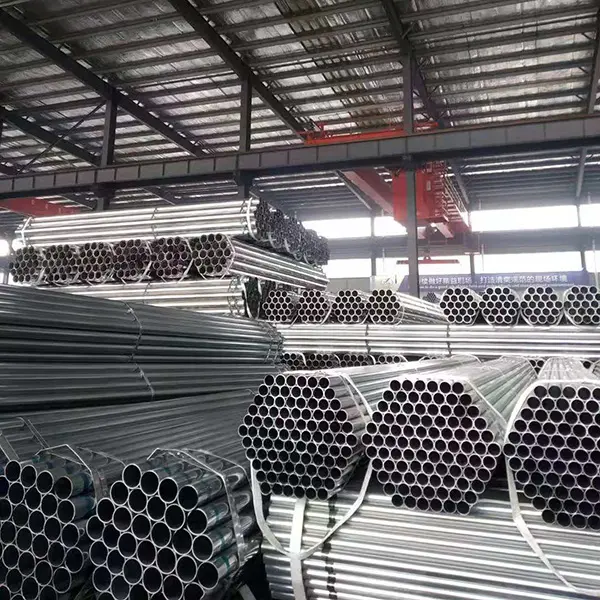
Large diameter steel pipe, typically defined as pipe with an outside diameter of 24 inches (610mm) and above, constitutes a critical component in numerous large-scale infrastructure projects across the oil & gas, water conveyance, and power generation industries. Its technical position within the industry chain is primarily as a fluid transport medium, often operating under high pressure and across considerable distances. Core performance characteristics revolve around pressure containment, structural integrity under various loading conditions (internal pressure, external loads, bending moments), corrosion resistance, and weldability. A key industry pain point centers around maintaining consistent dimensional tolerances and mechanical properties across large pipe diameters, as variations can significantly impact welding procedures, stress concentrations, and overall system reliability. Further challenges include the logistical complexities of transporting and handling these heavy components and ensuring adherence to stringent regulatory standards concerning material traceability and non-destructive testing (NDT).
Material Science & Manufacturing
The primary material for large diameter steel pipe is carbon steel, specifically grades such as API 5L X42, X52, X60, X65, and X70, each denoting increasing yield strength. These steels derive their properties from a carefully controlled chemical composition including carbon, manganese, silicon, sulfur, and phosphorus, with additions of microalloying elements like niobium, vanadium, and titanium to refine grain size and enhance weldability. Raw material properties such as tensile strength, yield strength, elongation, and impact toughness (Charpy V-notch) are rigorously tested prior to processing. Manufacturing typically employs two primary methods: seamless and welded. Seamless pipe is produced through mandrel mill processing, where a heated billet is pierced and expanded to the desired diameter and wall thickness. This method inherently offers superior pressure containment capability due to the absence of a weld seam. Welded pipe, conversely, is manufactured by rolling steel plates into cylindrical shapes and subsequently welding the longitudinal seam using submerged arc welding (SAW), electric resistance welding (ERW), or high-frequency induction welding (HFIW). Critical parameters during welding include heat input, welding speed, and shielding gas composition to minimize defects like porosity, slag inclusions, and incomplete fusion. Post-weld heat treatment (PWHT) is often employed to relieve residual stresses and improve ductility. Dimensional accuracy is maintained through online ultrasonic testing (UT) and radiographic inspection (RT) throughout the manufacturing process.
Performance & Engineering
Performance evaluation of large diameter steel pipe focuses on its ability to withstand internal and external pressures, axial loads, bending moments, and cyclical fatigue. Force analysis, governed by the thin-walled cylinder theory (Lame’s equations), dictates the required wall thickness to prevent yielding or bursting under specified operating conditions. Environmental resistance is crucial, particularly in corrosive environments. Pipeline steel is susceptible to various forms of corrosion, including uniform corrosion, pitting corrosion, crevice corrosion, and stress corrosion cracking (SCC). Protective coatings, such as epoxy, polyethylene, or fusion-bonded epoxy (FBE), are applied to the external surface to mitigate corrosion. Cathodic protection (CP), utilizing sacrificial anodes or impressed current systems, provides additional corrosion control. Compliance requirements are extensive, varying depending on the application and geographical location. Standards such as ASME B31.8 (Gas Transmission and Distribution Piping Systems) and API 5L (Specification for Line Pipe) dictate design, fabrication, inspection, and testing procedures. Functional implementation often involves complex pipeline routing, including considerations for terrain, soil conditions, and potential seismic activity. Stress analysis using finite element analysis (FEA) is routinely performed to assess the structural integrity of the pipeline system and identify potential stress concentration areas.
Technical Specifications
| Parameter | API 5L X42 | API 5L X60 | API 5L X70 | ASTM A53 Grade B |
|---|---|---|---|---|
| Yield Strength (MPa) | 345 | 485 | 550 | 250 |
| Tensile Strength (MPa) | 485-620 | 565-710 | 630-780 | 400-550 |
| Elongation (%) | 20 | 19 | 18 | 22 |
| Charpy V-Notch Impact Energy (J @ -20°C) | 27 | 27 | 27 | 20 |
| Outside Diameter (mm) | 500-1626 | 500-1626 | 500-1626 | 10.3-660.4 |
| Wall Thickness (mm) | 6.4-40.6 | 6.4-40.6 | 6.4-40.6 | 2.6-25.4 |
Failure Mode & Maintenance
Large diameter steel pipe is susceptible to several failure modes. Fatigue cracking, often initiated at weld defects or geometric discontinuities, occurs under cyclical loading. Corrosion-related failures include pitting corrosion leading to localized wall thinning and stress corrosion cracking (SCC) induced by the combined effects of tensile stress and corrosive environments. Delamination can occur in coated pipes due to inadequate coating adhesion or moisture ingress. Oxidation at high temperatures can degrade the material's mechanical properties. External damage from third-party excavation is a common cause of pipeline failures. Maintenance strategies include regular inline inspection (ILI) using intelligent pigs equipped with ultrasonic testing (UT), magnetic flux leakage (MFL), or eddy current sensors to detect corrosion, cracks, and other defects. External coating inspection and repair are essential to prevent corrosion. Cathodic protection system monitoring and maintenance are crucial. Hydrostatic testing is performed periodically to verify the pipeline’s pressure containment capability. Preventive maintenance, including right-of-way patrols and damage prevention programs, minimizes the risk of external damage. Repair techniques range from localized weld repairs to sleeve installation or complete pipe replacement, depending on the severity of the damage.
Industry FAQ
Q: What is the primary difference between seamless and welded large diameter steel pipe in terms of pressure handling capability?
A: Seamless pipe generally exhibits superior pressure handling capability due to the absence of a longitudinal weld seam, which is a potential site for crack initiation. The lack of a weld eliminates a geometric discontinuity and inherent material variations present in welded pipe, resulting in a more uniform stress distribution under pressure. However, advancements in welding technology and stringent quality control procedures have significantly narrowed the performance gap between seamless and welded pipe, particularly for high-strength steel grades.
Q: How does the API 5L grade designation (e.g., X60, X70) relate to the pipe's performance?
A: The API 5L grade designation directly correlates with the minimum specified yield strength of the steel. A higher grade number (e.g., X70 vs. X60) indicates a higher yield strength, enabling the pipe to withstand greater internal pressure or external loads for a given wall thickness. This allows for potential wall thickness reduction, resulting in cost savings, but necessitates careful consideration of other factors like corrosion resistance and weldability.
Q: What are the key considerations when selecting a coating for external corrosion protection?
A: The selection of an external coating depends on factors such as the operating environment (soil type, moisture content, pH), temperature, and mechanical stresses. Fusion-bonded epoxy (FBE) coatings offer excellent adhesion and corrosion resistance but are susceptible to damage during handling and installation. Polyethylene coatings provide superior impact resistance but may have lower adhesion. Multi-layer coating systems combining different materials offer enhanced protection. Coating application quality is paramount.
Q: What is inline inspection (ILI) and why is it crucial for pipeline integrity management?
A: Inline inspection (ILI) involves deploying intelligent pigs – remotely operated devices – inside the pipeline to detect and characterize defects such as corrosion, cracks, dents, and metal loss. ILI is crucial because it provides a comprehensive assessment of pipeline condition without requiring excavation or shutdown. The data collected enables proactive maintenance and repair decisions, minimizing the risk of failures and ensuring long-term pipeline integrity.
Q: What role does Non-Destructive Testing (NDT) play in ensuring the quality of large diameter steel pipes?
A: Non-Destructive Testing (NDT) is vital for verifying the integrity of the pipe without causing damage. Common NDT methods include Ultrasonic Testing (UT) for detecting internal flaws and weld defects, Radiographic Testing (RT) to visualize internal structures, Magnetic Particle Inspection (MPI) for surface and near-surface cracks, and Liquid Penetrant Inspection (LPI) for detecting surface discontinuities. These tests ensure that the pipe meets specified quality standards before being put into service.
Conclusion
Large diameter steel pipe remains a cornerstone of critical infrastructure, demanding meticulous attention to material selection, manufacturing processes, and operational maintenance. Understanding the interplay between mechanical properties, corrosion mechanisms, and regulatory compliance is paramount for ensuring long-term reliability and safety. The ongoing development of advanced materials, inspection technologies, and predictive maintenance strategies will continue to optimize the performance and longevity of these essential components.
As infrastructure ages and environmental regulations become more stringent, proactive pipeline integrity management will become increasingly important. Investing in advanced ILI technologies, corrosion control systems, and skilled personnel will be crucial for mitigating risks and ensuring the continued safe and efficient transport of vital resources. Future advancements will likely focus on developing more durable coatings, self-healing materials, and automated repair techniques.
