

Introduction
Piles tube, also commonly referred to as piling pipe or simply pile, represents a critical component in deep foundation construction. These tubular sections, typically manufactured from steel, are driven or drilled into the ground to transfer structural loads to deeper, more competent soil or rock strata. Their technical position within the construction industry chain is foundational, literally and figuratively, preceding concrete pouring and superstructure erection. Core performance characteristics of piles tube are defined by its load-bearing capacity (both axial and lateral), corrosion resistance, structural integrity under sustained stress, and its ability to withstand the dynamic forces encountered during installation. Variations exist in manufacturing methods – seamless, welded, spiral welded – each influencing performance and cost. This guide will provide an in-depth analysis of piles tube, covering material science, manufacturing processes, performance criteria, failure modes, and relevant industry standards, focusing on the specific challenges faced by B2B purchasers and engineers in large-scale infrastructure projects. The primary industry pain point revolves around ensuring consistent quality, accurate load calculation, and minimizing lifecycle costs through robust corrosion protection strategies.
Material Science & Manufacturing
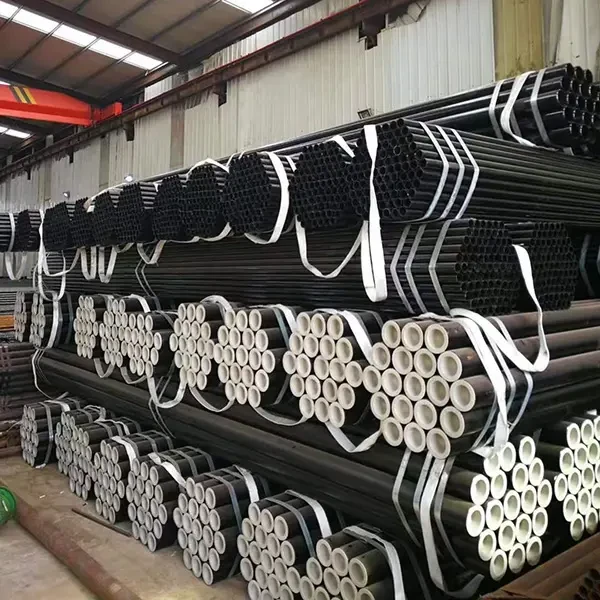
The dominant material for piles tube is carbon steel, with grades ranging from ASTM A53 Grade B to higher strength alloys like API 5L X52 and X65, selected based on the anticipated load and soil conditions. Steel’s yield strength, tensile strength, and elongation are critical properties. Seamless piles are produced through piercing and rolling solid billets, resulting in a homogenous structure with superior strength and resistance to buckling. Welded piles, manufactured by rolling and longitudinally welding steel plates, offer a cost-effective alternative. Spiral welded piles utilize a continuous strip of steel formed into a helical shape and welded along the seam. Critical parameters during manufacturing include weld quality (evaluated via ultrasonic testing and radiographic inspection), dimensional accuracy (diameter, wall thickness, straightness), and surface finish (removal of mill scale and imperfections). Chemical composition is tightly controlled to ensure weldability and prevent hydrogen-induced cracking. Corrosion protection is often achieved through external coatings such as epoxy, polyurethane, or polyethylene, alongside sacrificial anodes for submerged applications. The steel's microstructure is crucial; a fine-grained ferrite-pearlite structure offers a balance of strength and ductility, while minimizing the presence of inclusions and voids is essential for fatigue resistance. Hydrogen embrittlement, induced during the pickling process (acid cleaning), is a major concern and requires stringent control of acid concentration and temperature, along with post-treatment baking to diffuse hydrogen.
Performance & Engineering
The performance of piles tube is fundamentally governed by soil-structure interaction. Axial load capacity is determined by end bearing (resistance at the pile tip) and skin friction (resistance along the pile shaft). Lateral load capacity relies on the pile’s bending stiffness and the surrounding soil’s resistance to lateral movement. Engineering analyses involve sophisticated modeling techniques, including Finite Element Analysis (FEA), to predict pile behavior under various loading scenarios, including static, dynamic, and seismic forces. Corrosion is a paramount performance concern, particularly in marine environments and soils with high sulfate content. Electrochemical corrosion occurs when dissimilar metals are in contact, creating a galvanic cell. Uniform corrosion reduces wall thickness over time, weakening the pile. Pitting corrosion, localized attack, can lead to rapid perforation. Compliance requirements often mandate specific corrosion protection measures, such as minimum coating thicknesses and anode placement density. Buckling is another critical failure mode, particularly for long, slender piles installed in soft soils. Accurate assessment of the pile’s Euler buckling load is essential. Pile driving analysis (PDA) uses strain gauges and accelerometers to monitor pile stress and deformation during installation, ensuring the pile reaches the required penetration depth and load-carrying capacity. Group pile effects, where the presence of multiple piles influences the soil stress distribution, must be considered in the design.
Technical Specifications
| Parameter | ASTM A53 Grade B | API 5L X52 | ASTM A36 | Typical Coating Thickness (Epoxy) |
|---|---|---|---|---|
| Yield Strength (MPa) | 250 | 345 | 250 | N/A |
| Tensile Strength (MPa) | 370 | 485 | 400 | N/A |
| Wall Thickness (mm) | 6-25 | 6-25 | 6-25 | N/A |
| Outer Diameter (mm) | 114-1219 | 114-1219 | 114-1219 | N/A |
| Elongation (%) | 23 | 21 | 20 | N/A |
| Corrosion Rate (mm/year) - Uncoated (Marine) | 0.1-0.5 | 0.05-0.3 | 0.1-0.5 | 0.01 (with coating) |
Failure Mode & Maintenance
Failure modes in piles tube are diverse. Corrosion-induced section loss remains the most prevalent, leading to reduced load-carrying capacity and potential buckling. Fatigue cracking can occur under cyclic loading, particularly in areas of stress concentration (e.g., welds, corrosion pits). Scour around the pile, caused by water flow, can undermine the foundation and lead to instability. Buckling, as previously mentioned, is critical in soft soil conditions. Concrete cracking around the pile head can allow water ingress, accelerating corrosion of the steel pile. Sustained high loads can lead to creep deformation, gradually reducing the pile’s effectiveness. Maintenance strategies include regular visual inspections for corrosion and damage, cathodic protection systems (sacrificial anodes or impressed current), and periodic non-destructive testing (NDT) such as ultrasonic thickness gauging and magnetic particle inspection. Concrete repairs around the pile head are crucial to prevent water ingress. In severe cases, pile replacement or strengthening may be necessary. Implementing a comprehensive corrosion monitoring program, utilizing sensors to measure corrosion rates and environmental parameters, is essential for proactive maintenance and extending the service life of the pile foundation. Failure analysis should include metallurgical examination of fractured surfaces to determine the root cause of failure.
Industry FAQ
Q: What is the primary difference between seamless and welded piles tube, and how does it affect cost and performance?
A: Seamless piles offer superior strength and a more homogenous structure due to the absence of a weld seam, resulting in higher resistance to buckling and fatigue. However, seamless manufacturing is more complex and expensive. Welded piles provide a cost-effective alternative, but require rigorous quality control of the weld to ensure its integrity. Proper weld inspection (ultrasonic, radiographic) is crucial to mitigate the risk of weld-related failures.
Q: How is corrosion protection specified for piles tube in offshore applications?
A: Offshore applications demand aggressive corrosion protection. Typically, this involves multi-layered epoxy or polyurethane coatings, often exceeding 500 microns in thickness, coupled with sacrificial anodes (zinc or aluminum alloys) strategically positioned along the pile length. Cathodic protection monitoring is critical to ensure adequate anode performance. The specification will detail coating application procedures, holiday detection requirements, and anode density calculations based on the water salinity and expected corrosion rates.
Q: What are the key considerations when selecting a steel grade for piles tube?
A: Steel grade selection depends on the anticipated loads, soil conditions, and corrosion environment. Higher strength steels (e.g., API 5L X52, X65) allow for thinner pile walls, reducing material costs, but require careful consideration of weldability and susceptibility to brittle fracture. Soil corrosivity dictates the need for more corrosion-resistant alloys or enhanced protection systems.
Q: How are pile driving stresses assessed during installation, and what are the potential consequences of overdriving or underdriving?
A: Pile Driving Analyzer (PDA) systems are used to measure pile stress and deformation during driving. Strain gauges and accelerometers provide data for calculating the pile’s dynamic resistance. Overdriving can lead to soil densification around the pile tip, potentially increasing bearing capacity, but can also cause damage to the pile. Underdriving results in insufficient penetration and reduced load-carrying capacity, requiring remedial measures.
Q: What non-destructive testing (NDT) methods are commonly employed to assess the integrity of in-service piles tube?
A: Common NDT methods include Ultrasonic Thickness Gauging (UTG) to measure wall thickness and detect corrosion; Magnetic Particle Inspection (MPI) to detect surface and near-surface cracks; and Radiographic Testing (RT) to inspect welds for internal defects. Eddy current testing can also be used to assess corrosion and material variations. Periodic NDT is crucial for monitoring the structural health of the piles and identifying potential problems before they escalate.
Conclusion
Piles tube represent a critical, yet often unseen, component of modern infrastructure. Selecting the appropriate material, manufacturing process, and corrosion protection strategy is paramount to ensuring long-term performance and minimizing lifecycle costs. Understanding the interplay between soil-structure interaction, loading conditions, and potential failure modes is crucial for engineers and procurement professionals. The consistent application of stringent quality control measures throughout the manufacturing and installation process is non-negotiable.
Future advancements will likely focus on the development of more corrosion-resistant alloys, improved coating technologies, and enhanced monitoring systems. Predictive maintenance, leveraging data analytics and machine learning, will become increasingly important for optimizing the performance and extending the service life of pile foundations. A holistic approach, considering the entire lifecycle of the pile – from design and manufacturing to installation, operation, and maintenance – is essential for delivering sustainable and resilient infrastructure.