

Introduction
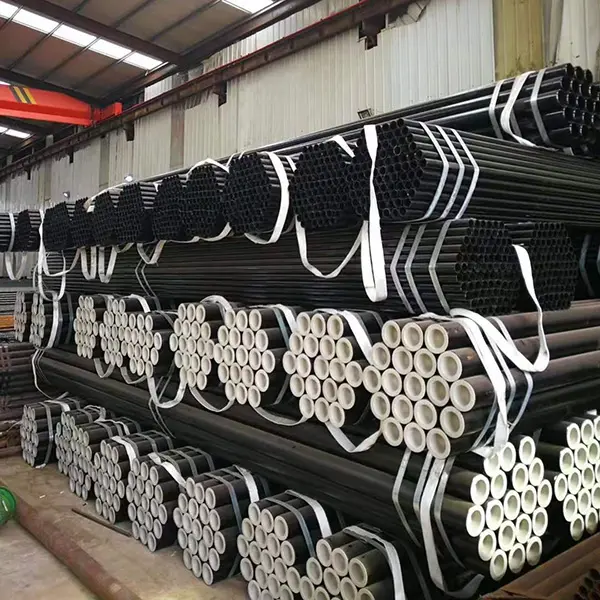
Piling pipe, also known as foundation pipe or large-diameter steel pipe, represents a critical component in deep foundation systems used extensively in civil engineering and construction. Positioned within the industry chain between steel manufacturing and on-site construction, piling pipe serves as a primary load-bearing element transferring structural loads from above ground to stable soil strata below. Core performance characteristics center on its capacity to resist axial loads (compression and tension), lateral loads, and bending moments, all while maintaining structural integrity over its design life. The selection of appropriate piling pipe is predicated on a thorough understanding of soil conditions, anticipated loads, and environmental factors. Incorrect specification can lead to foundation settlement, structural instability, and costly remediation efforts. This guide will comprehensively explore the material science, manufacturing processes, performance characteristics, failure modes, and maintenance considerations surrounding piling pipe, adhering to recognized industry standards.
Material Science & Manufacturing
Piling pipe is predominantly manufactured from carbon steel, with specific grades determined by the required strength and weldability. Common steel grades include ASTM A53 Grade B, API 5L X42, X52, and X60. The chemical composition is critical; carbon content influences weldability and hardness, manganese enhances strength, silicon improves deoxidation, and trace elements like phosphorus and sulfur must be carefully controlled to avoid embrittlement. Manufacturing typically involves either seamless or welded construction. Seamless pipe is produced via the Mannesmann process or similar techniques, creating a hollow billet through piercing and rolling. Welded pipe, conversely, is formed by rolling steel plates into a cylindrical shape and then welding the seam. Several welding methods are employed, including Submerged Arc Welding (SAW), Electric Resistance Welding (ERW), and High-Frequency Induction Welding (HFIW). SAW is frequently preferred for thicker-walled piling pipe due to its high deposition rate and penetration. Key parameter control during manufacturing includes precise temperature regulation during rolling and welding, stringent quality control of weld seams (through Non-Destructive Testing – NDT – methods like radiography, ultrasonic testing, and magnetic particle inspection), and accurate dimensional control to ensure proper fit-up during installation. Surface preparation, including cleaning and coating, is also vital for corrosion protection. The choice between seamless and welded pipe depends on factors such as pipe diameter, wall thickness, load requirements, and cost considerations.
Performance & Engineering
The performance of piling pipe is fundamentally governed by its structural capacity to resist applied loads. Axial load capacity is determined by considering the pipe's cross-sectional area, yield strength, and buckling resistance. Buckling is a critical concern, particularly for slender piles subjected to compressive loads, and is analyzed using Euler's buckling formula and more sophisticated finite element methods. Lateral load resistance is assessed through soil-structure interaction analysis, considering the soil's shear strength, stiffness, and the pile's embedment depth. P-y curves, representing the relationship between soil displacement and resistance, are commonly used in this analysis. Environmental resistance is paramount. Corrosion, both general and localized (pitting, crevice corrosion), is a major degradation mechanism, particularly in marine or aggressive soil environments. Protective coatings (epoxy, polyethylene, zinc-rich primers) and cathodic protection systems are employed to mitigate corrosion. Furthermore, piling pipe must withstand cyclic loading from traffic, wave action, or seismic events. Fatigue analysis, based on S-N curves (stress vs. number of cycles to failure), is used to assess the long-term durability under these conditions. Compliance requirements, outlined in building codes and industry standards, dictate minimum material properties, welding procedures, and installation practices. Geotechnical investigations are crucial to determine soil parameters (shear strength, density, water table) and inform the engineering design.
Technical Specifications
| Parameter | ASTM A53 Grade B | API 5L X52 | API 5L X60 | Unit |
|---|---|---|---|---|
| Yield Strength (Minimum) | 36,000 | 52,000 | 60,000 | psi |
| Tensile Strength (Minimum) | 58,000 | 65,000 | 70,000 | psi |
| Elongation (Minimum) | 22 | 20 | 18 | % |
| Wall Thickness | 0.154 – 0.500 | 0.250 – 1.000 | 0.250 – 1.250 | inches |
| Outside Diameter | 4.500 – 24.000 | 4.500 – 56.000 | 4.500 – 56.000 | inches |
| Corrosion Allowance | 0.0625 - 0.125 | 0.0625 - 0.125 | 0.0625 - 0.125 | inches |
Failure Mode & Maintenance
Piling pipe is susceptible to several failure modes. Corrosion, as previously discussed, is a prevalent cause of degradation, leading to wall thinning and reduced load-carrying capacity. Fatigue cracking can occur under cyclic loading, initiating at stress concentrations such as weld seams or geometric discontinuities. Buckling, particularly in long, slender piles, is a catastrophic failure mode resulting from instability under compressive loads. Soil-structure interaction failures can occur if soil conditions are not accurately assessed or if the pile foundation is not designed to withstand anticipated lateral loads. Weld defects (porosity, slag inclusions, incomplete fusion) can compromise the integrity of welded piling pipe. Maintenance strategies are crucial to prolong service life. Regular inspections, including visual examinations, ultrasonic testing, and cathodic protection monitoring, are essential. Protective coatings should be periodically inspected and repaired to maintain corrosion protection. In situations where corrosion is severe, sacrificial anodes or impressed current cathodic protection systems may be necessary. For piles subjected to high levels of cyclic loading, fatigue monitoring and crack detection programs can help identify potential problems before they lead to failure. Prompt repair of any identified defects is vital to prevent further degradation.
Industry FAQ
Q: What is the primary difference between seamless and welded piling pipe, and when would you choose one over the other?
A: Seamless pipe is manufactured without a weld seam, offering potentially higher strength and improved resistance to corrosion fatigue. Welded pipe is generally more cost-effective. Seamless pipe is typically preferred for critical applications requiring high strength and reliability, such as deepwater offshore piling or projects with demanding seismic requirements. Welded pipe is suitable for many onshore applications where cost considerations are paramount, provided that the weld seams are thoroughly inspected and meet applicable quality standards.
Q: How does soil type affect the selection of piling pipe diameter and wall thickness?
A: Soil type directly influences the required pile capacity and resistance to lateral loads. Weak, cohesive soils (clay, silt) require larger diameter piles or increased embedment depth to achieve adequate bearing capacity. Granular soils (sand, gravel) offer higher frictional resistance but may be susceptible to erosion. The presence of groundwater and aggressive chemicals in the soil also dictates the need for corrosion-resistant materials and protective coatings. Geotechnical investigations are crucial to determine soil parameters and inform the pile design.
Q: What are the key Non-Destructive Testing (NDT) methods used to ensure the quality of welded piling pipe?
A: Common NDT methods include Radiographic Testing (RT) – using X-rays to detect internal weld defects; Ultrasonic Testing (UT) – utilizing sound waves to identify flaws; Magnetic Particle Inspection (MPI) – detecting surface and near-surface defects in ferromagnetic materials; and Liquid Penetrant Testing (PT) – identifying surface cracks and discontinuities. Each method has its strengths and limitations, and a combination of techniques is often employed to ensure comprehensive quality control.
Q: What is cathodic protection, and how does it prevent corrosion in piling pipe?
A: Cathodic protection is a technique used to reduce the corrosion rate of metallic structures. It works by making the metal surface the cathode of an electrochemical cell, thereby inhibiting the oxidation (corrosion) reaction. There are two main types: sacrificial anode cathodic protection (SACP), where a more reactive metal (e.g., zinc, aluminum) is connected to the piling pipe and corrodes instead of the pipe; and impressed current cathodic protection (ICCP), where an external power source is used to supply a protective current.
Q: What is the importance of proper installation techniques when using piling pipe?
A: Proper installation is critical to ensure that the piling pipe achieves its design capacity and performs as intended. Incorrect driving techniques can damage the pipe, distort its geometry, or compromise the integrity of the pile-soil interface. Precise alignment and verticality are essential to prevent eccentric loading and buckling. Adequate soil compaction around the pile shaft is necessary to maximize frictional resistance. Following established installation procedures and employing qualified personnel are paramount.
Conclusion
Piling pipe represents a foundational element in numerous construction projects, demanding a comprehensive understanding of its material properties, manufacturing processes, and engineering principles. The selection of appropriate steel grades, weld procedures, and protective coatings is vital to ensure long-term durability and structural integrity. Rigorous quality control, coupled with proper installation and maintenance practices, is essential to mitigate potential failure modes such as corrosion, fatigue, and buckling.
As infrastructure demands increase and environmental challenges intensify, the development of advanced piling pipe materials and corrosion protection technologies will be crucial. Further research into soil-structure interaction, fatigue behavior, and innovative inspection techniques will contribute to improved foundation designs and enhanced structural reliability. Continued adherence to internationally recognized standards and best practices will remain paramount in ensuring the safety and longevity of piling pipe installations.
