

Introduction
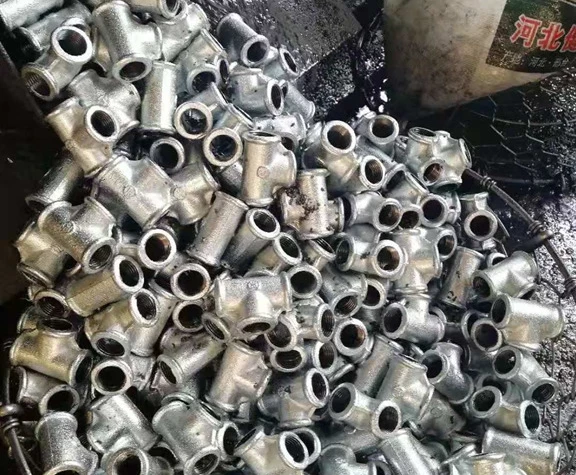
Pipe fittings are essential components in piping systems, facilitating the direction, control, and connection of fluid flow. They are categorized based on their function—reducing, expanding, branching, or simply connecting pipe sections. The industry chain positions pipe fittings downstream of raw material production (steel, ductile iron, plastics, copper) and upstream of final system integration within sectors like oil & gas, chemical processing, water treatment, power generation, and HVAC. Core performance characteristics encompass pressure rating, material compatibility with the conveyed fluid, dimensional accuracy to ensure leak-proof joints, and resistance to corrosion and erosion. The selection of appropriate pipe fittings is critical, as improper choices can lead to system failures, costly downtime, and safety hazards. A key pain point for procurement managers is balancing initial cost with long-term operational reliability, particularly concerning material selection in aggressive environments. Another challenge lies in ensuring compliance with often-complex industry standards and certifications.
Material Science & Manufacturing
The material selection for pipe fittings dictates their performance envelope. Carbon steel (ASTM A53, A105) is widely used due to its strength and cost-effectiveness, but is susceptible to corrosion. Stainless steels (304, 316 – ASTM A182) offer superior corrosion resistance, critical in chemical processing and pharmaceutical applications. Ductile iron (ASTM A509) provides high tensile strength and ductility, often used for larger diameter pipes and underground applications. Plastics like PVC (ASTM D1785), CPVC, and Polypropylene (PP) are favored for their lightweight nature, corrosion resistance, and lower cost, especially in lower-pressure systems. Copper (ASTM B88) is employed in plumbing and HVAC due to its excellent thermal conductivity and corrosion resistance.
Manufacturing processes vary by material and fitting type. Forging is common for high-pressure fittings, shaping metal under compressive forces at elevated temperatures to achieve high strength and density. Casting (sand casting, investment casting) is utilized for complex geometries and larger fittings. Seamless pipe fittings are produced via extrusion and subsequent drawing, minimizing weld seams and enhancing pressure containment. Welded fittings are formed by joining pre-formed components through welding processes like Gas Metal Arc Welding (GMAW) or Submerged Arc Welding (SAW). Critical parameters during welding include heat input, shielding gas composition, and cooling rates to prevent weld defects like porosity and cracking. Plastic fittings are typically manufactured through injection molding, where molten plastic is injected into a mold cavity under high pressure. Precise mold design and temperature control are crucial for dimensional accuracy and material properties. Quality control involves hydrostatic testing to verify pressure integrity and non-destructive testing (NDT) methods like radiographic testing and ultrasonic testing to detect internal flaws.
Performance & Engineering
The performance of pipe fittings is governed by several engineering principles. Stress analysis, utilizing Finite Element Analysis (FEA) software, is critical for determining the structural integrity of fittings under internal pressure, external loads, and thermal stresses. The von Mises stress criterion is commonly employed to assess yielding and failure potential. Fatigue analysis is essential for fittings subjected to cyclic loading, predicting their lifespan based on stress amplitude and number of cycles. Corrosion mechanisms – pitting, crevice corrosion, and galvanic corrosion – must be considered when selecting materials for specific fluid environments. The NACE MR0175/ISO 15156 standard provides guidance on material selection for sour service applications (containing hydrogen sulfide).
Environmental resistance is paramount. Temperature extremes can induce thermal expansion and contraction, leading to stress on joints. UV exposure degrades certain plastics, reducing their mechanical properties. Abrasion from suspended solids in the fluid stream causes erosion. Compliance requirements vary by industry and region. ASME B31.3 covers power piping, while ASME B31.1 applies to gas transmission and distribution. API 5L specifies requirements for line pipe, including fittings. The selection of appropriate gasket materials and bolting materials is also crucial for ensuring leak-free connections. Threaded connections require proper sealant application and torque control to achieve optimal sealing performance. Flanged connections necessitate accurate bolt tightening sequences and gasket compression to prevent leakage.
Technical Specifications
| Fitting Type | Material | Pressure Rating (PSI) | Temperature Range (°C) |
|---|---|---|---|
| 90° Elbow | Carbon Steel (A53 Gr. B) | 7200 | -30 to 370 |
| 45° Elbow | Stainless Steel (316/316L) | 6000 | -196 to 427 |
| Tee (Straight) | Ductile Iron (65-45-12) | 3500 | -40 to 120 |
| Reducer (Concentric) | PVC (Schedule 80) | 400 | -10 to 60 |
| Union | Copper (C12200) | 300 | -50 to 150 |
| Cap | Polypropylene (PP) | 150 | -20 to 80 |
Failure Mode & Maintenance
Pipe fitting failures commonly stem from several mechanisms. Corrosion, as previously discussed, weakens the material, leading to pitting, cracking, and eventual failure. Fatigue cracking occurs under cyclic loading, initiating at stress concentrators like weld defects or geometric discontinuities. Erosion, particularly with abrasive fluids, thins the fitting wall, reducing its pressure capacity. Creep, at elevated temperatures, causes slow deformation and eventual rupture. Threaded connections can fail due to stripping of threads, loosening from vibration, or corrosion of the threads. Welded joints are susceptible to weld defects (porosity, inclusions, cracking) and corrosion at the weld metal-base metal interface. Delamination can occur in composite fittings, where layers separate due to inadequate bonding or environmental exposure. Oxidation affects metallic fittings at high temperatures, forming scale that reduces the effective wall thickness.
Preventive maintenance is crucial. Regular visual inspections for corrosion, erosion, and cracks are essential. Hydrostatic testing should be performed periodically to verify pressure integrity. Nondestructive testing (NDT) methods, like ultrasonic testing and radiography, can detect internal flaws without disassembling the system. Torque checks on bolted connections ensure proper gasket compression. Lubrication of threaded connections prevents galling and facilitates disassembly. Cathodic protection is used to mitigate corrosion in underground pipelines. Replacement of fittings showing signs of significant degradation is necessary to prevent catastrophic failures. Proper material selection and adherence to industry standards are the most effective long-term maintenance strategies.
Industry FAQ
Q: What is the primary difference between forged and cast steel fittings in terms of mechanical properties and application?
A: Forged steel fittings generally exhibit superior mechanical properties – higher tensile strength, yield strength, and impact toughness – compared to cast steel fittings. This is due to the grain structure refinement achieved during the forging process. Forged fittings are preferred for high-pressure, high-temperature applications where structural integrity is critical, such as in power plants or oil refineries. Cast steel fittings are more economical for less demanding applications and complex geometries that are difficult to forge.
Q: How does the chemical composition of a stainless steel fitting influence its corrosion resistance in a specific process fluid?
A: The chemical composition, particularly the chromium, nickel, and molybdenum content, dictates the corrosion resistance of stainless steel. Higher chromium content enhances resistance to general corrosion. Nickel improves ductility and resistance to reducing acids. Molybdenum significantly increases resistance to pitting and crevice corrosion, especially in chloride-containing environments. The specific process fluid’s chemical nature (pH, chloride concentration, oxidizing agents) must be considered when selecting the appropriate stainless steel grade.
Q: What are the critical considerations when selecting gasket materials for flanged pipe fittings?
A: Key considerations include the fluid being conveyed, operating temperature, pressure, and flange material. The gasket material must be chemically compatible with the fluid to prevent degradation. Temperature limits dictate the gasket's ability to maintain sealing properties. Pressure dictates the gasket's required compressive strength. Compatibility between the gasket and flange material prevents galvanic corrosion. Common gasket materials include non-asbestos fiber, PTFE, and metallic gaskets.
Q: What is the significance of hydrostatic testing, and what acceptance criteria are typically used?
A: Hydrostatic testing is a crucial non-destructive testing method used to verify the pressure integrity of pipe fittings and piping systems. The system is filled with a test fluid (typically water) and pressurized to a level exceeding the normal operating pressure. The acceptance criteria typically involve holding the test pressure for a specified duration (e.g., 30 minutes) with no visible leaks or pressure drop exceeding a defined threshold. This ensures the system can safely withstand anticipated operating conditions.
Q: What impact does improper installation torque have on the performance and longevity of threaded pipe fittings?
A: Improper installation torque – either under-tightening or over-tightening – significantly impacts performance and longevity. Under-tightening can lead to leaks and eventual failure. Over-tightening can strip threads, damage the fitting, and induce stress corrosion cracking. Proper torque values, specified by the fitting manufacturer, must be used with a calibrated torque wrench. Consistent application of torque across all threaded connections is essential for uniform sealing pressure.
Conclusion
Pipe fittings represent a critical, often underestimated, component in fluid handling systems. Their selection and implementation necessitate a comprehensive understanding of material science, manufacturing processes, engineering principles, and relevant industry standards. Optimizing fitting performance requires a nuanced approach, considering not only initial cost but also long-term operational reliability, safety, and regulatory compliance. Proper material selection, adherence to installation best practices, and diligent maintenance protocols are paramount to preventing failures and ensuring system integrity.
Future trends in pipe fitting technology are driven by the demand for improved performance in harsh environments, reduced weight, and enhanced sustainability. The adoption of advanced materials like duplex stainless steels and nickel alloys is increasing, along with the development of innovative joining techniques such as orbital welding. Digitalization, through the integration of sensors and data analytics, is enabling predictive maintenance and improved asset management. Continued research and development in pipe fitting technology will be essential to meeting the evolving needs of various industries.
