
Introduction
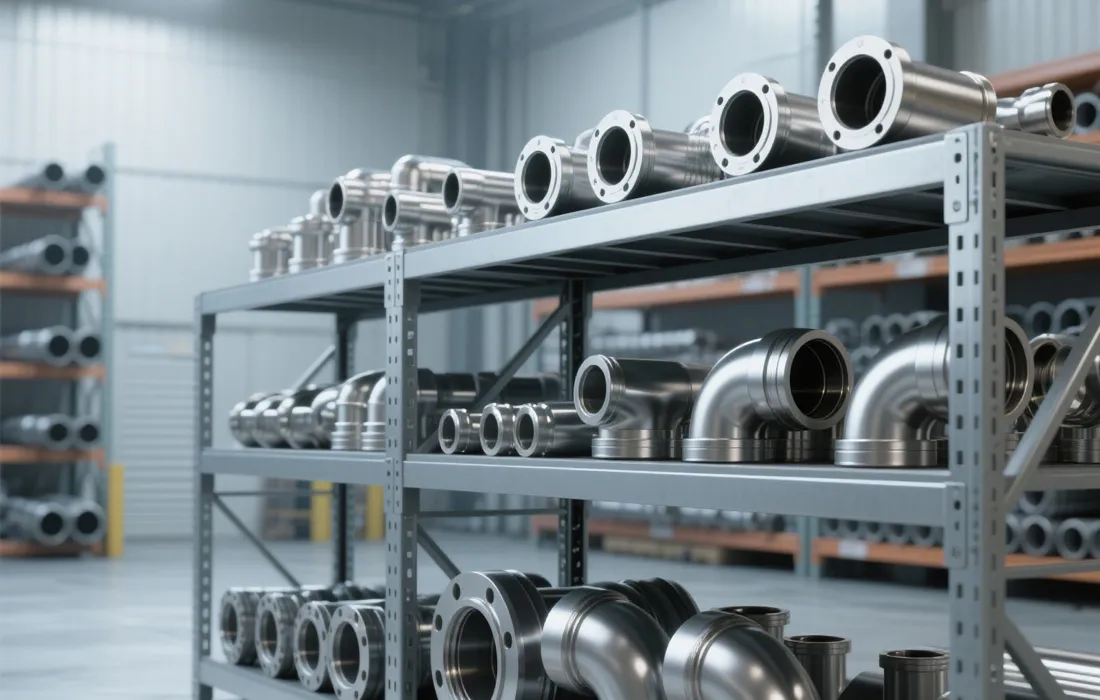
Stainless steel pipe is a ubiquitous component across numerous industrial sectors, including chemical processing, oil & gas, food & beverage, pharmaceutical, and power generation. Its selection is predicated on its exceptional corrosion resistance, hygienic properties, and mechanical strength. Positioned within the materials supply chain, stainless steel pipe represents a crucial intermediary product between steel mills and end-use applications requiring fluid or gas transport. Core performance characteristics revolve around pressure containment, flow rate capacity, resistance to specific corrosive media (acids, chlorides, bases), and adherence to stringent industry codes and standards. The choice of stainless steel grade (e.g., 304/304L, 316/316L) directly influences these performance parameters, demanding careful consideration of the intended service environment and operational conditions. A primary industry pain point is balancing upfront material cost with long-term life cycle cost, considering maintenance, replacement, and potential downtime associated with corrosion-related failures.
Material Science & Manufacturing
The fundamental material science of stainless steel pipe centers on the addition of chromium (Cr) to iron (Fe), creating a passive chromium oxide (Cr2O3) layer on the surface that resists corrosion. Austenitic stainless steels (e.g., 304, 316) contain significant amounts of nickel (Ni), enhancing ductility, weldability, and corrosion resistance. Ferritic and martensitic grades offer different property profiles, optimized for specific applications. The primary raw materials include iron ore, chromium ore, nickel ore, molybdenum ore (for 316 grades), and alloying elements like manganese and silicon. Manufacturing processes for stainless steel pipe typically involve Electric Resistance Welding (ERW), seam welding, and seamless extrusion. ERW involves forming steel strips into a cylindrical shape and welding the seam using high-frequency electrical resistance. Seam welding utilizes a similar forming process but employs conventional arc welding techniques. Seamless pipe is produced by piercing a solid billet of stainless steel and subsequently drawing it through dies to achieve the desired diameter and wall thickness. Critical parameters in these processes include weld bead geometry (ERW/Seam), temperature control during forming, reduction ratio during drawing (seamless), and annealing temperature to relieve residual stresses and restore ductility. Chemical composition control is paramount, monitored via spectroscopic analysis throughout the manufacturing process. The microstructure is heavily influenced by heat treatment; improper annealing can lead to sensitization (carbide precipitation at grain boundaries) reducing corrosion resistance, particularly in weld heat-affected zones.
Performance & Engineering
Performance evaluation of stainless steel pipe necessitates a comprehensive understanding of mechanical and chemical properties. Force analysis, particularly pressure containment calculations, relies on the pipe's yield strength, tensile strength, and hoop stress calculations based on the Barlow's formula (S = PD/2t, where S=hoop stress, P=internal pressure, D=diameter, t=wall thickness). Environmental resistance is assessed through corrosion testing, including salt spray tests (ASTM B117), immersion tests in specific corrosive media, and electrochemical potentiodynamic polarization. Compliance with industry standards (ASME B31.3 for process piping, API 5L for line pipe) dictates design factors, allowable stresses, and inspection requirements. Functional implementation details vary based on the application. In hygienic applications (food/pharma), surface finish (Ra values) is critical to minimize bacterial adhesion. In high-temperature applications (power generation), creep resistance and oxidation resistance become primary concerns, necessitating the use of stabilized grades (e.g., 316Ti). Fatigue analysis is crucial for applications subject to cyclic loading (e.g., offshore pipelines) to prevent crack initiation and propagation. Understanding the coefficient of thermal expansion is also important to manage thermal stresses during operation. The potential for galvanic corrosion must also be considered when joining stainless steel pipe with dissimilar metals; proper dielectric isolation or the use of compatible materials is required.
Technical Specifications
| Grade | Yield Strength (MPa) | Tensile Strength (MPa) | Corrosion Resistance (Salt Spray Hours - ASTM B117) |
|---|---|---|---|
| 304/304L | 205 | 517 | 168 |
| 316/316L | 210 | 550 | 336 |
| 309S | 190 | 500 | 240 |
| 310S | 180 | 485 | 200 |
| Duplex 2205 | 450 | 700 | 876 |
| Super Duplex 2507 | 550 | 860 | 1000+ |
Failure Mode & Maintenance
Stainless steel pipe, despite its inherent corrosion resistance, is susceptible to various failure modes. Pitting corrosion, induced by chloride ions, initiates small, localized holes. Crevice corrosion occurs in shielded areas, such as under gaskets or where dissimilar metals contact. Stress corrosion cracking (SCC) results from the combined action of tensile stress and a corrosive environment, particularly in chloride-containing solutions. Intergranular corrosion arises from sensitization, leading to weakening along grain boundaries. Erosion corrosion occurs due to the abrasive action of fluids containing solid particles. Fatigue cracking can initiate from pre-existing flaws or surface imperfections under cyclic loading. Maintenance strategies include regular visual inspections for signs of corrosion, non-destructive testing (NDT) methods like ultrasonic testing (UT) and radiographic testing (RT) to detect internal flaws, and implementation of cathodic protection systems in aggressive environments. Periodic hydrostatic testing verifies the structural integrity of the pipe. Proper passivation treatment after welding or mechanical damage restores the protective chromium oxide layer. Internal cleaning and removal of debris prevent erosion corrosion and maintain flow rates. Selection of appropriate welding consumables and adherence to qualified welding procedures are critical to avoid weld defects and sensitization. Regular monitoring of water chemistry in closed-loop systems (e.g., cooling water) prevents scaling and corrosion.
Industry FAQ
Q: What is the difference between 304L and 304 stainless steel pipe, and when should I choose the ‘L’ grade?
A: The “L” designation in 304L indicates low carbon content. Lower carbon reduces the formation of chromium carbides during welding, minimizing the risk of sensitization and intergranular corrosion in the heat-affected zone. 304L is preferred for applications requiring extensive welding, especially in corrosive environments where weld integrity is paramount.
Q: Can stainless steel pipe be used for potable water systems, and are there specific grades required?
A: Yes, stainless steel is an excellent material for potable water systems due to its hygienic properties and resistance to corrosion. Grades 304 and 316 are commonly used. However, NSF/ANSI 61 certification is essential to ensure the material meets stringent standards for lead content and potential leaching of harmful substances into the water.
Q: What causes pitting corrosion in stainless steel pipe, and how can it be prevented?
A: Pitting corrosion is initiated by localized defects in the passive layer, often caused by chloride ions. Prevention involves selecting a higher-grade stainless steel with increased corrosion resistance (e.g., 316 instead of 304), avoiding crevices where chlorides can concentrate, and maintaining a properly passivated surface. The use of molybdenum-containing grades significantly improves pitting resistance.
Q: What is the impact of welding on the corrosion resistance of stainless steel pipe?
A: Improper welding can significantly reduce corrosion resistance due to sensitization (carbide precipitation) and the formation of weld defects. Using low-carbon grades (304L, 316L), controlling heat input, and employing post-weld heat treatment (PWHT) can mitigate these effects. Qualified welding procedures and appropriate filler metals are crucial.
Q: How does temperature affect the mechanical properties and corrosion resistance of stainless steel pipe?
A: Elevated temperatures generally reduce the yield and tensile strength of stainless steel. Furthermore, the corrosion resistance can be affected by changes in the passive layer stability and increased oxidation rates. At high temperatures, creep deformation becomes a concern. The selection of an appropriate grade, such as stabilized grades (316Ti) or high-temperature alloys, is critical for high-temperature applications.
Conclusion
Stainless steel pipe remains a cornerstone material in numerous industries owing to its robust corrosion resistance, mechanical integrity, and versatility. The selection of an appropriate grade, manufacturing process, and maintenance strategy are critical for ensuring long-term reliability and minimizing life cycle costs. Understanding the nuances of material science, potential failure modes, and industry standards is paramount for engineers and procurement professionals alike.
Future trends will likely focus on the development of advanced stainless steel alloys with enhanced corrosion resistance in specific environments, improved manufacturing techniques for seamless pipe with tighter tolerances, and the implementation of predictive maintenance technologies leveraging sensor data and machine learning algorithms to detect corrosion before catastrophic failure occurs. Continued research into novel surface treatments and coatings will also play a vital role in extending the service life of stainless steel pipe systems.
