
Introduction
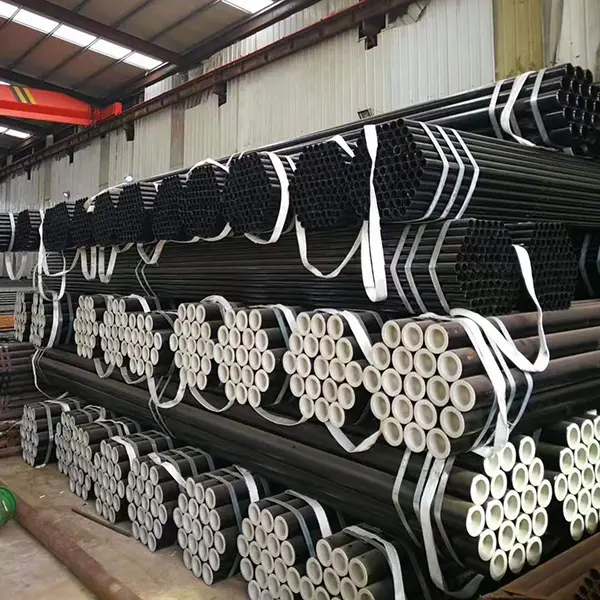
Pipes and fittings are fundamental components in fluid conveyance systems across diverse industries including oil and gas, petrochemical, water treatment, power generation, and infrastructure. Their primary function is to safely and efficiently transport liquids, gases, and slurries. This technical guide provides an in-depth analysis of their material science, manufacturing processes, performance characteristics, failure modes, and relevant industry standards. The selection of appropriate pipe and fitting materials and configurations is critical for system integrity, operational longevity, and safety. A significant industry pain point revolves around corrosion, erosion, and material degradation leading to costly downtime and environmental hazards. This guide will address these challenges through a detailed examination of material selection, protective coatings, and inspection methodologies. Furthermore, compliance with stringent international standards and regulatory requirements is paramount, and this document will outline key specifications and testing procedures.
Material Science & Manufacturing
The materials used in pipe and fitting manufacture dictate their performance characteristics and suitability for specific applications. Common materials include carbon steel (ASTM A53, A106), stainless steel (304, 316 – ASTM A312), alloy steels (ASTM A335), ductile iron (ASTM A576), and various polymers (PVC, CPVC, HDPE, PP). Carbon steel offers high strength and affordability, but is susceptible to corrosion. Stainless steels provide superior corrosion resistance due to their chromium content, with 316 adding molybdenum for enhanced resistance to chloride pitting. Alloy steels offer tailored properties for high-temperature and high-pressure services. Polymers are lightweight and corrosion resistant, but have lower temperature and pressure ratings.
Manufacturing processes vary depending on the material and product type. Seamless pipes are produced through processes like electric resistance welding (ERW), longitudinal seam welding (LSW), and extrusion. Welding introduces residual stresses and potential for corrosion at the weld seam, necessitating rigorous quality control including non-destructive testing (NDT) such as radiography and ultrasonic testing. Fittings are typically manufactured through forging, casting, machining, or injection molding (for polymers). Forging offers high strength and grain refinement, while casting is cost-effective for complex geometries. Machining provides precise dimensions and surface finishes. Polymer fittings are produced via injection molding, where precise temperature and pressure control are essential to prevent defects like warping and sink marks. Key parameter control during manufacturing includes precise dimensional tolerances, material composition verification, heat treatment (for metals), and surface finish inspection.
Performance & Engineering
The performance of pipes and fittings is governed by several engineering principles. Pressure containment is a primary concern, dictated by the pipe's wall thickness, material strength, and diameter. Hoop stress calculations (using Barlow's formula or Lamé's equations) determine the maximum allowable operating pressure. Thermal expansion and contraction must be accounted for to prevent stress concentrations and potential failure at joints. Support systems and expansion loops are crucial for mitigating these stresses. Fluid flow characteristics, including friction losses and turbulence, influence energy consumption and system efficiency. Darcy-Weisbach equation and Moody diagram are used to calculate pressure drop. Fittings introduce additional pressure losses due to flow disturbances. Fatigue analysis is critical for applications involving cyclic loading or vibration, assessing the potential for crack initiation and propagation. Corrosion resistance is paramount, and selection of appropriate materials or coatings is essential. Environmental resistance must also consider the effects of UV radiation, chemical exposure, and temperature extremes. Compliance requirements, such as ASME B31.3 for process piping, dictate design, fabrication, inspection, and testing procedures.
Technical Specifications
| Material | Yield Strength (MPa) | Tensile Strength (MPa) | Maximum Operating Pressure (MPa) @ 20°C |
|---|---|---|---|
| Carbon Steel (A53 Gr. B) | 250 | 450 | 10.3 |
| Stainless Steel (304/304L) | 205 | 517 | 17.2 |
| Stainless Steel (316/316L) | 205 | 586 | 17.2 |
| Ductile Iron (A576 Gr. 65-45) | 414 | 620 | 20.7 |
| PVC (Schedule 40) | 55 | 62 | 4.1 |
| HDPE (PE100) | 34.5 | 45 | 6.3 |
Failure Mode & Maintenance
Pipes and fittings are susceptible to several failure modes. Corrosion is a prevalent issue, particularly in carbon steel, manifesting as pitting, crevice corrosion, or galvanic corrosion. Erosion, caused by abrasive particles in the fluid, can wear away material at bends and restrictions. Fatigue cracking can occur under cyclic loading, initiated at stress concentrators like welds or threads. Hydrogen embrittlement can lead to brittle fracture in high-strength steels exposed to hydrogen sulfide. Delamination can occur in polymer pipes due to poor bonding or UV degradation. Thermal stress can cause buckling or rupture, especially in systems with inadequate expansion provisions. Maintenance strategies include regular visual inspections for signs of corrosion, leaks, or damage. NDT methods like ultrasonic testing and radiography can detect internal flaws. Protective coatings (epoxy, polyurethane, galvanized) can mitigate corrosion. Cathodic protection can be employed in buried pipelines. Periodic hydrostatic testing verifies the integrity of the system. Proper cleaning and filtration of fluids minimize erosion and fouling. Replacement of corroded or damaged components is essential to prevent catastrophic failures.
Industry FAQ
Q: What is the impact of weld quality on the long-term reliability of welded pipes?
A: Weld quality is paramount. Poor weld penetration, porosity, or incomplete fusion can create stress concentrators and initiation points for corrosion and fatigue cracking. Non-destructive testing (NDT), specifically radiography and ultrasonic testing, is crucial to ensure weld integrity. Post-weld heat treatment (PWHT) can relieve residual stresses and improve the ductility of the weldment. Proper weld procedures and qualified welders are essential to achieving acceptable weld quality.
Q: How does temperature affect the pressure rating of a pipe?
A: Increasing temperature generally reduces the allowable pressure rating of a pipe. Material strength decreases with temperature, and thermal expansion can introduce additional stresses. Pressure-temperature ratings are typically provided by the pipe manufacturer based on standardized testing. Derating factors are applied to account for elevated temperatures.
Q: What are the key considerations when selecting a coating for corrosion protection?
A: Coating selection depends on the service environment, the pipe material, and the type of corrosion expected. Factors to consider include adhesion, chemical resistance, abrasion resistance, UV resistance, and application method. Epoxy coatings offer excellent chemical resistance, polyurethane coatings provide good abrasion resistance, and galvanized coatings offer sacrificial protection. Proper surface preparation is critical for coating adhesion.
Q: What is the difference between Schedule 40 and Schedule 80 pipe?
A: Schedule refers to the pipe wall thickness. Schedule 80 pipe has a thicker wall than Schedule 40 pipe, resulting in a higher pressure rating. Schedule 40 is generally used for lower-pressure applications, while Schedule 80 is used for higher-pressure and more demanding services. The schedule number is a dimensionless number related to the internal diameter and wall thickness.
Q: How do you mitigate the risk of galvanic corrosion in a piping system?
A: Galvanic corrosion occurs when dissimilar metals are in contact in the presence of an electrolyte. Mitigation strategies include using compatible materials, insulating dissimilar metals, applying coatings to isolate the metals, and using sacrificial anodes. Careful material selection and proper electrical bonding are crucial to minimizing galvanic corrosion.
Conclusion
The selection and implementation of pipes and fittings require a comprehensive understanding of material science, manufacturing processes, and engineering principles. Effective corrosion mitigation, rigorous quality control during manufacturing, and adherence to international standards are essential for ensuring the long-term reliability and safety of fluid conveyance systems. The industry faces ongoing challenges related to increasingly demanding operating conditions, stricter environmental regulations, and the need for sustainable materials and practices.
Future advancements in pipe and fitting technology will likely focus on the development of novel materials with enhanced corrosion resistance and mechanical properties, the implementation of advanced NDT techniques for improved defect detection, and the adoption of smart monitoring systems for real-time assessment of system integrity. Continuous research and development are crucial for addressing these challenges and advancing the performance and sustainability of piping systems.
