
Introduction
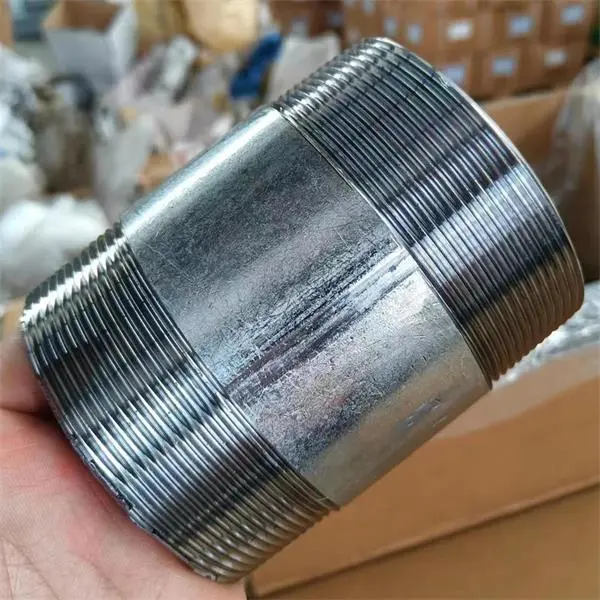
Rolled tube, a fundamental component across numerous industrial sectors, refers to hollow sections produced by forming and welding flat-rolled metal sheets or strips. Unlike seamless tube manufactured from solid billets, rolled tube construction leverages the cost-effectiveness and design flexibility of sheet metal. Its technical position within the industrial chain is primarily as a semi-finished product, undergoing further fabrication—cutting, bending, welding, and coating—to create finished parts for applications in structural support, fluid conveyance, heat exchange, and aesthetic coverings. Core performance characteristics are defined by dimensional accuracy (diameter, wall thickness, ovality), mechanical properties (yield strength, tensile strength, elongation), weld seam integrity, and corrosion resistance, factors heavily influencing its suitability for demanding engineering applications. The increasing demand for lightweight, high-strength materials is driving innovation in rolled tube manufacturing, with a focus on advanced high-strength steels (AHSS) and improved welding techniques.
Material Science & Manufacturing
The primary raw material for rolled tube production is carbon steel, specifically low-carbon mild steel (e.g., ASTM A1018) due to its formability. However, higher-strength steels (HSLA, AHSS) like ASTM A570, A572, and stainless steels (304, 316) are also commonly utilized depending on application requirements. Material properties such as yield strength (typically 250-550 MPa for mild steel), tensile strength (400-700 MPa), and elongation (%18-25) are critical. Manufacturing typically begins with slitting coils of sheet metal to the desired width. The sheet is then progressively formed into a cylindrical shape using roll forming machines. Key parameters during roll forming include roll profile design, roll spacing, and strip tension. Following forming, the longitudinal seam is joined via resistance spot welding (RSW), gas metal arc welding (GMAW), or laser welding (LW). GMAW and LW provide superior weld strength and corrosion resistance. Post-welding, the tube undergoes sizing (diameter correction) and straightening operations. Surface treatment, including pickling, oiling, and coating (galvanizing, painting), enhances corrosion resistance and aesthetics. Precise control of welding parameters – current, voltage, welding speed – is paramount to ensure a consistent, defect-free weld seam. Chemical composition control of the steel is also vital, adhering to relevant ASTM or EN standards.
Performance & Engineering
The structural performance of rolled tube is governed by its geometric properties (diameter, wall thickness) and material characteristics. Force analysis, particularly considering bending moments, torsional loads, and axial compression, is essential for engineering design. Buckling stability is a crucial consideration for thin-walled tubes under compressive loads. Environmental resistance is paramount; corrosion is a significant failure mechanism. Galvanization (ASTM A123) provides excellent protection against atmospheric corrosion, while epoxy coatings enhance resistance to chemical exposure. Compliance requirements vary by industry. For pressure applications (e.g., hydraulic systems), tubes must meet standards like ASME B31.3. For structural applications in building construction, adherence to building codes (IBC, Eurocode 3) is necessary. The weld seam is a critical area of focus; non-destructive testing (NDT) methods – ultrasonic testing (UT), radiographic testing (RT), liquid penetrant testing (PT) – are employed to verify weld integrity. Fatigue life is also a key performance metric, influenced by weld quality, surface finish, and cyclic loading conditions. Detailed finite element analysis (FEA) is routinely used to predict stress distribution and optimize tube design for specific load cases.
Technical Specifications
| Parameter | ASTM A53 Grade B (Typical) | ASTM A570 Grade 50 (Typical) | EN 10210 S235JR (Typical) | Unit |
|---|---|---|---|---|
| Outside Diameter | 0.5 - 4.0 | 0.5 - 8.0 | 10 - 610 | inches |
| Wall Thickness | 0.065 - 0.25 | 0.083 - 0.5 | 1 - 25 | inches |
| Yield Strength | 36,000 | 50,000 | 235 | psi (MPa) |
| Tensile Strength | 58,000 | 65,000 | 360 | psi (MPa) |
| Elongation (2 inch gauge) | 23 | 21 | 21 | % |
| Maximum Carbon Equivalent (CE) | 0.31 | 0.41 | 0.43 | - |
Failure Mode & Maintenance
Rolled tube is susceptible to several failure modes. Corrosion, particularly in harsh environments, leads to material degradation and eventual perforation. Weld seam failure, caused by inadequate weld penetration, porosity, or cracking, is a critical concern. Fatigue cracking can occur under cyclic loading, initiating at weld defects or stress concentrators (e.g., sharp edges). Dent formation, resulting from impact loads, compromises structural integrity. Creep, at elevated temperatures, causes gradual deformation. Preventative maintenance includes regular visual inspection for corrosion, cracks, and dents. Protective coatings should be inspected for damage and repaired promptly. For critical applications, NDT (UT, RT) should be performed periodically to assess weld integrity. Proper handling and storage are essential to prevent mechanical damage. If corrosion is detected, surface cleaning and re-coating are necessary. In cases of severe corrosion or weld failure, tube replacement is required. Addressing the root cause of failures—environmental factors, improper welding procedures, overloading—is crucial to prevent recurrence. Periodic hydrostatic testing can verify tube integrity and detect leaks.
Industry FAQ
Q: What is the primary difference between rolled tube and seamless tube in terms of cost and application?
A: Rolled tube is generally less expensive to manufacture than seamless tube, making it suitable for large-volume applications where precise dimensional tolerances are not critical. Seamless tube, with its inherent uniformity and higher strength, is preferred for high-pressure applications, critical structural components, and situations where weld seam integrity is paramount.
Q: What welding process is most commonly used for high-strength rolled tube, and why?
A: Laser welding (LW) is increasingly favored for high-strength rolled tube production due to its ability to create narrow, deep-penetration welds with minimal heat-affected zone (HAZ). This results in superior weld strength, reduced distortion, and improved corrosion resistance compared to traditional methods like GMAW or RSW.
Q: How does the carbon equivalent (CE) of the steel impact the weldability of rolled tube?
A: Higher carbon equivalent values indicate a greater tendency for weld cracking during cooling. This is because higher CE materials contain more alloying elements that promote martensite formation, a brittle microstructure. Therefore, lower CE steels are generally preferred for rolled tube applications requiring extensive welding, or preheating and post-weld heat treatment are necessary for higher CE materials.
Q: What non-destructive testing (NDT) methods are essential for ensuring the quality of welded rolled tube?
A: Ultrasonic testing (UT) is the most widely used NDT method for detecting internal weld defects such as porosity, lack of fusion, and cracking. Radiographic testing (RT) provides a visual image of the weld’s internal structure, revealing similar defects. Liquid penetrant testing (PT) is used to detect surface cracks and discontinuities.
Q: What considerations are important when specifying a coating for rolled tube intended for outdoor use in a corrosive environment?
A: Galvanizing (hot-dip galvanizing, electrogalvanizing) offers excellent corrosion protection, forming a sacrificial barrier against atmospheric elements. For more aggressive environments, epoxy coatings or polyurethane coatings can provide enhanced resistance to chemicals and abrasion. Coating thickness and application method are critical factors influencing long-term performance.
Conclusion
Rolled tube represents a versatile and cost-effective solution for a wide range of engineering applications. Its manufacturing process, rooted in forming and welding techniques, necessitates stringent control of material properties, welding parameters, and dimensional accuracy. Understanding the potential failure modes—corrosion, weld defects, fatigue—and implementing appropriate preventative maintenance strategies are crucial for ensuring long-term reliability and structural integrity. The selection of appropriate materials and coatings based on environmental conditions and application requirements is paramount.
Future advancements in rolled tube technology will likely focus on the development of more sophisticated welding processes, the utilization of advanced high-strength steels, and the implementation of real-time monitoring systems to detect defects during manufacturing. Continued research into corrosion-resistant coatings and improved NDT techniques will further enhance the performance and durability of rolled tube structures, expanding their application in increasingly demanding industrial sectors.
