
Introduction
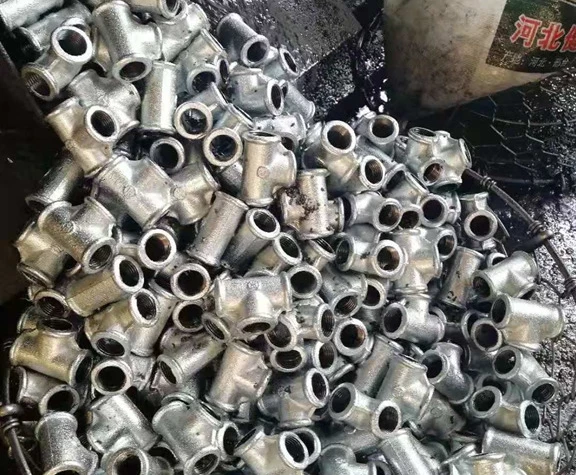
Solid steel pipe is a cylindrical hollow section manufactured from steel, characterized by its seamless or welded construction. It serves as a fundamental component across numerous industries including construction, oil and gas, automotive, and manufacturing. Its technical position within the materials supply chain is as a semi-finished product, requiring further fabrication – cutting, bending, threading, or joining – to create finished goods. Core performance characteristics include high tensile strength, pressure containment capability, durability, and corrosion resistance (depending on alloy composition and applied coatings). The selection of specific steel grades and manufacturing processes directly impacts the pipe’s suitability for diverse applications, ranging from structural support to high-pressure fluid transport. Industry pain points center around maintaining consistent material properties across large diameters and wall thicknesses, ensuring weld integrity in welded pipes, and mitigating corrosion in aggressive environments.
Material Science & Manufacturing
The primary raw material for solid steel pipe is carbon steel, though alloy steels (incorporating elements like chromium, nickel, molybdenum, and vanadium) are frequently employed to enhance specific properties. Carbon steel's physical properties are dictated by its carbon content – higher carbon content increases hardness and strength but reduces ductility and weldability. Manufacturing typically involves two main processes: seamless and welded. Seamless pipe is produced through mandrel piercing of a solid billet, followed by rolling and drawing to achieve desired dimensions and wall thickness. This process results in a homogenous structure without any weld seams. Welded pipe, conversely, is fabricated by forming a steel plate into a cylindrical shape and then welding the seam. Common welding techniques include Electric Resistance Welding (ERW), submerged arc welding (SAW), and laser welding. Key parameter control during manufacturing includes precise temperature regulation during heating and cooling cycles to manage grain size and prevent phase transformations. For alloy steels, maintaining precise compositional control is crucial, as even minor deviations can significantly affect mechanical properties. Surface finish also requires strict control, often involving pickling or shot blasting to remove scale and prepare the surface for further processing or coating application. Non-destructive testing (NDT) such as ultrasonic testing (UT) and radiographic testing (RT) are employed to verify weld integrity and detect internal flaws.
Performance & Engineering
Performance analysis of solid steel pipe centers on its ability to withstand internal and external pressures, axial loads, bending moments, and torsional stresses. Force analysis requires consideration of material yield strength, tensile strength, and elongation. The pipe's wall thickness is a critical parameter, directly influencing its pressure containment capability according to established formulas like Barlow’s formula (for circumferential stress). Environmental resistance is paramount, particularly in corrosive environments. Corrosion manifests as either uniform corrosion, pitting corrosion, or stress corrosion cracking. Galvanic corrosion can occur when steel pipe is in contact with dissimilar metals. Protective measures include applying corrosion-resistant coatings (e.g., epoxy, polyurethane, polyethylene) or utilizing corrosion-resistant alloys (e.g., stainless steel, duplex stainless steel). Compliance requirements vary significantly by industry and application. For example, oil and gas pipelines must adhere to stringent regulations outlined by API 5L, governing material specifications, welding procedures, and hydrostatic testing. Structural applications in building construction are governed by codes like AISC 360. Finite element analysis (FEA) is frequently used to model stress distributions under complex loading conditions and optimize pipe design.
Technical Specifications
| Parameter | ASTM A53 Grade B (Carbon Steel) | ASTM A36 (Carbon Steel) | ASTM A500 Grade B (Hollow Structural Steel) | 304/304L Stainless Steel |
|---|---|---|---|---|
| Yield Strength (MPa) | 250 | 250 | 250 | 205 |
| Tensile Strength (MPa) | 400-530 | 400-550 | 450 | 517-724 |
| Elongation (%) | 23 | 20 | 21 | 30 |
| Wall Thickness Range (mm) | 2.77 - 12.7 | 3.2 - 50.8 | 2.77 - 12.7 | 1.24 - 25.4 |
| Outside Diameter Range (mm) | 10.32 - 660.4 | 21.3 - 660.4 | 10.32 - 323.85 | 6.35 - 660.4 |
| Corrosion Resistance | Low (Requires Coating) | Low (Requires Coating) | Low (Requires Coating) | High |
Failure Mode & Maintenance
Common failure modes in solid steel pipe include fatigue cracking (induced by cyclic loading), pitting corrosion (localized attack by corrosive agents), general corrosion (uniform material loss), stress corrosion cracking (SCC – cracking induced by tensile stress in a corrosive environment), and weld defects (porosity, incomplete fusion, cracking). Fatigue cracking typically initiates at stress concentrators such as weld seams, dents, or scratches. Pitting corrosion is particularly problematic in chloride-containing environments. SCC is specific to certain alloy/environment combinations. Weld defects compromise the pipe’s structural integrity and can lead to catastrophic failure. Maintenance strategies include regular visual inspections to identify signs of corrosion or damage, application of protective coatings to prevent corrosion, cathodic protection (for buried pipelines), and periodic NDT (UT, RT, MT) to assess the condition of welds and detect internal flaws. For corroded pipe, localized repair techniques such as weld overlays or composite wraps can be employed. In cases of severe corrosion or damage, pipe replacement is necessary. Proper storage is crucial to prevent surface corrosion; pipes should be stored in a dry, sheltered environment. Hydrostatic testing is a critical maintenance procedure to verify the pipe's pressure containment capability.
Industry FAQ
Q: What is the difference between seamless and welded steel pipe in terms of pressure rating?
A: Generally, seamless pipe exhibits a slightly higher pressure rating compared to welded pipe of the same dimensions and material grade. This is due to the absence of a weld seam, which can represent a potential weakness. However, modern welding techniques (e.g., laser welding, SAW) have significantly improved weld quality, and properly welded pipe can often achieve pressure ratings comparable to seamless pipe, provided it passes rigorous NDT inspections.
Q: How does carbon content affect the weldability of steel pipe?
A: Increasing carbon content generally decreases weldability. Higher carbon content promotes the formation of hardenable microstructures in the heat-affected zone (HAZ) during welding, increasing the risk of cracking. Therefore, lower carbon steel grades are typically preferred for applications requiring extensive welding. Preheating and post-weld heat treatment may be necessary for higher carbon steels to mitigate cracking risks.
Q: What is the role of hydrostatic testing in ensuring the integrity of steel pipe?
A: Hydrostatic testing involves pressurizing the pipe with water to a level exceeding its design operating pressure. This test verifies the pipe's ability to withstand pressure without leaking or experiencing permanent deformation. It helps identify flaws such as weld defects or material imperfections that may not be detectable through visual inspection. The test is typically conducted per established standards like API 5L or ASME B31.3.
Q: What are the common coating systems used to protect steel pipe from corrosion?
A: Common coating systems include epoxy coatings (providing good chemical resistance), polyurethane coatings (offering excellent abrasion resistance), polyethylene coatings (suitable for buried pipelines), and galvanizing (zinc coating providing sacrificial protection). The selection of the appropriate coating depends on the specific corrosive environment and the service conditions.
Q: What is duplex stainless steel, and why is it used in demanding applications?
A: Duplex stainless steel is a microstructure containing both austenite and ferrite phases, offering a combination of high strength and excellent corrosion resistance, particularly to chloride stress corrosion cracking. It's used in demanding applications like offshore oil and gas pipelines, chemical processing plants, and seawater handling systems where conventional stainless steels may be susceptible to corrosion.
Conclusion
Solid steel pipe remains a cornerstone material in numerous industrial sectors, owing to its robust mechanical properties and versatility. Understanding the interplay between material science, manufacturing processes, and performance characteristics is crucial for selecting the appropriate pipe for a given application. Precise control of manufacturing parameters, diligent application of corrosion protection strategies, and adherence to relevant industry standards are essential for ensuring long-term reliability and preventing premature failure.
Future advancements in steel pipe technology will likely focus on developing new alloy compositions with enhanced corrosion resistance and strength, improving welding techniques to minimize weld defects, and implementing advanced NDT methods for more accurate flaw detection. Furthermore, sustainable manufacturing practices and lifecycle assessment will become increasingly important considerations in the production and use of solid steel pipe.
