
Introduction
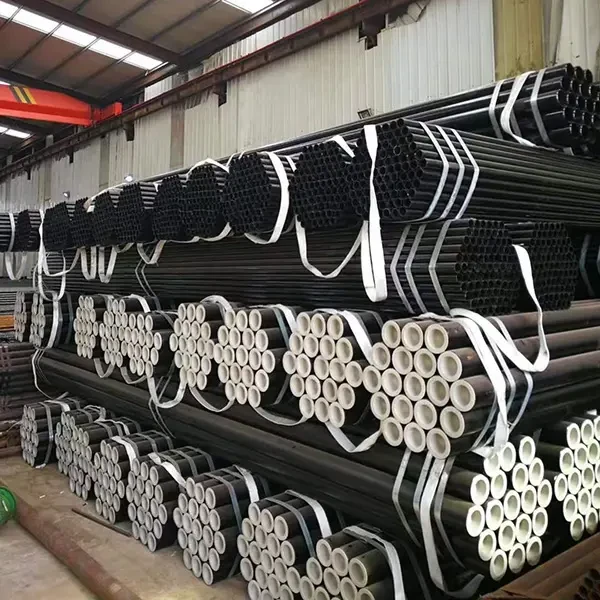
Spiral Steel Pipe (SSP), also known as continuously formed steel pipe, represents a significant advancement in steel pipe manufacturing. Unlike traditional welded steel pipe produced from flat-rolled steel, SSP is manufactured by spirally welding continuously formed steel plate. This process allows for the production of large-diameter pipes with varying wall thicknesses and lengths, offering substantial advantages in cost-effectiveness and design flexibility. Its technical position within the industry chain resides between raw steel production and downstream applications such as oil & gas pipelines, water conveyance systems, and structural support. Core performance characteristics include high strength-to-weight ratio, excellent pressure resistance, and adaptability to diverse operating environments. SSP’s ability to be tailored to specific project needs addresses a critical pain point in infrastructure projects: the need for customized, robust, and economically viable pipeline solutions.
Material Science & Manufacturing
The primary raw material for SSP is typically carbon steel (ASTM A53 Grade B, API 5L X42, X52 being common specifications), though stainless steel (304/316) and alloy steels are used for specialized applications requiring enhanced corrosion resistance or high-temperature performance. The steel plate’s chemical composition is rigorously controlled to ensure weldability and mechanical properties. Manufacturing begins with the unwinding of the steel coil, followed by edge preparation – typically milling or beveling – to facilitate welding. The plate then passes through a forming machine that progressively bends it into a spiral shape. Continuous submerged arc welding (SAW) is the predominant welding method, utilizing a granular flux to shield the weld pool from atmospheric contamination and refine the weld metal’s properties. Key parameters requiring stringent control include welding current, voltage, travel speed, flux composition, and preheating/interpass temperatures. Post-weld heat treatment (PWHT) is often employed to relieve residual stresses and improve toughness. Non-destructive testing (NDT), including radiographic examination, ultrasonic testing, and magnetic particle inspection, is critical to ensure weld integrity. The metallurgical structure of the weld zone is carefully examined to prevent porosity, cracks, and incomplete fusion. Precise control of forming parameters is essential to avoid introducing undesirable residual stresses and geometric distortions.

Performance & Engineering
The structural performance of SSP is governed by principles of thin-walled pressure vessel theory and buckling analysis. The hoop stress (σh) is calculated as σh = (P D) / (2 t), where P is the internal pressure, D is the pipe diameter, and t is the wall thickness. Local buckling is a critical failure mode, particularly in larger diameter pipes with relatively thin walls. Finite element analysis (FEA) is frequently used to accurately predict buckling behavior and optimize pipe dimensions. Environmental resistance is a key consideration, particularly in corrosive environments. Coatings, such as epoxy, polyurethane, or polyethylene, are applied to provide a barrier against corrosion. Cathodic protection, utilizing sacrificial anodes or impressed current systems, is another common method for mitigating corrosion. SSP must comply with relevant industry standards, including API 5L, EN 10217, and ISO 3183, which specify requirements for material properties, manufacturing processes, and testing procedures. The hydrostatic test, involving pressurizing the pipe to a specified level, is a critical quality control step to verify the pipe’s ability to withstand operating pressures and detect any leaks. Force analysis under external loads (soil loading, seismic activity) is crucial for pipeline design, necessitating consideration of bending moments and shear stresses.
Technical Specifications
| Parameter | Units | Typical Value (API 5L X52) | Testing Standard |
|---|---|---|---|
| Outside Diameter | mm | 300 - 3000 | ASTM E29 |
| Wall Thickness | mm | 6 - 25 | ASTM E29 |
| Yield Strength | MPa | 345 | ASTM A530 |
| Tensile Strength | MPa | 485 | ASTM A530 |
| Elongation | % | 22 | ASTM E8 |
| Impact Toughness (Charpy V-Notch) | J | 45 @ -20°C | ASTM A370 |
Failure Mode & Maintenance
Common failure modes in SSP include corrosion-induced pitting and cracking, stress corrosion cracking (SCC), fatigue cracking due to cyclic loading, and weld defects (porosity, lack of fusion). Corrosion is often initiated at surface imperfections or weld seams. SCC is particularly prevalent in environments containing chlorides or hydrogen sulfide. Fatigue cracking typically occurs at locations of stress concentration, such as welds or geometric discontinuities. Weld defects can compromise the pipe’s structural integrity and lead to catastrophic failure. Maintenance strategies include regular inspection for corrosion, cracks, and coating damage. Non-destructive testing (NDT) methods, such as ultrasonic testing and radiographic examination, are used to detect subsurface defects. Cathodic protection systems require periodic monitoring and maintenance to ensure their effectiveness. Internal inspection using intelligent pigging technology can identify corrosion, cracks, and other anomalies along the pipeline’s entire length. Repair options include weld repairs, composite wrapping, and sleeve installation. Proper coating maintenance, including periodic re-coating, is essential to prevent corrosion. Preventive maintenance based on risk assessment and operational history is crucial to extend the service life of SSP.
Industry FAQ
Q: What are the advantages of spiral steel pipe over traditional seamless or longitudinally welded pipe for large-diameter pipelines?
A: SSP offers significant cost advantages for large-diameter pipelines due to its efficient manufacturing process and reduced material waste. It allows for the production of pipes with larger diameters and varying wall thicknesses without the limitations of conventional methods. Seamless pipe becomes prohibitively expensive for large diameters, and longitudinal welded pipe often requires more complex and costly fabrication for comparable performance.
Q: How does the welding process in SSP affect the corrosion resistance of the pipe?
A: The welding process can introduce heat-affected zones (HAZs) with altered microstructure and potentially reduced corrosion resistance. The selection of appropriate welding consumables and PWHT are crucial to minimize these effects. Proper weld cleaning and surface preparation are also essential to prevent localized corrosion. Furthermore, the use of corrosion-resistant coatings and cathodic protection can mitigate the risk of corrosion in weld areas.
Q: What is the role of non-destructive testing (NDT) in ensuring the quality of spiral steel pipe?
A: NDT is paramount in SSP quality control. Radiographic examination (RT) detects internal weld defects like porosity and cracks. Ultrasonic testing (UT) identifies both surface and subsurface flaws. Magnetic particle inspection (MT) is used to detect surface and near-surface cracks. Liquid penetrant inspection (PT) reveals surface defects. These methods ensure weld integrity and conformance to specified quality standards.
Q: What are the key considerations when selecting a coating system for spiral steel pipe exposed to harsh marine environments?
A: For marine environments, the coating system must provide exceptional corrosion resistance and adhesion. Epoxy coatings are often used as a primer to promote adhesion and prevent underfilm corrosion. Polyurethane coatings offer excellent abrasion resistance and UV protection. Fusion-bonded epoxy (FBE) coatings provide a durable and long-lasting barrier against corrosion. The coating thickness and application method must be carefully controlled to ensure adequate protection. Regular inspection and maintenance of the coating system are essential.
Q: How does the manufacturing process of SSP impact its susceptibility to buckling under external loads?
A: The forming process can introduce residual stresses within the pipe wall which may reduce its buckling resistance. Precise control of forming parameters, coupled with PWHT, minimizes these stresses. Finite element analysis (FEA) is crucial to assess buckling performance under various loading scenarios. Pipe dimensions, wall thickness, and material properties must be carefully optimized to ensure structural stability.
Conclusion
Spiral Steel Pipe represents a compelling solution for large-diameter pipeline applications, offering a balance of cost-effectiveness, performance, and design flexibility. The manufacturing process, while complex, allows for tailored solutions that address specific project requirements. Understanding the material science, engineering principles, and potential failure modes is crucial for ensuring the long-term reliability and integrity of SSP infrastructure.
Future developments will likely focus on enhancing the automation of the manufacturing process, improving weld quality through advanced welding techniques, and developing more robust and environmentally friendly coating systems. Continued research into buckling behavior and fatigue resistance will also contribute to the optimization of SSP designs. Proper adherence to international standards and rigorous quality control procedures remain paramount to maintain the integrity and safety of this vital infrastructure component.
