

Introduction
Stainless steel rectangular tube is a fabricated product commonly utilized across diverse industrial applications including construction, manufacturing, infrastructure, and transportation. Positioned as a semi-finished product within the steel supply chain, it bridges the gap between primary steel production (e.g., hot rolling, cold finishing) and finished components. The core performance characteristics – strength, corrosion resistance, weldability, and formability – dictate its suitability in structural supports, handrails, frames, and various mechanical assemblies. This guide provides an in-depth technical examination of stainless steel rectangular tube, encompassing material science, manufacturing processes, performance parameters, failure modes, and relevant industry standards. The rising demand for corrosion-resistant and aesthetically pleasing structural elements fuels the continued relevance of this versatile material. A key industry pain point lies in accurately selecting the appropriate grade and specification of stainless steel rectangular tube to withstand specific environmental and mechanical stressors, avoiding premature failure and costly replacements.
Material Science & Manufacturing
Stainless steel rectangular tube is predominantly manufactured from austenitic stainless steels (304/304L, 316/316L), ferritic stainless steels (430), and in some specialized cases, martensitic grades (410). The austenitic grades, alloyed with chromium (18-24%), nickel (8-10.5%), and often molybdenum, exhibit superior corrosion resistance and weldability. Chromium forms a passive chromium oxide layer on the surface, protecting the underlying material. The ‘L’ designations (e.g., 304L) indicate low carbon content, minimizing carbide precipitation during welding, further enhancing corrosion resistance. Ferritic grades, with higher chromium content (11-18%) and lower alloy content, offer good corrosion resistance at a lower cost but have limited weldability. The manufacturing process typically involves forming a flat stainless steel sheet or coil into a rectangular shape, followed by welding the longitudinal seam (using Tungsten Inert Gas (TIG) or Plasma Arc Welding (PAW) for superior quality). Key parameters controlled during manufacturing include weld pool temperature, shielding gas composition, and welding speed. Post-welding, tubes undergo heat treatment (annealing) to relieve stresses, followed by pickling to remove weld scale and surface imperfections. Dimensional accuracy is ensured through controlled cooling and sizing operations. Raw material composition and inclusion control are critical. The presence of sulfur or phosphorus inclusions can compromise weldability and ductility. Surface finish (e.g., mill finish, polished, brushed) also impacts corrosion resistance and aesthetic appeal.
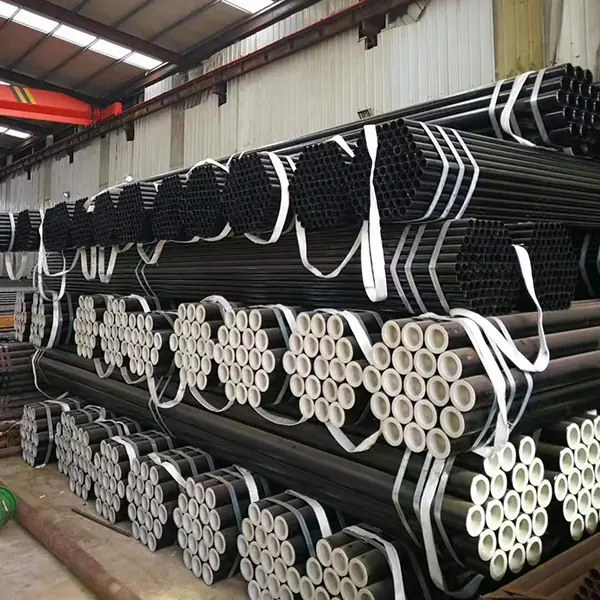
Performance & Engineering
The performance of stainless steel rectangular tube is governed by its mechanical properties, corrosion resistance, and load-bearing capacity. Force analysis dictates wall thickness and dimensions to withstand bending moments, shear forces, and compressive loads. Buckling stability is a primary concern for thin-walled tubes, requiring consideration of section modulus and slenderness ratio. Corrosion resistance is paramount, particularly in harsh environments. Pitting corrosion, crevice corrosion, and stress corrosion cracking are potential failure mechanisms. Molybdenum additions (in 316/316L) enhance resistance to chloride-induced pitting corrosion. Environmental resistance must account for exposure to acids, bases, salts, and elevated temperatures. The yield strength and tensile strength of the stainless steel grade determine the allowable stress levels. Fatigue performance is crucial for applications involving cyclic loading. Compliance requirements vary depending on the industry and application. For example, structural applications require adherence to building codes (e.g., IBC, Eurocode) which specify minimum material properties and design factors. Weldability impacts the integrity of fabricated structures. Proper welding procedures, filler metal selection, and post-weld heat treatment are essential to avoid cracking and maintain corrosion resistance. Galvanic corrosion can occur when stainless steel is in contact with dissimilar metals; isolation or compatible material selection is necessary.
Technical Specifications
| Grade | Chemical Composition (Cr%) | Yield Strength (MPa) | Tensile Strength (MPa) | Wall Thickness Range (mm) | Typical Applications |
|---|---|---|---|---|---|
| 304/304L | 18-24 | 205-275 | 517-724 | 1.2-6.35 | Architectural, Food Processing, General Fabrication |
| 316/316L | 16-18 | 205-275 | 517-724 | 1.2-12.7 | Marine, Chemical Processing, Pharmaceutical |
| 430 | 16-18 | 276-414 | 517-690 | 0.8-3.2 | Automotive Trim, Appliance Components, Indoor Applications |
| 410 | 11.5-13.5 | 290-414 | 517-690 | 1.6-6.35 | Cutlery, Fasteners, Applications requiring heat treatment |
| Duplex 2205 | 22-23 | 450-620 | 700-900 | 2.4-10 | Offshore, Chemical Processing (high chloride environments) |
| 309S | 23-25 | 240-310 | 550-750 | 1.6-8 | High temperature applications, furnace components |
Failure Mode & Maintenance
Common failure modes for stainless steel rectangular tube include corrosion-induced failures (pitting, crevice, stress corrosion cracking), fatigue cracking (under cyclic loading), denting or deformation (due to impact), and weld defects (porosity, cracking). Pitting corrosion is often initiated by chloride ions, creating localized attack. Stress corrosion cracking occurs when tensile stress is combined with a corrosive environment. Fatigue cracking initiates from stress concentrations (e.g., welds, corners) and propagates under cyclic loading. Weld defects compromise the structural integrity and corrosion resistance. Maintenance strategies include regular visual inspection for signs of corrosion, cracks, or deformation. Protective coatings (e.g., epoxy, polyurethane) can enhance corrosion resistance in aggressive environments. Surface cleaning and passivation can restore the protective chromium oxide layer. Welded structures should be periodically inspected using non-destructive testing (NDT) methods (e.g., ultrasonic testing, radiographic testing) to detect internal defects. For heavily loaded applications, periodic stress relief may be necessary. Proper drainage should be ensured to prevent water accumulation and promote drying. Avoid contact with dissimilar metals where galvanic corrosion is a concern; use isolation materials or compatible alloys. Promptly address any signs of corrosion or damage to prevent propagation and ensure long-term structural integrity.
Industry FAQ
Q: What is the impact of carbon content on the weldability of 304/304L stainless steel rectangular tube?
A: Higher carbon content in 304 stainless steel can lead to the formation of chromium carbides during welding, depleting the chromium available for forming the protective passive layer and potentially causing intergranular corrosion. 304L, with its lower carbon content, minimizes this risk, resulting in superior weldability and corrosion resistance in welded joints.
Q: How does molybdenum content in 316/316L contribute to its improved corrosion resistance compared to 304/304L?
A: Molybdenum enhances the resistance of 316/316L stainless steel to pitting and crevice corrosion, particularly in chloride-containing environments. It stabilizes the passive layer, making it more resistant to localized attack. This is critical for applications in marine environments or chemical processing plants.
Q: What are the key considerations when selecting a wall thickness for a stainless steel rectangular tube used as a structural support?
A: Wall thickness selection depends on the anticipated load, span length, and buckling resistance requirements. Factors to consider include the yield strength of the material, the section modulus, the slenderness ratio, and applicable building codes or design standards. Finite element analysis (FEA) can be employed for complex loading scenarios.
Q: What non-destructive testing (NDT) methods are commonly used to inspect welded stainless steel rectangular tube for defects?
A: Common NDT methods include visual inspection, liquid penetrant testing (PT), magnetic particle testing (MT), ultrasonic testing (UT), and radiographic testing (RT). UT and RT are particularly effective in detecting internal defects such as porosity, cracks, and inclusions. PT and MT are used for surface defect detection.
Q: How can galvanic corrosion be prevented when using stainless steel rectangular tube in contact with carbon steel?
A: Galvanic corrosion can be prevented by isolating the stainless steel from the carbon steel using non-conductive materials (e.g., plastic washers, coatings). Alternatively, using a more compatible alloy or applying a protective coating to both metals can mitigate the risk. Sacrificial anodes can also be used to protect the carbon steel.
Conclusion
Stainless steel rectangular tube offers a compelling combination of strength, corrosion resistance, and versatility, making it a foundational material across numerous industries. The selection of the appropriate grade (304/304L, 316/316L, 430, etc.) is dictated by the specific application requirements, with careful consideration given to environmental conditions, loading parameters, and welding procedures. Understanding the potential failure modes – corrosion, fatigue, weld defects – and implementing appropriate maintenance strategies are critical for ensuring long-term structural integrity and minimizing life-cycle costs.
Future trends point towards increased utilization of duplex stainless steels and higher-alloyed grades to address increasingly demanding performance requirements. Advancements in manufacturing processes, such as laser welding and automated forming, will further improve dimensional accuracy and reduce production costs. Continued research and development in corrosion-resistant coatings and materials will expand the application range of stainless steel rectangular tube, solidifying its position as a vital engineering material.
