
Introduction
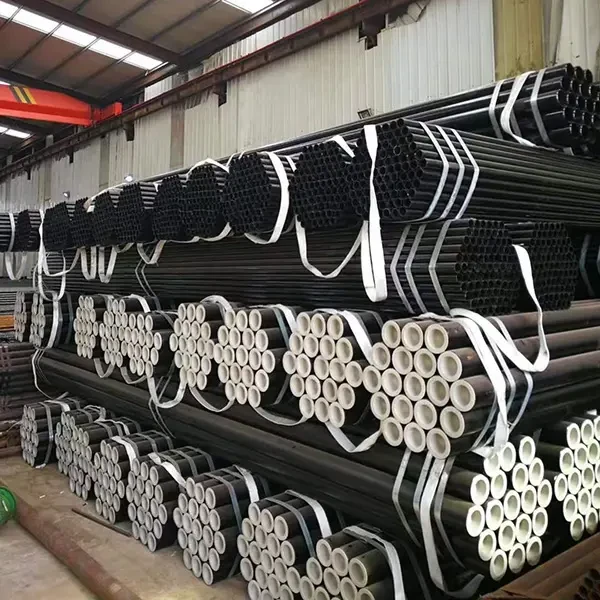
Stainless rectangular tube is a fabricated product formed by welding, rolling, or extruding stainless steel sheet or strip into a rectangular cross-section. Its position within the industry chain falls between raw material production (stainless steel billet/coil) and downstream fabrication – construction, automotive, industrial equipment manufacturing, and architectural applications. Core performance characteristics revolve around its strength-to-weight ratio, corrosion resistance, weldability, and aesthetic appeal. Unlike circular tubing, the rectangular profile offers increased surface area for heat transfer and facilitates easier integration into structural designs where flat surfaces are required. The selection of a specific stainless steel grade dictates the ultimate performance envelope, influencing resistance to specific corrosive environments and high-temperature oxidation.
Material Science & Manufacturing
The primary raw materials for stainless rectangular tube are various grades of stainless steel, most commonly 304/304L, 316/316L, and 409. 304/304L offers excellent corrosion resistance in a wide range of atmospheric environments and is favored for general purpose applications. 316/316L incorporates molybdenum, enhancing resistance to chloride corrosion, making it suitable for marine environments and chemical processing. 409, an austenitic stainless steel, offers good weldability and moderate corrosion resistance, frequently employed in automotive exhaust systems. The manufacturing process typically begins with stainless steel coil or plate. For welded tubes, the plate is formed into the rectangular shape through roll forming. High-frequency induction welding (HFI) or Tungsten Inert Gas (TIG) welding are common methods used to join the edges. HFI welding utilizes electromagnetic induction to heat the edges, fusing them together. TIG welding provides a higher quality, more controlled weld, especially for critical applications. Key parameters during forming include roll pressure, forming speed, and the use of lubrication to prevent galling. Welding parameters – current, voltage, welding speed, and shielding gas composition – are crucial for achieving a sound, defect-free weld. Post-weld heat treatment may be applied to relieve stress and improve mechanical properties. For seamless rectangular tube (less common), extrusion or drawing processes are employed, requiring significant tooling and process control.
Performance & Engineering
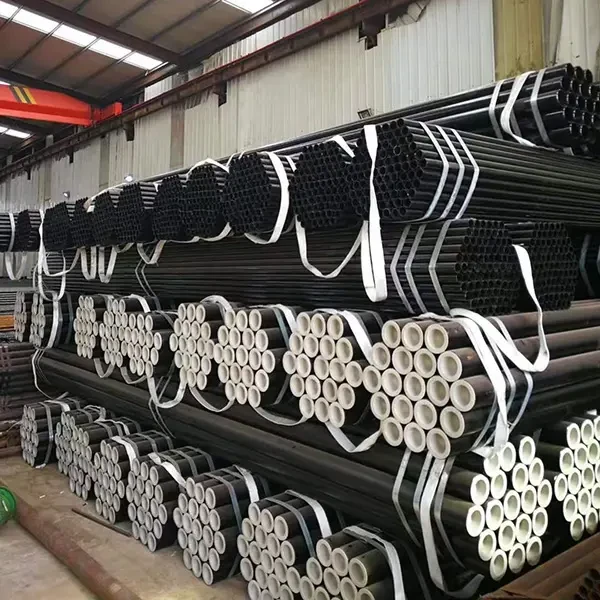
The performance of stainless rectangular tube is critically dependent on its structural integrity and resistance to its operating environment. Force analysis, particularly bending moment and torsional stress calculations, are essential for structural applications. The rectangular cross-section introduces a higher second moment of area compared to circular tubing with similar wall thickness, enhancing resistance to bending. Environmental resistance is dictated by the chosen stainless steel grade. Corrosion resistance is not absolute; pitting corrosion, crevice corrosion, and galvanic corrosion can occur under specific conditions. Passivation, a process that forms a protective chromium oxide layer on the surface, is crucial for maximizing corrosion resistance. Temperature plays a significant role; elevated temperatures can reduce the protective effect of the passive layer and accelerate corrosion. Compliance requirements vary by industry. ASTM A554 (Standard Specification for Welded Stainless Steel Pipe) and ASTM A788 (Standard Specification for Stainless Steel Bar, Rod, and Profiles) are commonly referenced. For pressure applications, adherence to ASME Boiler and Pressure Vessel Code Section IX is mandatory. The design must account for thermal expansion and contraction to prevent stress buildup and potential failures. Welding procedures must be qualified according to AWS D1.1 (Structural Welding Code – Steel) to ensure weld integrity and mechanical properties.
Technical Specifications
| Grade | Typical Tensile Strength (MPa) | Yield Strength (MPa) | Elongation (%) | Wall Thickness Range (mm) | Typical Applications |
|---|---|---|---|---|---|
| 304/304L | 517-724 | 205-276 | 30-45 | 1.2-6.35 | Food processing, architectural trim, general fabrication |
| 316/316L | 517-790 | 205-310 | 30-45 | 1.2-12.7 | Marine environments, chemical processing, pharmaceuticals |
| 409 | 450-620 | 180-276 | 20-35 | 1.0-3.0 | Automotive exhaust systems, structural supports |
| Duplex 2205 | 790-930 | 480-620 | 20-25 | 2.0-10.0 | Offshore oil and gas, chemical processing, desalination plants |
| 310S | 480-620 | 170-240 | 30-40 | 1.5-8.0 | High-temperature applications, furnace components |
| 904L | 620-760 | 310-450 | 30-45 | 2.0-12.0 | Severe corrosive environments, chemical processing |
Failure Mode & Maintenance
Stainless rectangular tube, despite its inherent corrosion resistance, is susceptible to several failure modes. Pitting corrosion, initiated by chloride ions, can create localized areas of attack, leading to perforation. Crevice corrosion occurs in shielded areas, such as under gaskets or in weld seams. Stress corrosion cracking (SCC) can develop under tensile stress in corrosive environments, particularly with 304/304L in chloride-containing solutions. Fatigue cracking can occur under cyclic loading. Weld defects – porosity, inclusions, and incomplete fusion – weaken the structure and create stress concentrators. Galvanic corrosion arises when dissimilar metals are in contact in the presence of an electrolyte. Maintenance recommendations include regular visual inspections for signs of corrosion, cracks, or deformation. Surface cleaning to remove contaminants is essential. Passivation treatments can restore the protective chromium oxide layer. Welded joints should be periodically inspected using non-destructive testing methods (e.g., radiographic testing, ultrasonic testing). For applications in harsh environments, cathodic protection or the application of corrosion-inhibiting coatings may be necessary. Proper drainage should be ensured to prevent stagnant water accumulation, which promotes corrosion.
Industry FAQ
Q: What are the key differences between 304 and 316 stainless steel rectangular tube regarding corrosion resistance?
A: The primary difference lies in the addition of molybdenum to 316 stainless steel. Molybdenum significantly enhances resistance to chloride corrosion, making 316 superior in marine environments, chemical processing facilities, and applications involving exposure to de-icing salts. 304 is generally sufficient for less aggressive environments, offering excellent overall corrosion resistance in atmospheric conditions and many industrial applications.
Q: How does the wall thickness affect the structural performance of stainless rectangular tube?
A: Wall thickness has a direct impact on both the strength and stiffness of the tube. Increasing the wall thickness increases the section modulus, thereby enhancing resistance to bending and buckling. It also increases the tube's weight and cost. The optimal wall thickness is determined through structural analysis, considering the applied loads, span length, and desired safety factor.
Q: What welding techniques are recommended for joining stainless rectangular tube, and what precautions should be taken?
A: TIG (GTAW) welding is generally preferred for its superior control and weld quality, especially for critical applications. HFI welding is also common for high-volume production. Precautions include using appropriate filler metals compatible with the base metal, ensuring proper shielding gas coverage (argon is typical), maintaining a clean welding environment, and controlling interpass temperature to prevent distortion and cracking. Post-weld heat treatment may be required to relieve stress and optimize mechanical properties.
Q: How does heat treatment affect the mechanical properties of stainless rectangular tube?
A: Heat treatment can significantly alter the mechanical properties. Annealing softens the material, improving ductility and formability. Solution annealing and quenching followed by tempering can enhance strength and toughness. However, improper heat treatment can lead to sensitization (chromium carbide precipitation at grain boundaries), reducing corrosion resistance. The specific heat treatment parameters depend on the stainless steel grade and desired properties.
Q: What are the common surface finishes available for stainless rectangular tube, and how do they impact performance?
A: Common surface finishes include mill finish (as-rolled), brushed finish, polished finish (various grades), and electropolished finish. Mill finish is the most economical but offers the least corrosion resistance. Brushed and polished finishes improve aesthetic appeal and can enhance corrosion resistance by removing surface contaminants. Electropolishing provides the highest level of corrosion resistance and cleanliness by removing a thin layer of surface material, creating a passive, highly polished surface.
Conclusion
Stainless rectangular tube represents a versatile engineering material, offering a compelling combination of strength, corrosion resistance, and aesthetic appeal. Its selection requires a detailed understanding of the application's specific demands, including environmental exposure, load requirements, and fabrication processes. Choosing the appropriate stainless steel grade, controlling manufacturing parameters, and implementing proper maintenance strategies are crucial for ensuring long-term performance and preventing premature failure.
The future of stainless rectangular tube lies in the development of advanced grades with enhanced corrosion resistance and strength, coupled with innovative manufacturing techniques that reduce cost and improve dimensional accuracy. Further research into welding processes and non-destructive testing methods will contribute to greater structural integrity and reliability, expanding its application scope across diverse industries.
