
Introduction
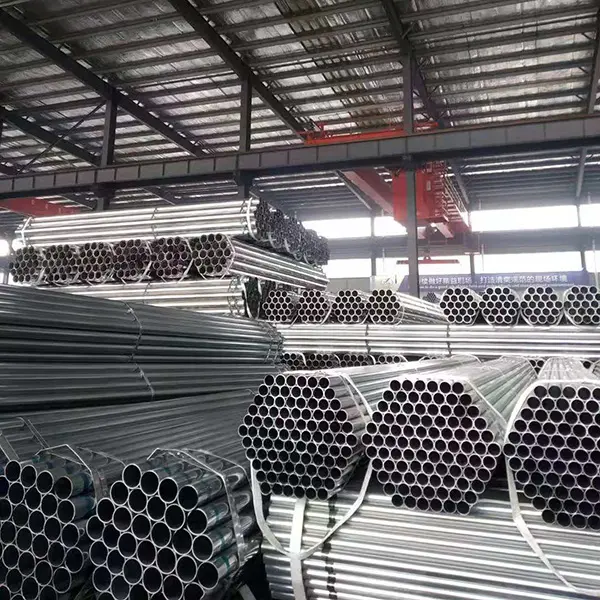
Stainless round tube is a longitudinally welded or seamless hollow section manufactured from various grades of stainless steel. It’s a fundamental component across a multitude of industries, including construction, chemical processing, food and beverage, pharmaceuticals, automotive, and aerospace. Its position within the industry chain is as a semi-finished product, requiring further fabrication – bending, flanging, welding, and machining – to create finished components. Core performance characteristics revolve around corrosion resistance, hygienic properties, mechanical strength, and temperature resistance. Stainless steel tubes offer significant advantages over carbon steel equivalents, especially in corrosive environments, leading to extended service life and reduced maintenance costs. Understanding the nuances of alloy selection, manufacturing process, and application-specific requirements is crucial for optimal performance and longevity. The growing demand for hygienic processing and robust infrastructure solutions further solidifies the importance of stainless round tube in modern industrial applications. A primary pain point within the industry centers on selecting the appropriate grade of stainless steel to withstand specific chemical exposure and operating temperatures, and ensuring consistent weld quality in fabricated systems.
Material Science & Manufacturing
Stainless round tube is manufactured from a range of austenitic, ferritic, martensitic, and duplex stainless steel alloys. The most common grades include 304/304L, 316/316L, 410, and 2205 duplex. 304/304L, containing approximately 18% chromium and 8% nickel, exhibits excellent corrosion resistance and weldability. The ‘L’ designation indicates low carbon content, minimizing carbide precipitation during welding which can compromise corrosion resistance. 316/316L adds molybdenum (2-3%) to enhance resistance to chloride corrosion, making it suitable for marine and chemical processing environments. 410, a martensitic grade, offers higher strength and hardness but lower corrosion resistance. 2205 duplex combines the benefits of austenitic and ferritic structures, providing high strength, good corrosion resistance (especially to stress corrosion cracking), and weldability. Raw material, typically stainless steel strip or billet, undergoes either welding or seamless extrusion processes. Welding involves forming a strip into a cylindrical shape and longitudinally welding the seam, followed by heat treatment. Seamless tubes are produced by piercing a solid billet with a mandrel. Key manufacturing parameters include controlled cooling rates during heat treatment to achieve desired mechanical properties, precise control of welding parameters (current, voltage, gas shielding) to ensure complete penetration and minimize porosity, and rigorous dimensional control through processes like drawing and rolling. Surface finishing, including pickling and passivation, is critical to enhance corrosion resistance by removing surface contaminants and forming a protective chromium oxide layer.

Performance & Engineering
The performance of stainless round tube is governed by its mechanical properties, corrosion resistance, and resistance to various environmental factors. Force analysis, particularly for pressure-containing applications, dictates wall thickness requirements based on internal pressure, external loads, and safety factors, calculated using formulas derived from ASME Boiler and Pressure Vessel Code or equivalent standards. Stress corrosion cracking (SCC) is a significant concern, particularly in chloride-containing environments. Duplex stainless steels offer superior resistance to SCC compared to austenitic grades. Elevated temperature applications require consideration of creep resistance and oxidation. Austenitic stainless steels maintain good strength at elevated temperatures, but may require surface treatments to prevent scaling. Environmental resistance is further impacted by exposure to acids, alkalis, and reducing agents. Proper material selection, based on chemical compatibility charts, is essential. Compliance requirements vary by industry and region. Pharmaceutical and food processing applications demand compliance with 3-A Sanitary Standards and FDA regulations, ensuring hygienic surface finish and cleanability. Construction applications must meet building codes and seismic requirements. Fatigue analysis is critical for applications involving cyclic loading. The tube’s endurance limit, the stress level it can withstand for an infinite number of cycles, determines its lifespan under fatigue conditions. Finite element analysis (FEA) is frequently used to model stress distribution and predict potential failure points under complex loading scenarios.
Technical Specifications
| Grade | Tensile Strength (MPa) | Yield Strength (MPa) | Elongation (%) | Corrosion Resistance | Typical Applications |
|---|---|---|---|---|---|
| 304/304L | 517-724 | 205-276 | 30-45 | Excellent (General Purpose) | Food Processing, Chemical Transfer, Architecture |
| 316/316L | 517-790 | 205-310 | 30-50 | Superior (Chloride Environments) | Marine Applications, Pharmaceutical Manufacturing |
| 410 | 550-760 | 276-414 | 15-25 | Moderate (Requires Surface Treatment) | Fasteners, Pump Shafts, Valve Components |
| 2205 Duplex | 780-930 | 450-620 | 20-30 | Excellent (SCC Resistance) | Chemical Processing, Oil & Gas, Pulp & Paper |
| 321/321H | 517-758 | 207-345 | 30-40 | Excellent (High Temperature) | Aerospace, High Temperature Chemical Processing |
| 904L | 620-760 | 276-414 | 35-50 | Outstanding (Severe Corrosive Environments) | Strongly Corrosive Chemical Plants |
Failure Mode & Maintenance
Stainless round tube can experience several failure modes, including pitting corrosion, crevice corrosion, intergranular corrosion, stress corrosion cracking, and fatigue failure. Pitting corrosion occurs due to localized breakdown of the passive layer, often initiated by chloride ions. Crevice corrosion arises in confined spaces where oxygen depletion occurs. Intergranular corrosion results from carbide precipitation at grain boundaries, particularly in improperly heat-treated austenitic grades. Fatigue cracking initiates from stress concentrators like welds or dents and propagates under cyclic loading. General corrosion, while slower, can also lead to thinning of the tube wall over time. Maintenance strategies include regular inspection for signs of corrosion or damage, proper cleaning to remove corrosive contaminants, and application of protective coatings where appropriate. Passivation treatments can restore the protective chromium oxide layer. For welded joints, non-destructive testing (NDT) methods like radiography, ultrasonic testing, and dye penetrant inspection are essential to detect defects. Repair welding should be performed using compatible filler materials and followed by heat treatment to restore corrosion resistance. Preventing galvanic corrosion, where dissimilar metals are in contact, is crucial by using isolation materials or coatings. Proper support structures and load distribution minimize stress concentrations and prevent deformation or cracking.
Industry FAQ
Q: What is the difference between 304 and 316 stainless steel in terms of corrosion resistance?
A: 316 stainless steel contains molybdenum, which significantly enhances its resistance to chloride corrosion, particularly in marine environments and applications involving exposure to salts or de-icing chemicals. 304 is suitable for general-purpose applications with less aggressive environments, while 316 is the preferred choice when chloride exposure is a concern.
Q: How does welding affect the corrosion resistance of stainless steel tubes?
A: Improper welding can lead to carbide precipitation at grain boundaries, reducing intergranular corrosion resistance, particularly in 304/304L grades. Using low-carbon (304L/316L) grades and proper heat treatment post-welding minimizes this risk. Maintaining a clean weld environment and employing appropriate shielding gases are also critical.
Q: What are the advantages of duplex stainless steel over austenitic stainless steel?
A: Duplex stainless steels combine the benefits of both austenitic and ferritic structures, offering higher strength, improved resistance to stress corrosion cracking (SCC), and better localized corrosion resistance. They are often selected for demanding applications in the chemical processing, oil & gas, and marine industries.
Q: What is passivation and why is it important for stainless steel tubes?
A: Passivation is a chemical treatment that creates a protective chromium oxide layer on the surface of the stainless steel. This passive layer enhances corrosion resistance by preventing the underlying metal from reacting with the environment. It’s essential for maintaining the inherent corrosion resistance of stainless steel, especially after fabrication processes like welding or machining.
Q: How do you determine the appropriate wall thickness for a stainless steel tube used in a pressure vessel?
A: Wall thickness is determined by conducting a pressure vessel design calculation according to codes like ASME Section VIII Division 1. This calculation considers the internal pressure, external loads, material properties (yield strength, tensile strength), and a safety factor. Finite element analysis (FEA) can also be used to validate the design and optimize wall thickness.
Conclusion
Stainless round tube represents a critical engineering material providing a balance of mechanical strength, corrosion resistance, and hygienic properties. The selection process requires careful consideration of the operating environment, chemical compatibility, mechanical loads, and relevant industry standards. Understanding the nuances of different stainless steel grades, manufacturing processes, and potential failure modes is paramount to ensuring long-term performance and reliability.
Future advancements in stainless steel technology will likely focus on developing alloys with enhanced corrosion resistance, improved weldability, and reduced manufacturing costs. The integration of advanced inspection techniques, such as ultrasonic phased array and eddy current testing, will enable more reliable detection of defects and ensure the structural integrity of fabricated components. Continued research into surface engineering techniques, such as plasma nitriding and physical vapor deposition, will further enhance the performance and lifespan of stainless round tube in challenging applications.
