
Introduction
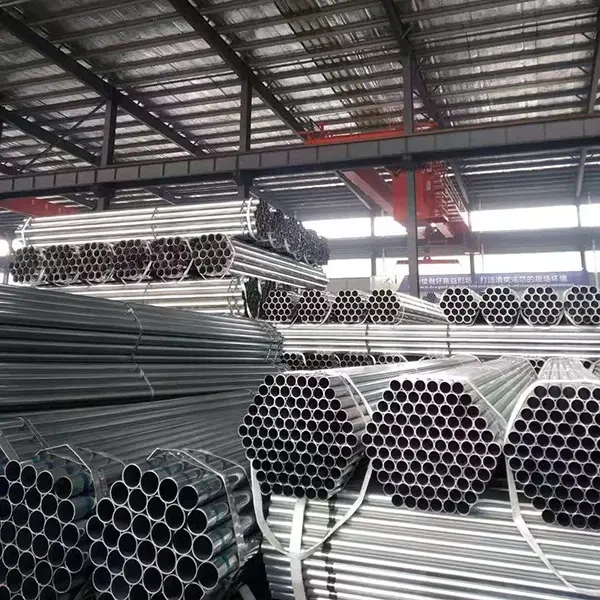
Stainless tube pipe represents a critical component in a wide range of industrial applications, encompassing fluid transport, structural support, and process equipment. Distinguished by its corrosion resistance and mechanical strength, stainless steel tubing occupies a unique technical position within the broader piping industry. Unlike carbon steel, which requires extensive protective coatings, stainless steel inherently resists rust and corrosion due to the presence of chromium. The core performance characteristics – tensile strength, yield strength, elongation, and corrosion resistance – are dictated by the alloy’s composition, manufacturing process, and subsequent heat treatment. The selection of the appropriate grade of stainless steel tubing is paramount, directly influencing the longevity and reliability of the system in which it is implemented. Industry pain points revolve around cost optimization versus performance requirements, ensuring traceability of material composition for critical applications (e.g., pharmaceutical, nuclear), and mitigating the risk of localized corrosion like pitting or crevice corrosion.
Material Science & Manufacturing
The foundational material for stainless tube pipe is typically an iron-based alloy containing a minimum of 10.5% chromium. Different grades, such as 304/304L, 316/316L, and duplex stainless steels, achieve varying levels of corrosion resistance and mechanical properties through the addition of other alloying elements like nickel, molybdenum, and nitrogen. 304/304L stainless steel, containing 18-20% chromium and 8-10% nickel, is the most widely used grade due to its excellent formability and weldability. 316/316L, with the addition of molybdenum (2-3%), exhibits superior resistance to chloride corrosion, making it ideal for marine environments and chemical processing. Manufacturing processes predominantly involve seamless tube drawing or welded tube fabrication. Seamless tube production begins with piercing a solid billet of stainless steel, followed by drawing it through a series of dies to achieve the desired dimensions and wall thickness. Welded tube manufacturing involves forming a strip of stainless steel into a tube shape and then welding the seam, often using Tungsten Inert Gas (TIG) or Plasma Arc Welding (PAW) techniques. Critical parameters during manufacturing include maintaining precise temperature control during heat treatment (annealing, solution annealing) to ensure optimal microstructure and mechanical properties, accurate dimensional control during drawing or forming, and thorough non-destructive testing (NDT), such as hydrostatic testing and eddy current testing, to detect defects. The chemical composition must conform to standards like ASTM A312 for seamless tubing or ASTM A53 for welded tubing.

Performance & Engineering
The performance of stainless tube pipe is fundamentally governed by its mechanical and corrosion resistance properties. Force analysis, particularly stress analysis under internal pressure or external loads, is crucial for determining the appropriate wall thickness to prevent failure. The Barlow formula (σ = (PD)/(2t), where σ is stress, P is pressure, D is diameter, and t is wall thickness) provides a foundational understanding of hoop stress. Environmental resistance encompasses resistance to general corrosion, pitting corrosion, crevice corrosion, stress corrosion cracking, and oxidation. The pitting resistance equivalent number (PREN = %Cr + 3.3%Mo + 16%N) is a key metric for evaluating susceptibility to pitting corrosion. Compliance requirements vary significantly by industry. For example, pharmaceutical applications demand adherence to ASME BPE standards, ensuring sanitary design and surface finish requirements. Nuclear applications necessitate stringent quality control and traceability per ASME Section III. Food and beverage processing requires compliance with 3-A Sanitary Standards. Functional implementation details involve considerations like thermal expansion coefficients (influencing piping system design to accommodate temperature fluctuations), weldability (dictating welding procedures and filler metal selection), and compatibility with the conveyed fluid (preventing galvanic corrosion or chemical attack). Fatigue strength, particularly important in applications involving cyclic loading, must be carefully considered to prevent premature failure.
Technical Specifications
| Grade | Tensile Strength (MPa) | Yield Strength (MPa) | Elongation (%) | Corrosion Resistance |
|---|---|---|---|---|
| 304/304L | 517-724 | 205-276 | 30-45 | Excellent (General) |
| 316/316L | 517-790 | 205-310 | 30-50 | Superior (Chloride) |
| Duplex 2205 | 780-930 | 480-620 | 20-25 | Outstanding (Pitting & Crevice) |
| 316Ti | 517-790 | 205-310 | 30-50 | Superior (High Temperature) |
| 904L | 620-790 | 240-345 | 35-55 | Exceptional (Broad Range) |
| 321 | 517-790 | 205-310 | 30-50 | Good (Oxidation Resistance) |
Failure Mode & Maintenance
Stainless tube pipe, while highly durable, is susceptible to various failure modes. Pitting corrosion, a localized form of corrosion, initiates at surface imperfections and can lead to through-wall penetration. Crevice corrosion occurs in shielded areas, such as under gaskets or in stagnant fluid zones. Stress corrosion cracking (SCC) arises from the combined action of tensile stress and a corrosive environment. Intergranular corrosion can occur if sensitization occurs during welding or heat treatment, leading to chromium depletion at grain boundaries. Fatigue cracking results from cyclic loading, initiating at stress concentrators like welds or dents. Oxidation at high temperatures can lead to scale formation and reduced wall thickness. Maintenance strategies include regular visual inspections for signs of corrosion or damage, non-destructive testing (eddy current, ultrasonic testing) to detect hidden defects, proper cleaning to remove contaminants, implementation of corrosion inhibitors, and periodic hydrostatic testing to verify structural integrity. For welded joints, regular inspection of weld quality and adherence to proper welding procedures are critical. In highly corrosive environments, cathodic protection or sacrificial anodes can be employed to mitigate corrosion. Passivation, a chemical treatment, can restore the protective chromium oxide layer on the surface.
Industry FAQ
Q: What is the difference between 304L and 304 stainless steel, and when would I choose one over the other?
A: The “L” in 304L signifies “low carbon.” 304L contains less carbon (typically less than 0.03%) than 304 (typically 0.08%). This lower carbon content minimizes carbide precipitation during welding, reducing the risk of intergranular corrosion. 304L is preferred for welding applications, especially in corrosive environments where sensitization is a concern. 304 is suitable for non-welded applications or where corrosion resistance is not a primary concern.
Q: How does the molybdenum content in 316 stainless steel impact its corrosion resistance?
A: Molybdenum significantly enhances the resistance of 316 stainless steel to pitting and crevice corrosion, particularly in chloride-containing environments. Chloride ions can break down the protective chromium oxide layer, initiating corrosion. Molybdenum forms a more stable passive layer, improving resistance to this breakdown. Higher molybdenum content provides greater protection in increasingly corrosive environments.
Q: What are the implications of using duplex stainless steel in a high-chloride environment?
A: Duplex stainless steels (like 2205) offer superior resistance to pitting, crevice corrosion, and stress corrosion cracking in high-chloride environments compared to austenitic stainless steels like 316. Their microstructure, consisting of both austenite and ferrite, contributes to this enhanced resistance. However, duplex steels can be susceptible to hydrogen embrittlement under certain conditions, requiring careful control of welding parameters and process fluids.
Q: Can stainless steel tube pipe be susceptible to galvanic corrosion when coupled with dissimilar metals?
A: Yes, galvanic corrosion can occur when stainless steel is electrically coupled with a less noble metal (e.g., carbon steel) in the presence of an electrolyte (e.g., water). The less noble metal will corrode preferentially. Mitigation strategies include using electrically insulating materials to separate the dissimilar metals, applying protective coatings to the less noble metal, or selecting a stainless steel grade with a more similar electrochemical potential.
Q: What is the recommended surface finish for stainless steel tubing used in sanitary applications (e.g., food processing)?
A: For sanitary applications, a smooth, low-roughness surface finish is critical to minimize bacterial adhesion and facilitate cleaning. A typical surface finish requirement is Ra ≤ 0.8 μm (32 microinches) or even Ra ≤ 0.4 μm (16 microinches) for critical areas. Electropolishing is often used to achieve the desired smoothness and passivity.
Conclusion
The selection and implementation of stainless tube pipe require a thorough understanding of material science, manufacturing processes, and application-specific performance requirements. The inherent corrosion resistance of stainless steel provides a significant advantage over other materials in numerous industries, but careful consideration of alloy selection, welding procedures, and potential failure modes is paramount. Optimizing the balance between cost, performance, and longevity necessitates a detailed engineering analysis and adherence to relevant industry standards.
Looking ahead, advancements in stainless steel alloy development – including higher nitrogen content alloys and improved duplex grades – will continue to enhance corrosion resistance and mechanical properties. Furthermore, the integration of advanced non-destructive testing techniques, such as phased array ultrasonic testing and eddy current array, will enable more accurate defect detection and ensure the long-term reliability of stainless steel piping systems. Proper preventative maintenance programs, coupled with rigorous quality control, remain crucial for maximizing the service life and minimizing the total cost of ownership.