
Introduction
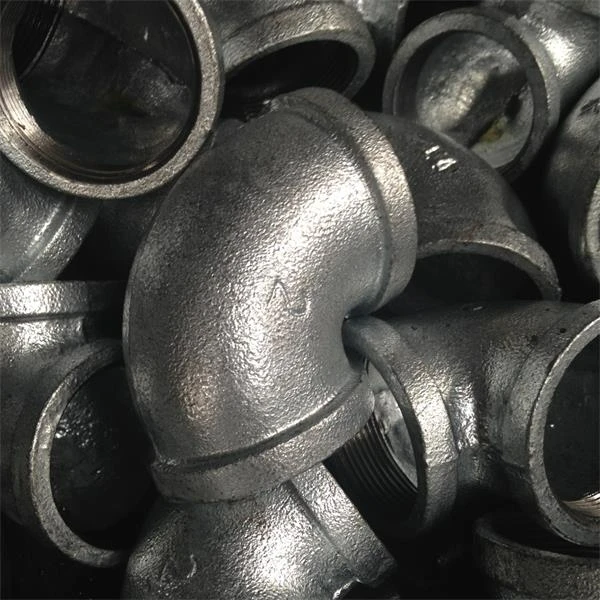
Steel and Tube Industries Ltd. operates within the foundational layers of the materials supply chain, specializing in the manufacture and distribution of steel tubes and related products. Its technical position resides between raw steel production (integrated steel mills or electric arc furnaces) and downstream fabrication industries – construction, automotive, energy, and general manufacturing. Core performance characteristics center on dimensional accuracy, mechanical properties (yield strength, tensile strength, elongation), weldability, corrosion resistance, and adherence to stringent industry specifications. The company's product range includes seamless and welded steel tubes, galvanized tubes, and specialized alloy steel tubes, each engineered to withstand specific operational demands. A critical pain point addressed by Steel and Tube Industries Ltd. is the need for consistent quality and traceability in steel tube materials, critical for ensuring the structural integrity and longevity of finished products across various demanding applications. The consistent challenge is balancing cost-effectiveness with adherence to increasingly rigorous performance and safety standards.
Material Science & Manufacturing
The primary raw material for Steel and Tube Industries Ltd. is carbon steel, with varying compositions of iron, carbon, and alloying elements (manganese, silicon, chromium, molybdenum, nickel). The physical properties are inherently linked to chemical composition and processing. Carbon content significantly affects hardness and tensile strength – higher carbon generally increasing hardness but reducing ductility. Alloying elements are incorporated to enhance specific properties like corrosion resistance (chromium), strength at elevated temperatures (molybdenum), and toughness (nickel). Manufacturing processes vary depending on the type of tube produced. Seamless tubes are typically manufactured via the Mannesmann process, which involves piercing a solid billet of steel to create a hollow shell, followed by mandrel milling and drawing to achieve the desired dimensions and wall thickness. Welded tubes are produced by forming steel strips or sheets into a cylindrical shape and then welding the seam, typically using electric resistance welding (ERW) or submerged arc welding (SAW). Critical parameters in the welding process include welding current, voltage, speed, and electrode type. Galvanization, a corrosion protection method, involves immersing the steel tubes in a molten zinc bath, forming a protective zinc coating. Parameter control during galvanization – bath temperature, immersion time, and steel surface preparation – is crucial for coating adhesion and durability. Quality control during manufacturing involves rigorous testing of chemical composition, mechanical properties (tensile tests, impact tests, hardness tests), dimensional accuracy (ultrasonic thickness testing, hydrostatic testing), and weld integrity (radiographic testing, ultrasonic testing).
Performance & Engineering
The performance of steel tubes in structural applications is governed by principles of stress and strain, bending moments, and buckling resistance. Force analysis, utilizing finite element analysis (FEA) software, is often employed to predict the behavior of tubes under various load conditions. Environmental resistance is a critical concern, particularly in corrosive environments. Factors affecting corrosion include humidity, temperature, salinity, and the presence of corrosive agents (acids, chlorides). Material selection and surface treatments (galvanization, painting, epoxy coatings) play a vital role in mitigating corrosion. Compliance requirements vary depending on the intended application and geographic region. For example, tubes used in pressure vessels must comply with ASME Boiler and Pressure Vessel Code Section IX. Tubes used in pipeline construction must adhere to API 5L standards. Tubes destined for the automotive industry must meet specific OEM specifications. Functional implementation details include considerations for weldability, formability, and machinability. The choice of steel grade and manufacturing process directly impacts these properties. Furthermore, the design of tube supports and connections is crucial for ensuring structural integrity and preventing stress concentrations. Fatigue analysis is essential for applications involving cyclical loading, predicting the lifespan of the tube under repeated stress.
Technical Specifications
| Steel Grade | Outer Diameter (mm) | Wall Thickness (mm) | Yield Strength (MPa) |
|---|---|---|---|
| ASTM A53 Grade B | 21.3 | 2.6 | 250 |
| ASTM A106 Grade B | 114.3 | 6.4 | 290 |
| API 5L X42 | 101.6 | 8.0 | 345 |
| EN 10210-S355J2H | 159.0 | 10.0 | 355 |
| ASTM A36 | 38.1 | 3.2 | 250 |
| EN 10216-2 P235GH | 76.1 | 4.0 | 235 |
Failure Mode & Maintenance
Common failure modes in steel tubes include corrosion (uniform corrosion, pitting corrosion, galvanic corrosion), fatigue cracking (initiated by stress concentrations), localized yielding (due to excessive loads), weld defects (porosity, cracks, incomplete fusion), and denting or buckling (due to external impact). Failure analysis typically involves visual inspection, non-destructive testing (NDT) – ultrasonic testing, radiographic testing, magnetic particle inspection – and metallographic examination to determine the root cause of the failure. Corrosion is often mitigated through protective coatings (galvanization, paint), cathodic protection, and the use of corrosion-resistant alloys. Fatigue cracking can be prevented by reducing stress concentrations (through proper design and surface finishing) and using materials with high fatigue strength. Weld defects are avoided through proper welding procedures, welder qualification, and rigorous inspection. Maintenance strategies include regular visual inspections to detect corrosion or damage, periodic NDT to assess the integrity of welds and tube walls, and application of protective coatings as needed. For pipeline applications, internal inspection using intelligent pigging technology is employed to detect corrosion, cracks, and other defects. Preventive maintenance programs, based on risk assessment and operating conditions, are crucial for extending the lifespan of steel tubes and ensuring their safe and reliable operation.
Industry FAQ
Q: What is the difference between seamless and welded steel tubes, and when would you choose one over the other?
A: Seamless tubes are manufactured from a single billet of steel, offering superior strength and uniformity, making them ideal for high-pressure applications (e.g., pipelines, pressure vessels). Welded tubes are more cost-effective and can be produced in larger diameters, suitable for less demanding structural applications (e.g., scaffolding, fencing). The choice depends on the pressure rating, application requirements, and budget constraints.
Q: How does galvanization protect steel tubes from corrosion?
A: Galvanization provides a barrier protection by creating a physical shield against corrosive elements. It also offers sacrificial protection; zinc corrodes preferentially to steel, even if the coating is scratched, preventing corrosion of the underlying steel. The effectiveness of galvanization depends on coating thickness, uniformity, and adherence.
Q: What are the key considerations when selecting a steel grade for a specific application?
A: Key considerations include yield strength, tensile strength, ductility, weldability, corrosion resistance, and temperature requirements. The operating environment (e.g., exposure to corrosive chemicals, extreme temperatures) and the loading conditions (static, dynamic, cyclical) are also critical factors. Specific industry standards and regulations may dictate the required steel grade.
Q: What non-destructive testing (NDT) methods are commonly used to inspect steel tubes?
A: Common NDT methods include ultrasonic testing (UT) for detecting internal flaws and measuring wall thickness, radiographic testing (RT) for identifying weld defects, magnetic particle inspection (MPI) for detecting surface cracks, and liquid penetrant inspection (LPI) for identifying surface flaws. Eddy current testing can also be used to detect surface and near-surface defects.
Q: What are the implications of exceeding the yield strength of a steel tube?
A: Exceeding the yield strength causes permanent deformation (plastic deformation) of the tube. This can lead to structural instability, buckling, or failure. Designing with an appropriate safety factor is crucial to ensure that the applied stresses remain below the yield strength under all operating conditions.
Conclusion
Steel and Tube Industries Ltd.'s success hinges on its ability to consistently deliver high-quality steel tubes that meet stringent industry specifications and performance requirements. The manufacturing processes, material selection, and quality control measures detailed above are critical to achieving this. Understanding the nuances of material science, engineering principles, and potential failure modes is paramount for ensuring the longevity and reliability of these products in demanding applications.
Looking forward, innovations in steel alloying, coating technologies, and non-destructive testing will continue to drive improvements in the performance and durability of steel tubes. Embracing advanced manufacturing techniques, such as laser welding and automated inspection systems, will further enhance quality control and reduce production costs. Continued adherence to evolving industry standards and a commitment to sustainable manufacturing practices will be essential for Steel and Tube Industries Ltd. to maintain its competitive edge in the global marketplace.
