
Introduction
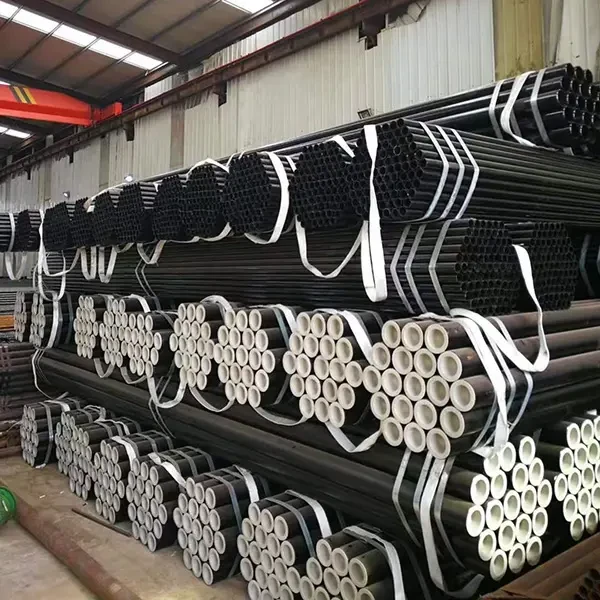
Steel conduit pipe, encompassing Electrical Metallic Tubing (EMT), Rigid Metal Conduit (RMC), and Intermediate Metal Conduit (IMC), is a foundational component in electrical infrastructure. Its primary function is to protect and route electrical wiring, offering mechanical strength and shielding against electromagnetic interference. Within the industrial chain, steel conduit resides downstream of steel production, undergoing forming, threading, and coating processes. Core performance characteristics center around its mechanical rigidity, electrical grounding capabilities, corrosion resistance, and adherence to stringent safety standards. A persistent industry pain point revolves around achieving long-term corrosion protection, particularly in harsh environments, and ensuring consistent dimensional accuracy during installation, minimizing labor costs and potential system failures. The selection between EMT, RMC, and IMC is dictated by application requirements, balancing cost, weight, and mechanical protection needs.
Material Science & Manufacturing
The dominant material for steel conduit is carbon steel, specifically low carbon steel grades such as ASTM A53 Grade B or equivalent. These steels exhibit adequate ductility for forming and welding. Raw material properties, including tensile strength (typically 450-550 MPa), yield strength (around 250 MPa), and elongation (18-25%), are critical for ensuring conduit integrity. Manufacturing typically begins with hot-rolled steel strip, which is then formed into a seamless or welded pipe. For welded conduit, Electric Resistance Welding (ERW) is commonly employed, offering high production rates. Critical parameters during ERW include welding current, welding speed, and electrode pressure, all influencing weld seam quality. After forming, the conduit undergoes threading (for RMC and IMC) using automated threading machines. Dimensional accuracy, particularly thread pitch and diameter, is meticulously controlled. Finally, conduit is often coated with zinc (galvanizing) to provide corrosion protection. Galvanizing can be achieved through hot-dip galvanizing or electrogalvanizing, each offering varying levels of corrosion resistance and coating thickness. The zinc coating’s adherence and thickness are key performance indicators, directly impacting service life. Post-coating inspection involves checking for coating defects like porosity and uneven coverage.

Performance & Engineering
The mechanical performance of steel conduit is paramount. Force analysis centers on its ability to withstand bending moments, axial loads, and impact forces without deformation or failure. Conduit’s bending radius must adhere to industry standards (typically a minimum of 10 times the conduit diameter) to avoid kinking and maintain structural integrity. Environmental resistance is another crucial consideration. Exposure to moisture, corrosive chemicals, and temperature fluctuations can lead to corrosion and degradation. The galvanizing layer provides a barrier against corrosion, but its effectiveness diminishes over time. Cathodic protection techniques, such as sacrificial anodes or impressed current systems, can be employed in highly corrosive environments to extend service life. Compliance with electrical codes (NEC in the US, IEC internationally) dictates conduit fill ratios, grounding requirements, and support spacing. Proper grounding is essential for ensuring electrical safety and minimizing electromagnetic interference. Engineering calculations must consider factors like short-circuit current capacity and ground fault current paths to select appropriately sized conduit and grounding conductors. Conduit supports must be adequately spaced to prevent sagging and maintain mechanical stability, particularly under heavy cable loads.
Technical Specifications
| Parameter | EMT (Electrical Metallic Tubing) | IMC (Intermediate Metal Conduit) | RMC (Rigid Metal Conduit) |
|---|---|---|---|
| Wall Thickness (Typical) | 0.065 – 0.083 in (1.65 – 2.11 mm) | 0.083 – 0.109 in (2.11 – 2.77 mm) | 0.109 – 0.154 in (2.77 – 3.91 mm) |
| Tensile Strength (Minimum) | 50,000 PSI (345 MPa) | 60,000 PSI (414 MPa) | 70,000 PSI (483 MPa) |
| Yield Strength (Minimum) | 36,000 PSI (248 MPa) | 42,000 PSI (290 MPa) | 50,000 PSI (345 MPa) |
| Standard Compliance | UL 797, ANSI C80.3 | UL 651, ANSI C80.6 | UL 651, ANSI C80.1 |
| Typical Galvanization Coating | Zinc Plated / Zinc Coated | Hot-Dip Galvanized | Hot-Dip Galvanized |
| Weight per Foot (Approx.) | 0.68 lbs (1.09 kg/m) | 0.89 lbs (1.42 kg/m) | 1.29 lbs (2.06 kg/m) |
Failure Mode & Maintenance
Steel conduit is susceptible to several failure modes. Corrosion is a primary concern, leading to thinning of the conduit wall and eventual perforation. Crevice corrosion, occurring in threaded connections or areas with trapped moisture, is particularly aggressive. Mechanical damage, such as dents, bending beyond the allowable radius, or impact from dropped objects, can compromise structural integrity. Weld seam failure in ERW conduit is another potential issue, often initiated by stress concentrations or material defects. Fatigue cracking can occur under cyclic loading conditions, particularly at support points. Maintenance involves regular visual inspections for signs of corrosion, physical damage, and loose connections. Corroded areas should be cleaned and treated with a corrosion inhibitor or protective coating. Damaged conduit sections should be replaced. Periodic torque checks of threaded connections are recommended to ensure proper grounding continuity. For conduit installed in harsh environments, supplementary corrosion protection measures, such as applying a sacrificial coating or implementing cathodic protection, may be necessary. Regular cleaning to remove debris and contaminants can also extend service life.
Industry FAQ
Q: What is the primary difference between RMC and IMC in terms of corrosion resistance?
A: RMC typically has a thicker galvanizing coating than IMC, offering superior corrosion resistance. While both are hot-dip galvanized, the zinc coating thickness is greater for RMC. This thicker coating provides a more robust barrier against corrosive elements, making RMC the preferred choice for highly corrosive environments.
Q: How does the fill ratio of a conduit affect its performance and safety?
A: Exceeding the recommended conduit fill ratio increases the impedance of the grounding path, reducing the effectiveness of fault current clearing. It also generates heat, potentially damaging the insulation of the enclosed conductors and increasing the risk of fire. Maintaining proper fill ratios, as specified by electrical codes, is critical for both safety and performance.
Q: What are the common causes of thread failure in RMC installations?
A: Common causes include over-tightening during installation, which can strip the threads, and corrosion within the threaded connections. Using incompatible threading compounds or applying insufficient lubrication can also contribute to thread failure. Proper installation techniques, including the use of appropriate threading compounds and torque specifications, are essential.
Q: What are the considerations when selecting conduit for outdoor applications?
A: Outdoor applications demand enhanced corrosion protection. RMC with a heavy galvanizing coating is generally preferred. Alternatively, conduit can be coated with specialized corrosion-resistant polymers. UV exposure can degrade some coatings, so selecting UV-resistant materials is vital. Additionally, conduit supports must be designed to withstand wind loads and environmental stresses.
Q: How does the bending radius impact the electrical characteristics of the conduit?
A: Bending conduit beyond the specified minimum radius can distort the conduit, potentially damaging the insulation of the conductors within and increasing electrical resistance. Severely kinked conduit can create hotspots and compromise the grounding path, impacting safety and performance. Adhering to the recommended bending radius ensures the conduit’s integrity and optimal electrical characteristics.
Conclusion
Steel conduit pipe remains an indispensable element in electrical distribution systems, offering robust mechanical protection and reliable grounding. The selection of EMT, IMC, or RMC hinges on a careful assessment of environmental conditions, load requirements, and budget constraints. Understanding the material science, manufacturing processes, and potential failure modes is crucial for ensuring long-term performance and safety.
Future trends point towards the development of more durable and corrosion-resistant coatings, as well as improved manufacturing techniques to minimize weld seam defects. Continued adherence to industry standards and best practices in installation and maintenance are paramount for maximizing the lifespan and reliability of steel conduit systems. A proactive approach to corrosion prevention, including regular inspections and the implementation of cathodic protection when necessary, will remain essential for safeguarding electrical infrastructure.
