
Introduction
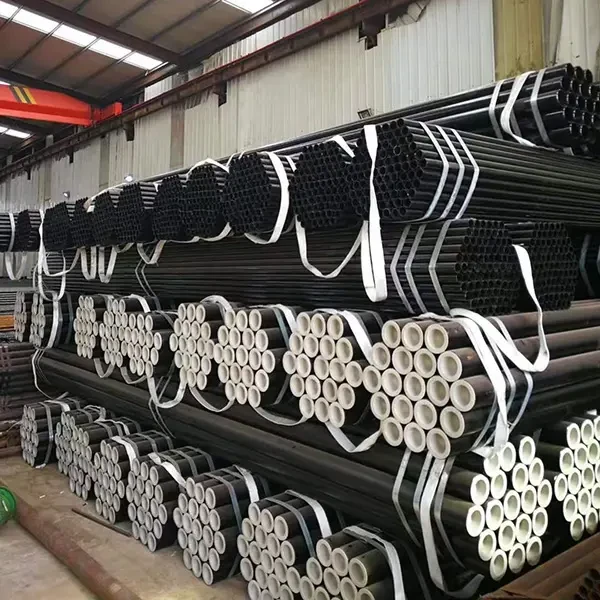
3-inch steel pipe, a fundamental component in numerous industrial applications, is categorized primarily by its nominal pipe size (NPS) of 3 inches, referencing the approximate internal diameter. Its designation as “steel” encompasses a broad range of alloy compositions, with carbon steel being the most prevalent due to its cost-effectiveness and adequate mechanical properties for many services. This technical guide focuses on the characteristics, manufacturing, performance, and maintenance of schedule 40 carbon steel pipe, representing a common industry standard. Within the supply chain, price fluctuations are heavily influenced by raw material costs (iron ore, scrap steel, alloying elements), manufacturing processes (seamless vs. welded), grade of steel, order volume, and prevailing market conditions. Understanding these factors is crucial for procurement managers and engineers optimizing project costs. Core performance characteristics include pressure containment capability, fluid flow capacity, and resistance to corrosion and mechanical stress. The selection of appropriate steel pipe grade and wall thickness is dictated by the specific application, considering factors such as operating temperature, pressure, and the nature of the conveyed fluid.
Material Science & Manufacturing
The primary raw material for 3-inch steel pipe is carbon steel, typically containing up to 2.1% carbon by weight, with iron as the base element. Other crucial elements include manganese (improving strength and hardenability), silicon (enhancing strength and deoxidizing properties), phosphorus, and sulfur (present as impurities, controlled for optimal ductility). Material properties are heavily dictated by the carbon content: lower carbon content results in increased ductility and weldability, while higher carbon content increases hardness and tensile strength. The manufacturing process dramatically impacts the pipe's mechanical properties and cost. Seamless pipe is produced by piercing a solid billet of steel and subsequently drawing it to the desired dimensions, resulting in a homogenous structure with superior pressure-bearing capacity and resistance to fatigue cracking. Welded pipe, conversely, is manufactured by forming a steel plate into a cylindrical shape and welding the seam longitudinally. Electric Resistance Welding (ERW) and Double Submerged Arc Welding (DSAW) are common welding techniques. ERW is cost-effective for smaller diameters and thinner walls, while DSAW is used for larger diameters and thicker walls. Critical manufacturing parameters include controlled cooling rates after welding to minimize residual stresses, non-destructive testing (NDT) such as ultrasonic testing (UT) and radiographic testing (RT) to detect defects in the weld seam, and dimensional accuracy to ensure proper fit-up in piping systems. Heat treatment processes like normalizing and annealing are often employed to refine the grain structure and improve ductility. Chemical composition control is vital, monitored through techniques such as optical emission spectroscopy to ensure adherence to standards like ASTM A53 or API 5L.
Performance & Engineering
The performance of 3-inch steel pipe is governed by several key engineering principles. Hydrostatic pressure testing, conducted according to standards like API 5L, verifies the pipe's ability to withstand internal pressure without failure. The Barlow's formula (P = 2St/D) is a foundational equation for calculating hoop stress (P = pressure, S = tensile strength, t = wall thickness, D = outside diameter). Fatigue analysis is crucial for applications involving cyclic loading, considering factors such as stress concentration at welds and geometric discontinuities. Corrosion resistance depends heavily on the steel grade and the environment. Carbon steel is susceptible to corrosion in aqueous environments, necessitating the use of protective coatings (e.g., epoxy coatings, galvanization) or the selection of corrosion-resistant alloys (e.g., stainless steel) for harsh environments. Thermal expansion and contraction must be accounted for in piping system design to prevent excessive stress on pipe joints and supports. Finite Element Analysis (FEA) is often employed to model complex stress distributions and optimize pipe support locations. Compliance with industry standards such as ASME B31.3 (Process Piping) and ASME B31.1 (Power Piping) is essential for ensuring safe and reliable operation. Furthermore, the pipe's ability to transmit fluids efficiently is dictated by its internal diameter and surface roughness, influencing friction losses and energy consumption. Consideration must be given to fluid velocity to avoid erosion corrosion or excessive noise.
Technical Specifications
| Parameter | Schedule 40 Carbon Steel (Typical) | Schedule 80 Carbon Steel (Typical) | ASTM A53 Grade B (Typical) | API 5L X42 (Typical) |
|---|---|---|---|---|
| Nominal Pipe Size (NPS) | 3 inches | 3 inches | 3 inches | 3 inches |
| Outside Diameter (OD) | 4.5 inches (114.3 mm) | 4.5 inches (114.3 mm) | 4.5 inches (114.3 mm) | 4.5 inches (114.3 mm) |
| Wall Thickness | 0.218 inches (5.54 mm) | 0.280 inches (7.11 mm) | 0.218 inches (5.54 mm) | 0.258 inches (6.55 mm) |
| Minimum Yield Strength | 36,000 psi (248 MPa) | 36,000 psi (248 MPa) | 36,000 psi (248 MPa) | 42,000 psi (290 MPa) |
| Minimum Tensile Strength | 58,000 psi (400 MPa) | 58,000 psi (400 MPa) | 58,000 psi (400 MPa) | 65,000 psi (448 MPa) |
| Hydrostatic Test Pressure | 600 psi (4140 kPa) | 900 psi (6205 kPa) | 600 psi (4140 kPa) | 840 psi (5790 kPa) |
Failure Mode & Maintenance
Failure modes in 3-inch steel pipe are diverse and depend heavily on the operating environment and application. Corrosion, particularly localized corrosion like pitting and crevice corrosion, is a common failure mechanism, leading to wall thinning and eventual leakage. External corrosion can occur due to atmospheric exposure, especially in humid or saline environments. Fatigue cracking can initiate at weld defects, stress concentrators (e.g., dents, gouges), or corrosion pits, propagating under cyclic loading. Erosion corrosion, caused by the abrasive action of fluids containing solid particles, can wear away the pipe wall. High-temperature applications can lead to creep rupture, a time-dependent failure mechanism caused by sustained stress at elevated temperatures. Hydrogen embrittlement, a phenomenon where hydrogen diffuses into the steel lattice and reduces ductility, can occur in specific environments. Maintenance strategies include regular visual inspections for signs of corrosion or damage, non-destructive testing (NDT) methods like ultrasonic thickness testing (UTT) to monitor wall thickness, and application of protective coatings to prevent corrosion. Cathodic protection, using sacrificial anodes or impressed current systems, can mitigate corrosion in buried pipelines. Periodic hydrostatic testing can verify the integrity of the pipe. Proper support and anchoring of the pipeline are crucial to prevent excessive stress. Replacement of corroded or damaged pipe sections is essential to prevent catastrophic failures. For welded pipe, regular weld inspection is vital.
Industry FAQ
Q: What is the difference between seamless and welded 3-inch steel pipe, and when should each be used?
A: Seamless pipe offers superior strength and corrosion resistance due to its homogenous structure, making it suitable for high-pressure applications, critical services, and environments where fatigue cracking is a concern. Welded pipe is generally more cost-effective, but its weld seam introduces a potential weakness. Welded pipe is typically used for less demanding applications, such as conveying water or low-pressure gases. The selection depends on a careful assessment of pressure requirements, fluid characteristics, and budgetary constraints.
Q: How does the schedule number (e.g., Schedule 40, Schedule 80) affect the performance of 3-inch steel pipe?
A: The schedule number defines the wall thickness of the pipe. Higher schedule numbers correspond to thicker walls, resulting in increased pressure-bearing capacity and improved resistance to corrosion and erosion. However, thicker walls also increase the pipe's weight and cost. Schedule 40 is common for moderate pressure applications, while Schedule 80 is preferred for higher pressures or more demanding service conditions.
Q: What are the common steel grades used for 3-inch steel pipe, and what are their respective advantages?
A: Common steel grades include ASTM A53 Grade B (general purpose carbon steel), API 5L X42 (pipeline steel with improved weldability and toughness), and A106 Grade B (high-temperature service). A53 Grade B offers a cost-effective solution for many applications. API 5L X42 provides enhanced toughness and is frequently used in oil and gas pipelines. A106 Grade B is designed for elevated temperature applications, maintaining strength at higher temperatures.
Q: What corrosion prevention measures should be implemented for 3-inch steel pipe in a marine environment?
A: Marine environments are highly corrosive due to the presence of saltwater. Recommended measures include applying epoxy coatings with high salt spray resistance, utilizing cathodic protection systems (sacrificial anodes or impressed current), selecting corrosion-resistant alloys (e.g., stainless steel, duplex stainless steel), and regular inspection and maintenance to detect and repair corrosion damage promptly.
Q: How often should hydrostatic testing be performed on 3-inch steel pipelines?
A: The frequency of hydrostatic testing is dictated by regulatory requirements and company-specific procedures. Generally, new pipelines undergo hydrostatic testing before commissioning. Subsequent testing intervals are typically determined based on the pipeline's operating conditions, age, and the consequences of failure. Intervals can range from every 5 to 10 years, but a risk-based inspection (RBI) approach is increasingly used to optimize testing schedules based on the probability and consequences of failure.
Conclusion
The selection and implementation of 3-inch steel pipe require a comprehensive understanding of material science, manufacturing processes, engineering principles, and industry standards. Optimizing cost while ensuring long-term reliability hinges on careful consideration of factors like steel grade, wall thickness, corrosion protection, and adherence to relevant regulations. The price of 3-inch steel pipe is a dynamic metric, influenced by fluctuating raw material costs and supply-demand dynamics, requiring diligent market analysis by procurement professionals.
Future trends will likely emphasize the adoption of advanced materials (e.g., high-strength low-alloy steels, corrosion-resistant alloys) and innovative manufacturing techniques (e.g., laser welding) to enhance performance and reduce life-cycle costs. Furthermore, the increasing use of digital technologies, such as sensor-based monitoring and predictive maintenance, will enable proactive identification and mitigation of potential failure modes, maximizing the lifespan and safety of steel pipe infrastructure.
