
Introduction
Steel pipe supply represents a critical component within the broader industrial infrastructure, functioning as a fluid and gas conveyance system across diverse sectors including oil and gas, construction, water management, and manufacturing. Its technical position within the industry chain extends from raw material sourcing (iron ore, alloying elements) through steelmaking, forming (seamless or welded), finishing (coating, threading), and finally, distribution to end-users. Core performance characteristics center around mechanical strength (yield strength, tensile strength), pressure containment capability, corrosion resistance, and dimensional accuracy. Steel pipe isn't merely a conduit; it’s a structurally engineered product requiring stringent adherence to international standards to ensure safety, longevity, and operational efficiency. Current industry challenges revolve around fluctuating raw material costs, increasingly demanding environmental regulations concerning coating materials, and the need for specialized alloys to handle extreme operating conditions (high temperature, high pressure, corrosive environments).
Material Science & Manufacturing
The fundamental material underpinning steel pipe is carbon steel, typically produced via basic oxygen furnace (BOF) or electric arc furnace (EAF) processes. Alloying elements – manganese, silicon, chromium, nickel, molybdenum – are added to tailor specific properties. Seamless pipe is manufactured through processes like rotary piercing, mandrel rolling, or extrusion. Rotary piercing involves heating a billet and forcing a mandrel through its center, creating a hollow shell. Welded pipe, conversely, is formed by rolling steel plates into a cylindrical shape and welding the seam, utilizing methods such as Electric Resistance Welding (ERW), Submerged Arc Welding (SAW), or Laser Beam Welding (LBW). ERW is common for smaller diameters, while SAW is favored for thicker-walled, larger diameter pipes due to its higher deposition rates and penetration. Critical manufacturing parameters include controlled cooling rates to optimize microstructure (pearlite, bainite, martensite), precise weld bead geometry and composition to prevent defects, and rigorous non-destructive testing (NDT) – ultrasonic testing (UT), radiographic testing (RT), magnetic particle inspection (MPI) – to ensure weld integrity. Chemical composition control is paramount; deviations from specified carbon equivalent (CE) levels can significantly impact weldability and toughness. Pipe coatings, such as polyethylene (PE), polypropylene (PP), epoxy, or fusion-bonded epoxy (FBE), are applied to enhance corrosion resistance. These coatings necessitate meticulous surface preparation – blasting to achieve a specific surface profile – and controlled application temperatures to ensure adhesion and prevent blistering.
Performance & Engineering
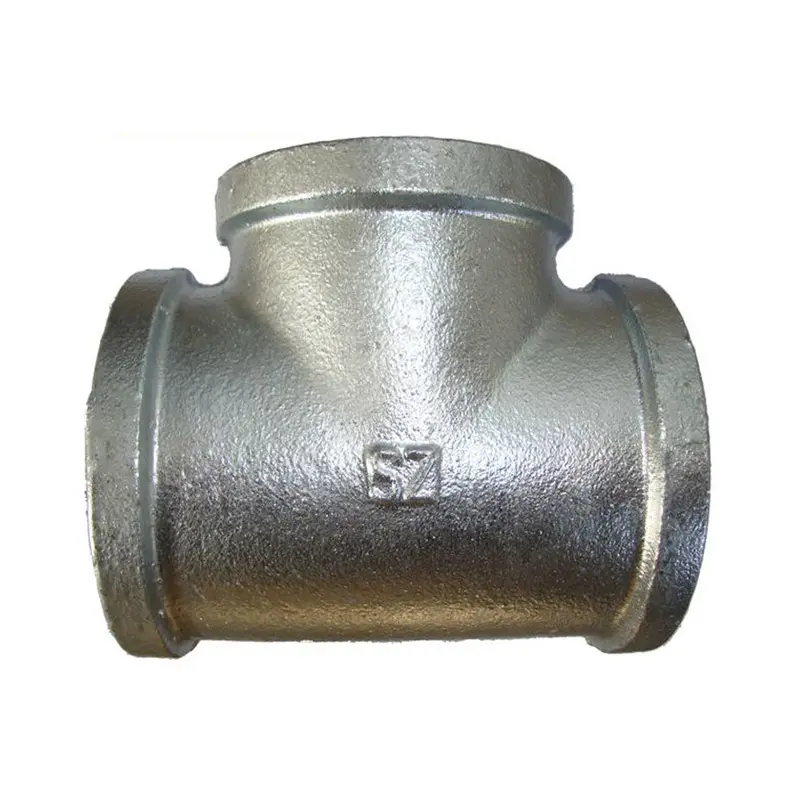
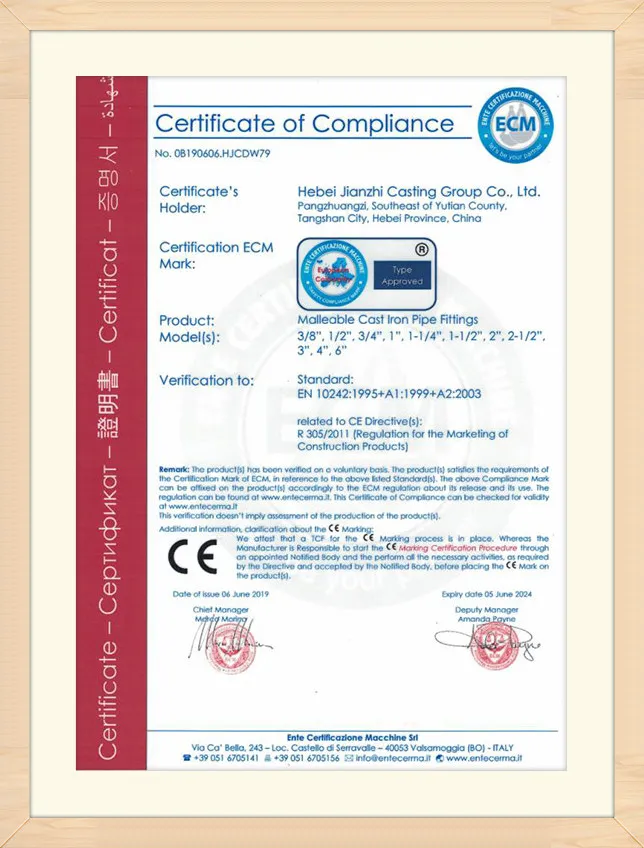
Performance of steel pipe is governed by several key engineering principles. Stress analysis, employing Finite Element Analysis (FEA), is critical in determining the pipe’s ability to withstand internal pressure, external loads (soil loading, bending moments), and thermal stresses. The Barlow's formula (σ = PD/2t, where σ is hoop stress, P is internal pressure, D is diameter, and t is wall thickness) provides a fundamental basis for pressure containment calculations, but FEA provides a more accurate assessment of stress distribution, particularly around welds and geometric discontinuities. Corrosion resistance is a significant performance factor; material selection (stainless steel, duplex stainless steel, carbon steel with protective coatings) must align with the fluid or gas being conveyed and the operating environment. Environmental resistance extends beyond corrosion to include erosion (particularly in slurry transport applications), and susceptibility to hydrogen embrittlement (in high-strength steels exposed to hydrogen-containing environments). Compliance requirements are stringent, dictated by standards like ASME B31.3 (Process Piping), API 5L (Line Pipe), and EN 10208/2 (Steel Tubes for Pressure Purposes). Functional implementation involves considerations such as thread types (NPT, API), fitting configurations (elbows, tees, reducers), and the impact of pipe supports on stress distribution. Fatigue analysis is also critical, especially in applications involving cyclic loading (e.g., offshore platforms subjected to wave action).
Technical Specifications
| Parameter | ASTM A53 Grade B (Carbon Steel) | ASTM A36 (Carbon Steel) | ASTM A106 Grade B (Carbon Steel) | 304/304L (Stainless Steel) |
|---|---|---|---|---|
| Yield Strength (MPa) | 250 | 250 | 240 | 205-275 |
| Tensile Strength (MPa) | 400-530 | 400-550 | 400-550 | 517-724 |
| Wall Thickness Range (mm) | 2.77-12.7 | 3.2-50.8 | 2.77-19.05 | 0.8-50.8 |
| Outer Diameter Range (mm) | 21.3-660.4 | 12.7-762 | 21.3-660.4 | 6.35-152.4 |
| Corrosion Rate (mm/year in NaCl) | 0.05-0.5 (dependent on environment) | 0.05-0.5 (dependent on environment) | 0.05-0.5 (dependent on environment) | <0.001 |
| Maximum Operating Pressure (MPa) | Dependent on diameter and thickness | Dependent on diameter and thickness | Dependent on diameter and thickness | Dependent on diameter and thickness |
Failure Mode & Maintenance
Common failure modes in steel pipe include corrosion (uniform, pitting, galvanic, crevice), fatigue cracking (due to cyclic loading), stress corrosion cracking (SCC), erosion (in abrasive environments), and weld defects (porosity, lack of fusion, cracks). Corrosion initiates at surface imperfections or areas with disrupted coatings. Fatigue cracking typically originates at stress concentrators (welds, dents, geometric discontinuities) and propagates under cyclic loading. SCC occurs due to the combined action of tensile stress and a corrosive environment. Weld defects compromise the pipe’s integrity, leading to potential leaks or catastrophic failures. Maintenance strategies involve regular inspections (visual, ultrasonic thickness testing, radiographic testing), coating repair (blasting and re-coating), cathodic protection (sacrificial anodes or impressed current systems) to mitigate corrosion, and proactive replacement of pipes exhibiting signs of significant degradation. Internal cleaning, using methods like pigging, removes deposits that can contribute to corrosion and erosion. Detailed failure analysis, employing metallography and fracture mechanics, is essential to determine the root cause of failures and implement corrective actions. Proper storage practices – preventing moisture ingress and minimizing exposure to corrosive environments – are also critical to extend pipe lifespan.
Industry FAQ
Q: What is the impact of sulfur content on the weldability of steel pipe?
A: Higher sulfur content (above 0.025%) reduces weldability by forming iron sulfide inclusions in the weld metal, which can lead to hot cracking during cooling. Low-sulfur steels are preferred for welding applications, and specific welding procedures (e.g., preheating, post-weld heat treatment) may be required for higher-sulfur steels.
Q: How does the carbon equivalent (CE) affect the selection of welding consumables?
A: Carbon Equivalent (CE) is a parameter used to estimate the hardenability of a steel. Higher CE values indicate increased hardenability and a greater risk of cracking during welding. The selection of welding consumables (electrodes, filler metals) must be based on the CE of the base metal to ensure compatibility and prevent weld metal cracking. Lower CE consumables are typically used for higher CE base metals.
Q: What are the key considerations when specifying stainless steel pipe for corrosive environments?
A: Selecting the appropriate grade of stainless steel is crucial. Austenitic stainless steels (304, 316) offer excellent corrosion resistance in many environments but may be susceptible to chloride-induced pitting corrosion. Duplex stainless steels provide superior resistance to pitting and stress corrosion cracking. Consider the specific corrosive agents (acids, bases, chlorides) and their concentrations, temperature, and flow velocity. Passivation treatment is also important to establish a protective oxide layer.
Q: What is the role of Non-Destructive Testing (NDT) in ensuring the quality of steel pipe?
A: NDT methods (UT, RT, MPI, Liquid Penetrant Inspection) are used to detect internal and surface defects without damaging the pipe. Ultrasonic testing (UT) is widely used to detect internal flaws, while radiographic testing (RT) provides a visual image of the weld and surrounding material. Magnetic particle inspection (MPI) detects surface and near-surface cracks in ferromagnetic materials. NDT is crucial for verifying weld integrity and ensuring compliance with quality standards.
Q: What are the implications of using different pipe schedules (e.g., Schedule 40, Schedule 80)?
A: Pipe schedule refers to the wall thickness of the pipe. Higher schedules (e.g., Schedule 80) have thicker walls, resulting in higher pressure-handling capabilities and greater resistance to mechanical damage. However, thicker walls also increase material cost and weight. Schedule selection must consider the operating pressure, temperature, fluid properties, and applicable safety factors.
Conclusion
Steel pipe supply remains a foundational element in diverse industrial applications, underpinned by complex material science, precise manufacturing processes, and rigorous engineering principles. Maintaining structural integrity and ensuring long-term performance demands meticulous attention to material selection, weld quality control, corrosion mitigation strategies, and adherence to stringent industry standards. The ongoing evolution of alloy development, coating technologies, and inspection techniques continuously improves the capabilities and reliability of steel pipe systems.
Looking ahead, the industry will increasingly focus on sustainable practices, including the development of eco-friendly coatings, the utilization of recycled materials, and the implementation of advanced monitoring systems for predictive maintenance. Furthermore, addressing the challenges posed by extreme operating conditions – high temperatures, corrosive environments, and demanding mechanical loads – will drive innovation in alloy composition and manufacturing techniques, ultimately ensuring the continued safe and efficient conveyance of fluids and gases across critical infrastructure.
