
Introduction
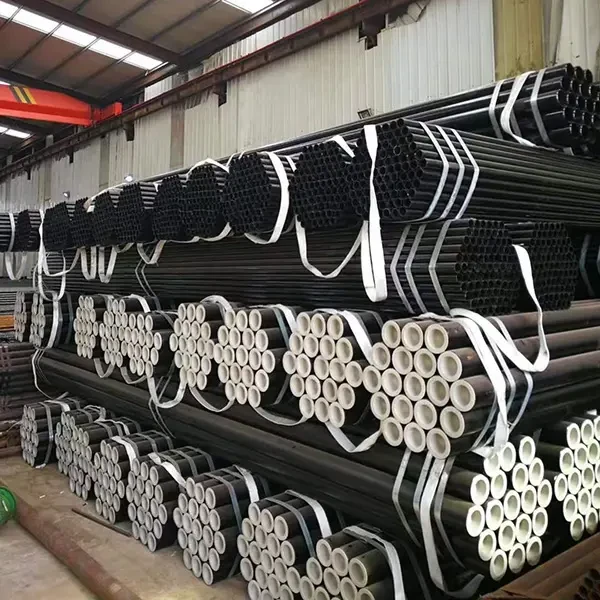
Steel threaded pipe is a fundamental component in fluid conveyance systems across numerous industries, including oil and gas, water distribution, chemical processing, and construction. It consists of steel pipe with standardized threading machined onto its ends, allowing for secure, leak-tight connections via threaded couplings. Its technical position within the industry chain is as a primary fabricated product, derived from steel billet or seamless tube stock, serving as a critical intermediary between steel mills and end-user applications. Core performance characteristics center on its pressure-bearing capacity, resistance to corrosion (dependent on steel grade and coating), dimensional accuracy of threads for proper engagement, and overall structural integrity to withstand operational stresses. The industry consistently faces challenges regarding thread damage during handling, galvanic corrosion in dissimilar metal connections, and the need for specialized installation techniques to ensure long-term reliability.
Material Science & Manufacturing
The predominant material for steel threaded pipe is carbon steel, typically conforming to ASTM A53 Grade B or API 5L specifications. These steels exhibit a microstructure consisting primarily of ferrite and pearlite, providing a balance of strength, ductility, and weldability. Alloy steels, such as those containing chromium and molybdenum (e.g., ASTM A335 Grade P11), are employed in high-temperature, high-pressure applications demanding enhanced creep resistance and oxidation resistance. The raw material undergoes several manufacturing stages. Seamless pipe is produced via processes like mandrel rolling or extrusion, resulting in a homogenous structure without weld seams. Welded pipe is manufactured from steel strip formed into a cylindrical shape and subsequently welded using electric resistance welding (ERW) or submerged arc welding (SAW). Following pipe formation, threading is achieved using automated die-threading machines. Critical parameters include die speed, cutting fluid application, and thread form geometry to ensure adherence to standards like ANSI/ASME B1.20.1. Surface treatment, including galvanizing or epoxy coating, is frequently applied to enhance corrosion resistance. Heat treatment, such as normalizing or quenching and tempering, is used to refine the steel’s microstructure and achieve desired mechanical properties. Controlling chemical composition (carbon equivalent, sulfur content), grain size, and inclusion content are vital for optimal thread engagement and fatigue performance.
Performance & Engineering
Performance of steel threaded pipe is dictated by its ability to withstand internal pressure, external loads, and environmental factors. Internal pressure rating is calculated based on Barlow’s formula, considering pipe diameter, wall thickness, and material tensile strength. Force analysis involves assessing bending moments induced by weight of fluid, external forces, and thermal expansion. Thread engagement is critical; insufficient engagement leads to stripping and leakage. The thread profile (e.g., NPT, BSPT) dictates the sealing mechanism and pressure capacity. Environmental resistance encompasses corrosion, erosion, and temperature effects. Galvanizing provides sacrificial protection against corrosion, while coatings offer a barrier against corrosive media. Low-temperature embrittlement is a concern in cold climates, demanding materials with sufficient impact toughness. Compliance requirements include adherence to ASME B31.3 (Process Piping), API 5L (Pipeline Specifications), and local building codes. Fatigue analysis is essential for applications involving cyclic loading, considering stress concentration at the thread roots. Proper joint design, including thread sealant application and torque control during installation, are crucial for preventing leaks and ensuring long-term structural integrity. Consideration of creep and stress relaxation is vital in high-temperature applications.
Technical Specifications
| Specification | ASTM A53 Grade B | ASTM A335 Grade P11 | API 5L X42 |
|---|---|---|---|
| Yield Strength (MPa) | 240 | 205 | 345 |
| Tensile Strength (MPa) | 400 | 415 | 485 |
| Wall Thickness (mm) | Schedule 40, 80 | Schedule 40, 80 | Variable |
| Outside Diameter (mm) | 1/2" - 4" | 1/2" - 4" | 6" - 48" |
| Thread Type | NPT, BSPT | NPT, BSPT | NPT, BSPT |
| Corrosion Resistance | Moderate (with coating) | High (alloy steel) | Moderate (with coating) |
Failure Mode & Maintenance
Steel threaded pipe is susceptible to several failure modes. Thread stripping occurs due to excessive torque, improper thread engagement, or material defects. Corrosion, particularly galvanic corrosion when connected to dissimilar metals, leads to wall thinning and eventual leakage. Fatigue cracking initiates at stress concentration points, such as thread roots, under cyclic loading. Erosion from abrasive fluids causes material removal and weakens the pipe wall. Creep, at elevated temperatures, results in gradual deformation and eventual rupture. Hydrogen embrittlement can occur in high-strength steels exposed to hydrogen-containing environments. Maintenance involves regular visual inspections for signs of corrosion, thread damage, and leaks. Protective coatings should be reapplied as needed. Torque values during installation must be strictly controlled, utilizing calibrated torque wrenches. Thread sealants should be compatible with the conveyed fluid and applied according to manufacturer's recommendations. Non-destructive testing (NDT) methods, such as ultrasonic testing or radiographic testing, can be employed to detect internal flaws. Periodic hydrostatic testing verifies the pipe’s pressure-bearing capacity. Replacement of corroded or damaged sections is essential to prevent catastrophic failure.
Industry FAQ
Q: What is the primary difference between NPT and BSPT threads, and which is preferred for high-pressure applications?
A: NPT (National Pipe Tapered) threads are a 60-degree tapered thread form commonly used in North America. BSPT (British Standard Pipe Tapered) threads are a 55-degree tapered thread form prevalent in Europe and other regions. NPT generally provides a tighter seal and is often preferred for higher pressure applications, but requires proper thread sealant. BSPT relies more on thread interference for sealing and is often used with PTFE tape.
Q: How does the carbon equivalent (CE) of steel affect its weldability and thread machining?
A: Higher carbon equivalent values indicate increased carbon and alloy content, which generally reduce weldability and increase hardness. This makes thread machining more difficult and can lead to tool wear. Lower CE values facilitate easier welding and machining, but may compromise strength. Careful selection of welding parameters and cutting tools is crucial for high-CE steels.
Q: What are the risks associated with using dissimilar metals in threaded connections, and how can they be mitigated?
A: Connecting dissimilar metals (e.g., steel and brass) creates a galvanic cell, leading to accelerated corrosion of the more anodic metal. Mitigation strategies include using dielectric unions or sleeves to isolate the metals, applying protective coatings, and selecting compatible metal pairs. Regular inspection of the connection for signs of corrosion is also essential.
Q: What are the critical considerations for selecting a thread sealant for specific fluids and operating conditions?
A: Thread sealant selection must consider the fluid being conveyed, its temperature, pressure, and chemical compatibility. PTFE tape is suitable for general-purpose applications, while anaerobic sealants provide a more robust seal for high-pressure and corrosive environments. Sealants must be resistant to degradation by the fluid and maintain their sealing properties over the operating temperature range.
Q: What is the role of hydrostatic testing in ensuring the integrity of steel threaded pipe systems?
A: Hydrostatic testing involves pressurizing the pipe system with a test fluid (typically water) to a pressure exceeding its normal operating pressure. This test verifies the system’s ability to withstand pressure, identifies leaks, and detects structural weaknesses. It is a critical quality control step to ensure safe and reliable operation.
Conclusion
Steel threaded pipe remains a vital component in numerous industrial applications due to its cost-effectiveness, ease of installation, and proven reliability. A thorough understanding of the material science, manufacturing processes, and performance characteristics is paramount for engineers and procurement managers. Proper selection of steel grade, thread type, and protective coatings, combined with meticulous installation practices and regular maintenance, are crucial for maximizing lifespan and preventing premature failure.
Future advancements will likely focus on improved corrosion-resistant alloys, enhanced thread geometries for increased sealing efficiency, and the integration of smart sensors for real-time monitoring of pipe integrity. Adherence to relevant international standards and a proactive approach to failure analysis will continue to drive advancements in the design, operation, and maintenance of steel threaded pipe systems.
