
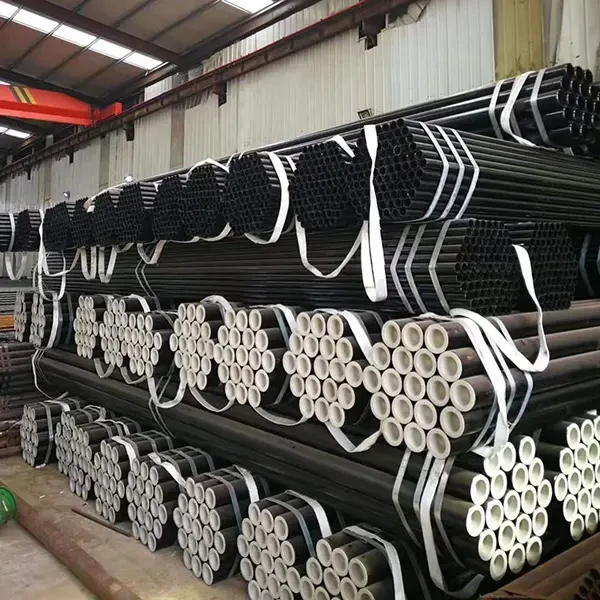
Introduction
Steel tube fabrication represents a critical component within the broader metals industry, serving as a foundational element in infrastructure, mechanical engineering, and fluid conveyance systems. This technical guide will comprehensively detail the manufacturing processes, material properties, performance characteristics, and potential failure modes associated with steel tubes, intended for engineers, procurement specialists, and quality control personnel. Steel tubes, distinct from pipe which is often defined by size, are generally produced to precise dimensions and tolerances, often utilizing welding or seamless manufacturing techniques. Core performance parameters encompass yield strength, tensile strength, corrosion resistance, and pressure containment capability, each dictated by steel alloy composition and processing conditions. The increasing demand for high-strength, lightweight, and corrosion-resistant tubes drives ongoing advancements in material science and manufacturing technologies, particularly within specialized applications like automotive exhaust systems and high-pressure hydraulic lines. Understanding the interplay between material science, manufacturing practices, and operational environments is paramount to ensuring long-term structural integrity and system reliability.
Material Science & Manufacturing
The raw materials for steel tube fabrication predominantly consist of carbon steel, alloy steel (containing elements like manganese, chromium, nickel, molybdenum, vanadium), and stainless steel (with a minimum of 10.5% chromium). Carbon content significantly influences steel’s hardness and weldability; higher carbon content increases hardness but reduces ductility and weldability. Alloying elements are introduced to enhance specific properties – chromium for corrosion resistance, manganese for strength and hardenability, nickel for toughness, and molybdenum for high-temperature strength. Manufacturing processes fall into two primary categories: seamless and welded. Seamless tube production typically involves piercing a solid billet of steel, followed by drawing and rolling to achieve the desired dimensions. This process, known as the Mannesmann process, yields tubes with superior strength and pressure resistance, essential in critical applications like oil and gas pipelines. Welded tube production utilizes steel strips formed into a cylindrical shape, subsequently welded along the seam using techniques like Electric Resistance Welding (ERW), submerged arc welding (SAW), or laser welding. ERW is cost-effective for high-volume production of smaller diameter tubes, while SAW is used for thicker-walled, large-diameter tubes. Key parameter control includes maintaining precise temperature during welding to ensure complete fusion and minimal residual stress. Heat treatment processes, such as annealing, normalizing, and quenching/tempering, are employed to refine the microstructure, improve mechanical properties, and relieve internal stresses. Chemical composition verification via optical emission spectroscopy (OES) and mechanical property testing (tensile, yield, impact) are critical quality control steps.

Performance & Engineering
Steel tube performance is dictated by its ability to withstand internal and external pressures, axial loads, bending moments, and torsional stresses. Force analysis, governed by principles of material mechanics, calculates stresses and strains under various loading conditions. The Barlow’s formula (σ = PD/2t) provides a simplified method for estimating hoop stress in thin-walled pressure vessels (where P=pressure, D=diameter, and t=wall thickness). However, more complex finite element analysis (FEA) is often required for intricate geometries and complex loading scenarios. Environmental resistance is crucial, particularly in corrosive environments. Corrosion manifests as uniform attack, pitting corrosion, crevice corrosion, and galvanic corrosion. Material selection (e.g., stainless steel for highly corrosive environments) and protective coatings (e.g., galvanizing, epoxy coating) mitigate corrosion. Compliance requirements are defined by industry standards and regulations (detailed in the footer). For pressure applications, adherence to ASME Boiler and Pressure Vessel Code Section IX (welding qualifications) and Section VIII (pressure vessel design) is mandatory. For structural applications, adherence to ASTM A53 (seamless steel pipe) or ASTM A500 (welded and seamless carbon steel structural tubing) is critical. Functional implementation demands meticulous attention to dimensional accuracy, weld quality, and surface finish to ensure proper fit-up, sealing, and operational reliability.
Technical Specifications
| Steel Grade | Yield Strength (MPa) | Tensile Strength (MPa) | Wall Thickness (mm) |
|---|---|---|---|
| ASTM A53 Grade B | 250 | 450 | 2.0 – 12.7 |
| ASTM A500 Grade C | 235 | 485 | 1.65 – 6.35 |
| AISI 304/304L (Stainless Steel) | 205 | 515 | 1.2 – 10.0 |
| API 5L X42 | 345 | 485 | 3.2 – 25.4 |
| ASTM A795 Grade A | 275 | 480 | 1.27 - 4.76 |
| EN 10210-1 S235JRH | 235 | 360-510 | 1.5 – 20 |
Failure Mode & Maintenance
Steel tubes are susceptible to several failure modes including fatigue cracking (due to cyclic loading), corrosion-induced cracking (stress corrosion cracking, hydrogen embrittlement), weld defects (porosity, inclusions, lack of fusion), and deformation (yielding, buckling). Fatigue cracking initiates at stress concentrators (weld toes, geometric discontinuities) and propagates incrementally under cyclic loading. Corrosion-induced cracking is accelerated by the presence of corrosive agents and tensile stresses. Weld defects compromise the structural integrity and can lead to catastrophic failure. Periodic non-destructive testing (NDT) techniques, such as ultrasonic testing (UT), radiographic testing (RT), and magnetic particle inspection (MPI), detect internal and surface flaws. Regular visual inspections identify surface corrosion and deformation. Preventive maintenance includes applying protective coatings, controlling corrosion environments, and implementing load monitoring systems. When cracks are detected, repair options include grinding and re-welding (subject to strict quality control procedures) or tube replacement. For corroded tubes, surface cleaning and application of corrosion inhibitors are viable maintenance strategies. Detailed failure analysis, including fractography and metallographic examination, determines the root cause of failure and informs preventative measures for future designs and maintenance schedules.
Industry FAQ
Q: What is the difference between seamless and welded steel tubes, and when should each be used?
A: Seamless tubes are manufactured from a single billet of steel, offering superior strength and resistance to pressure, making them ideal for critical applications like high-pressure pipelines and hydraulic cylinders. Welded tubes are made from steel strips and welded along the seam, typically being more cost-effective for less demanding applications. Welded tubes can exhibit slightly lower strength and are more susceptible to corrosion at the weld seam if not properly protected.
Q: How does the carbon content in steel affect its suitability for tube fabrication?
A: Higher carbon content increases the hardness and strength of steel, but it also reduces its ductility and weldability. Lower carbon steels are easier to weld and form, making them suitable for applications where ductility is more important than high strength. Medium carbon steels offer a balance of strength and weldability, while high carbon steels are used when maximum hardness and wear resistance are required.
Q: What are the common corrosion prevention methods for steel tubes?
A: Common methods include applying protective coatings (galvanizing, epoxy coating, paint), using corrosion-resistant alloys (stainless steel), implementing cathodic protection, and controlling the environment (reducing exposure to corrosive agents). The choice of method depends on the severity of the corrosion environment and the cost constraints.
Q: What NDT methods are commonly used for inspecting steel tubes, and what defects can they detect?
A: Ultrasonic testing (UT) detects internal flaws like cracks, porosity, and inclusions. Radiographic testing (RT) provides a visual image of internal defects. Magnetic particle inspection (MPI) detects surface and near-surface cracks. Liquid penetrant testing (PT) also detects surface cracks. Eddy current testing (ECT) can detect surface and near-surface defects and measure wall thickness.
Q: What standards govern the manufacturing and testing of steel tubes used in pressure applications?
A: ASME Boiler and Pressure Vessel Code Section IX (welding qualifications) and Section VIII (pressure vessel design) are crucial. API 5L specifies requirements for line pipe. ASTM A53 and A500 cover seamless and welded steel pipe, respectively. Compliance with these standards ensures the safe and reliable operation of pressure systems.
Conclusion
The selection, fabrication, and maintenance of steel tubes require a thorough understanding of material science principles, manufacturing processes, and performance characteristics. Optimizing steel alloy composition and manufacturing techniques allows for tailoring tube properties to specific application demands. Proactive monitoring for failure modes—such as fatigue, corrosion, and weld defects—through regular non-destructive testing, coupled with preventative maintenance strategies, significantly extends the operational lifespan and ensures the structural integrity of steel tube systems.
Future advancements in steel tube technology will likely focus on developing higher-strength, lightweight alloys, improving welding techniques to minimize residual stresses, and incorporating smart sensors for real-time monitoring of tube integrity. The increasing emphasis on sustainability will also drive the development of more environmentally friendly manufacturing processes and corrosion-resistant coatings. Continued research and development in these areas will be crucial for addressing the evolving challenges faced by industries reliant on steel tube technology.
