
Introduction
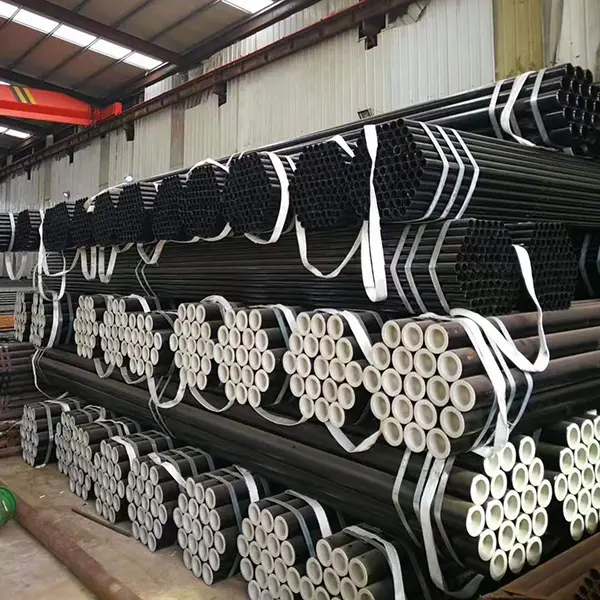
Steel tubes are hollow cylindrical sections, manufactured from steel, with significant applications across numerous industries including construction, automotive, aerospace, oil & gas, and mechanical engineering. They differentiate from steel pipes based on manufacturing processes and application – tubes are typically precision-made to exact tolerances for specific applications like bearings or structural components, while pipes primarily transport fluids. This guide provides an in-depth technical overview of steel tubes, encompassing material science, manufacturing processes, performance characteristics, failure modes, and relevant industry standards. The core pain point within the steel tube manufacturing industry stems from balancing cost-effectiveness with stringent quality control, particularly regarding dimensional accuracy, weld integrity, and corrosion resistance, all while navigating fluctuating raw material costs and increasingly demanding performance specifications. Achieving consistent mechanical properties and surface finish is also a persistent challenge.
Material Science & Manufacturing
Steel tubes are predominantly manufactured from carbon steel, alloy steel, and stainless steel. Carbon steel, commonly utilizing grades like A53, A106, and 1020, provides good strength and weldability but is susceptible to corrosion. Alloy steels, incorporating elements like chromium, molybdenum, and nickel, enhance mechanical properties such as tensile strength, yield strength, and toughness. Stainless steels (304, 316, etc.) offer superior corrosion resistance due to the presence of chromium forming a passive oxide layer. The selection of raw material dictates the final tube’s performance characteristics.
Manufacturing processes include seamless tube production and welded tube production. Seamless tubes are created by piercing a solid billet of steel, followed by drawing and rolling to achieve desired dimensions and wall thickness. This process yields tubes with superior strength and uniform properties. Welded tubes are produced by forming steel strips into a cylindrical shape and then welding the seam using processes like Electric Resistance Welding (ERW), Submerged Arc Welding (SAW), or Laser Welding. ERW is cost-effective for high-volume production, while SAW is preferred for thicker-walled tubes demanding higher weld strength. Laser welding offers precision and minimal heat-affected zones. Critical parameters in all manufacturing processes include temperature control during heat treatment, controlled cooling rates to prevent distortion, precise dimensional control via calibrated rollers and dies, and rigorous non-destructive testing (NDT) like ultrasonic testing and radiographic inspection to detect defects. The chemical composition of the steel, controlled via precise alloying, is crucial for achieving target mechanical properties. Heat treatment processes, such as annealing, normalizing, and quenching & tempering, are essential to refine the microstructure and enhance ductility, toughness, and machinability.

Performance & Engineering
The performance of steel tubes is heavily reliant on their mechanical properties: yield strength (the stress at which permanent deformation begins), tensile strength (maximum stress before fracture), elongation (ductility), and impact toughness (resistance to brittle fracture). These properties are determined by the steel grade, heat treatment, and manufacturing process. Force analysis is crucial in structural applications to determine the tube's load-bearing capacity under axial tension, compression, bending, and torsion. Buckling analysis is vital for long, slender tubes subjected to compressive loads, predicting the critical load at which instability occurs. Environmental resistance is paramount; corrosion prevention strategies include protective coatings (e.g., galvanizing, epoxy coatings), cathodic protection, and the use of corrosion-resistant alloys (stainless steel). Compliance requirements vary depending on the application and geographical location. For example, pressure vessels require adherence to ASME Boiler and Pressure Vessel Code Section VIII, Division 1. Structural applications must meet building codes (e.g., IBC, Eurocode 3) and relevant material standards. Finite element analysis (FEA) is frequently employed to simulate stress distributions and optimize tube geometry for specific loading conditions.
Technical Specifications
| Steel Grade | Outer Diameter (mm) | Wall Thickness (mm) | Yield Strength (MPa) |
|---|---|---|---|
| A53 Grade B | 21.3 | 2.6 | 250 |
| A106 Grade B | 50.8 | 6.4 | 290 |
| 1020 Carbon Steel | 19.1 | 2.0 | 276 |
| 304 Stainless Steel | 38.1 | 3.0 | 205 |
| 316 Stainless Steel | 76.2 | 5.0 | 210 |
| 4140 Alloy Steel | 114.3 | 8.0 | 379 |
Failure Mode & Maintenance
Common failure modes in steel tubes include corrosion, fatigue cracking, stress corrosion cracking (SCC), denting, and weld defects. Corrosion, particularly in carbon steel, results from electrochemical reactions with the environment. Fatigue cracking occurs due to cyclic loading, initiating from stress concentrations like weld toes or surface imperfections. SCC involves crack propagation due to the combined effect of tensile stress and a corrosive environment. Denting can occur from external impact, compromising structural integrity. Weld defects, such as porosity, inclusions, and incomplete fusion, reduce the tube’s strength and can lead to catastrophic failure. Failure analysis often involves metallographic examination to identify the fracture surface and root cause.
Preventive maintenance includes regular visual inspections for signs of corrosion or damage, protective coatings application, cathodic protection implementation, and periodic NDT (ultrasonic testing, radiographic inspection) to detect internal defects. For critical applications, scheduled replacement based on service life prediction is recommended. Cleaning to remove corrosive contaminants is also crucial. In cases of detected defects, repair options include weld repair (for minor defects) or tube replacement (for severe defects). The selection of appropriate lubricants in applications involving sliding or rotating tubes can minimize friction and wear, extending service life.
Industry FAQ
Q: What is the difference between normalized and annealed steel tubes, and how does it affect their application?
A: Normalizing and annealing are both heat treatment processes, but they achieve different microstructures and mechanical properties. Annealing involves heating the steel to a specific temperature followed by slow cooling, resulting in a soft, ductile material with improved machinability. Normalizing involves heating and then air cooling, resulting in a harder, stronger material with higher yield strength but reduced ductility. Annealed tubes are suitable for forming operations and applications requiring high ductility, while normalized tubes are preferred for structural applications requiring higher strength.
Q: How do you ensure weld integrity in ERW steel tubes, particularly concerning porosity and incomplete fusion?
A: Ensuring weld integrity in ERW tubes requires careful control of welding parameters, including current, voltage, welding speed, and electrode pressure. Precise control of the steel strip’s surface cleanliness is crucial to prevent porosity. Post-weld heat treatment can help to reduce residual stresses and improve weld fusion. Non-destructive testing, specifically ultrasonic testing and radiographic inspection, are essential to detect porosity, incomplete fusion, and other weld defects.
Q: What are the implications of using different steel grades (e.g., A53 vs. 304 Stainless) for tubes in a corrosive environment?
A: A53 carbon steel is susceptible to corrosion in many environments, requiring protective coatings or cathodic protection. 304 stainless steel offers significantly superior corrosion resistance due to the presence of chromium. Choosing the correct steel grade depends on the specific corrosive environment. For example, 304 stainless steel is suitable for many general-purpose applications, while 316 stainless steel provides enhanced resistance to chloride corrosion, making it ideal for marine environments.
Q: How does the wall thickness of a steel tube influence its pressure-bearing capacity?
A: The pressure-bearing capacity of a steel tube is directly proportional to its wall thickness. Thicker walls provide greater resistance to hoop stress generated by internal pressure. Pressure ratings are calculated using established formulas (e.g., Barlow’s formula) which incorporate the tube’s dimensions, material properties, and a safety factor. Increased wall thickness also improves the tube’s resistance to external loads and buckling.
Q: What non-destructive testing methods are commonly employed to verify the quality of steel tubes, and what defects can they detect?
A: Common NDT methods include Ultrasonic Testing (UT), Radiographic Testing (RT), Magnetic Particle Inspection (MPI), and Liquid Penetrant Inspection (LPI). UT detects internal flaws such as cracks, inclusions, and porosity. RT provides a visual image of internal defects. MPI detects surface and near-surface cracks in ferromagnetic materials. LPI detects surface-breaking flaws. The selection of NDT method depends on the type of defect being sought and the material being inspected.
Conclusion
Steel tubes remain essential components across diverse industries, demanding a deep understanding of material science, manufacturing processes, and performance characteristics. Selecting the appropriate steel grade, manufacturing method, and implementing rigorous quality control measures are paramount to ensuring structural integrity, longevity, and safe operation. Balancing cost-effectiveness with stringent performance requirements remains a core challenge for manufacturers.
Future advancements will likely focus on developing higher-strength, corrosion-resistant alloys, optimizing welding techniques to enhance weld integrity, and employing advanced NDT methods for more reliable defect detection. Increased adoption of digital technologies, such as AI-powered quality control systems and predictive maintenance algorithms, will further enhance efficiency and reliability within the steel tube manufacturing industry. Continued adherence to international standards is also vital for maintaining product quality and facilitating global trade.
