
Introduction
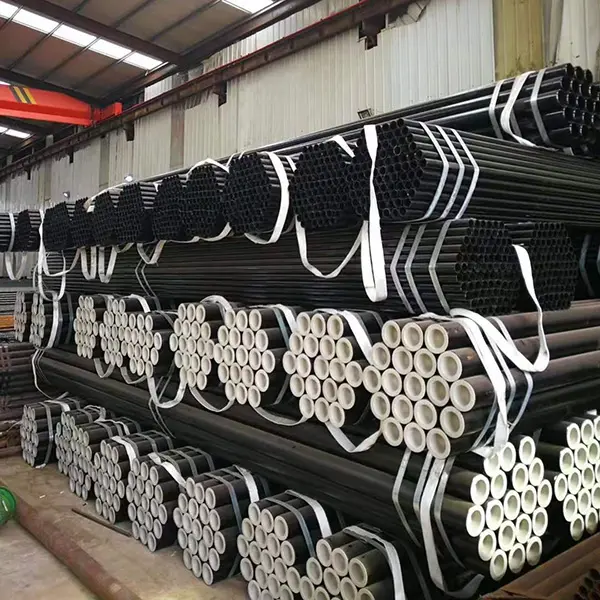
Structural steel pipe is a hollow structural element widely utilized in building construction, infrastructure projects, and industrial applications. Positioned within the broader steel industry as a critical component of load-bearing frameworks, it offers a high strength-to-weight ratio and facilitates efficient material usage. Unlike solid steel sections, the hollow profile optimizes material distribution for bending resistance, making it a preferable choice in many engineering designs. Core performance characteristics center around yield strength, tensile strength, weldability, and dimensional accuracy. The industry faces ongoing challenges related to corrosion prevention, consistent quality control across manufacturing variations (seamless vs. welded), and the increasing demand for higher-performance alloys to meet evolving structural requirements. Understanding the nuances of steel grade selection, fabrication techniques, and protective coating applications is paramount for ensuring the long-term integrity and safety of structures relying on structural steel pipe.
Material Science & Manufacturing
The primary raw material for structural steel pipe is carbon steel, typically produced through basic oxygen steelmaking or electric arc furnace processes. Alloying elements such as manganese, silicon, chromium, and molybdenum are added to tailor mechanical properties. Common steel grades include A53 Grade B, A106 Grade B/C, and API 5L X42/X52, each exhibiting distinct chemical compositions and performance profiles. The manufacturing process begins with steel billet or bloom preparation. Seamless pipe is created via rotary piercing, where a solid billet is heated and forced over a mandrel, forming a hollow tube. Welded pipe, conversely, is manufactured by rolling steel plates into cylindrical shapes and then welding the longitudinal seam – typically employing Electric Resistance Welding (ERW), submerged arc welding (SAW), or High-Frequency Induction (HFI) welding. Critical parameters during manufacturing include precise temperature control during heating and cooling cycles to avoid metallurgical defects like grain growth or hydrogen embrittlement. Welding parameters (current, voltage, travel speed) must be meticulously controlled to ensure complete fusion and minimize porosity or incomplete penetration. Non-destructive testing (NDT) – including ultrasonic testing (UT), radiographic testing (RT), and magnetic particle inspection (MPI) – is employed to verify weld integrity and detect flaws. Dimensional accuracy is maintained through continuous sizing and straightening operations post-welding or piercing.
Performance & Engineering
The performance of structural steel pipe is primarily dictated by its mechanical properties and its ability to withstand applied loads. Force analysis typically involves assessing axial loading, bending moments, shear forces, and torsional stresses. Buckling is a critical failure mode for thin-walled pipes subjected to compressive loads; therefore, calculations must consider the pipe's diameter-to-thickness ratio and the effective length of the member. Environmental resistance is another key consideration. Exposure to corrosive environments (e.g., saltwater, industrial pollutants) can lead to oxidation and degradation of the steel. Protective coatings – including galvanizing, epoxy coatings, and polyurethane coatings – are commonly applied to mitigate corrosion. Furthermore, the pipe must meet relevant compliance requirements, such as those specified by building codes (IBC, Eurocode 3) and industry standards (ASTM, API). Engineering design also necessitates evaluating weldability. Different steel grades exhibit varying weldability characteristics, and proper welding procedures and filler materials must be selected to avoid cracking or other weld defects. Fatigue analysis is essential for structures subjected to cyclic loading, determining the pipe’s lifespan under repeated stress cycles. Thermal expansion and contraction must also be accounted for in design, especially in large-diameter pipes or applications involving significant temperature fluctuations.
Technical Specifications
| Steel Grade | Yield Strength (MPa) | Tensile Strength (MPa) | Outside Diameter (mm) |
|---|---|---|---|
| A53 Grade B | 250 | 400 | 10.75 - 660.4 |
| A106 Grade B | 250 | 485 | 10.75 - 660.4 |
| API 5L X42 | 345 | 485 | 21.3 - 1219.2 |
| API 5L X52 | 379 | 530 | 21.3 - 1219.2 |
| ASTM A500 Grade C | 310 | 450 | 28.6 - 219.1 |
| EN 10210-2 S235JR | 235 | 360-525 | 10.2 - 630 |
Failure Mode & Maintenance
Structural steel pipe is susceptible to several failure modes. Corrosion is a prevalent issue, leading to material loss and reduced load-carrying capacity. Different forms of corrosion, including uniform corrosion, pitting corrosion, and galvanic corrosion, can occur depending on the environment. Fatigue cracking can initiate at stress concentrations (e.g., welds, dents) and propagate under cyclic loading. Weld defects – such as porosity, slag inclusions, and cracks – are also common failure points. Mechanical damage, including dents, gouges, and punctures, can compromise structural integrity. Failure analysis often reveals that a combination of factors contributes to the ultimate failure. Maintenance strategies include regular visual inspections to identify signs of corrosion or damage, application of protective coatings to prevent corrosion, and implementation of a corrosion monitoring program. NDT methods (UT, RT, MPI) can be used to detect hidden flaws. If cracks or significant corrosion are detected, repair options include welding (for cracks) or applying patching compounds or composite repairs. Periodic re-coating is essential to maintain corrosion protection. Proper drainage and ventilation are crucial to minimize moisture accumulation and prevent accelerated corrosion. Maintaining accurate records of inspections, repairs, and coating applications is vital for effective long-term asset management.
Industry FAQ
Q: What are the key differences between seamless and welded steel pipe regarding structural applications?
A: Seamless pipe generally exhibits higher uniform strength and is preferred for critical applications requiring high pressure containment or resistance to fatigue. Welded pipe, typically more cost-effective, is suitable for a broader range of structural applications, provided the weld quality is rigorously controlled and inspected. The weld seam introduces a potential weakness, which is why higher-grade welded pipes often require more stringent NDT procedures.
Q: How does the carbon equivalent (CE) affect the weldability of steel pipe?
A: A higher carbon equivalent indicates a greater susceptibility to cracking during welding. Higher CE materials require preheating and post-weld heat treatment (PWHT) to reduce the risk of hydrogen-induced cracking. Lower CE materials are generally easier to weld without PWHT.
Q: What types of coatings are most effective for preventing corrosion in offshore environments?
A: In harsh offshore environments, multi-layer coating systems are typically employed. These often consist of a zinc-rich primer (for cathodic protection), an epoxy intermediate coat (for barrier protection), and a polyurethane topcoat (for UV resistance and durability). Cathodic protection techniques, such as impressed current cathodic protection (ICCP), may also be used in conjunction with coatings.
Q: What is the significance of Charpy V-notch impact testing?
A: Charpy V-notch impact testing measures the toughness of a material – its ability to absorb energy under impact loading, especially at low temperatures. This is critical for applications where the steel pipe may be exposed to cold environments, as brittle fracture is a concern. A lower impact value indicates a higher risk of brittle failure.
Q: What role does normalizing play in improving the properties of structural steel pipe?
A: Normalizing is a heat treatment process that refines the grain structure of the steel, improving its toughness, ductility, and machinability. It also reduces residual stresses introduced during manufacturing, enhancing dimensional stability and weldability. This is particularly important for higher-strength steel grades.
Conclusion
Structural steel pipe remains a cornerstone material in modern construction and industrial engineering. Its versatility, strength-to-weight ratio, and cost-effectiveness contribute to its widespread adoption. A comprehensive understanding of the material science, manufacturing processes, and performance characteristics – including potential failure modes – is crucial for engineers and procurement managers. Careful consideration of environmental factors, appropriate coating selection, and rigorous quality control are essential to ensure the long-term durability and safety of structures utilizing structural steel pipe.
The continued development of higher-strength steel alloys, advanced welding techniques, and innovative corrosion protection systems will further enhance the capabilities and sustainability of structural steel pipe applications. Future trends point towards greater emphasis on life-cycle cost analysis, incorporating factors such as maintenance requirements and expected service life into the material selection process, and increased utilization of digital technologies for monitoring structural health and predicting potential failures.
