
Introduction
Welded steel pipe constitutes a fundamental component in numerous industrial applications, including fluid transport, structural support, and infrastructure development. Positioned within the broader steel product chain – originating from iron ore extraction, steelmaking, and subsequent forming processes – welded steel pipe offers a cost-effective alternative to seamless pipe, particularly for applications not requiring extreme pressure ratings or fatigue resistance. Its primary performance characteristics revolve around pressure containment capability, corrosion resistance (dependent on coating and material grade), and mechanical strength. Core to its utility is the ability to manufacture it in a wide range of diameters, wall thicknesses, and material compositions, tailored to specific operational requirements. This guide provides a comprehensive technical analysis of welded steel pipe, encompassing material science, manufacturing processes, performance characteristics, failure modes, and relevant industry standards.
Material Science & Manufacturing
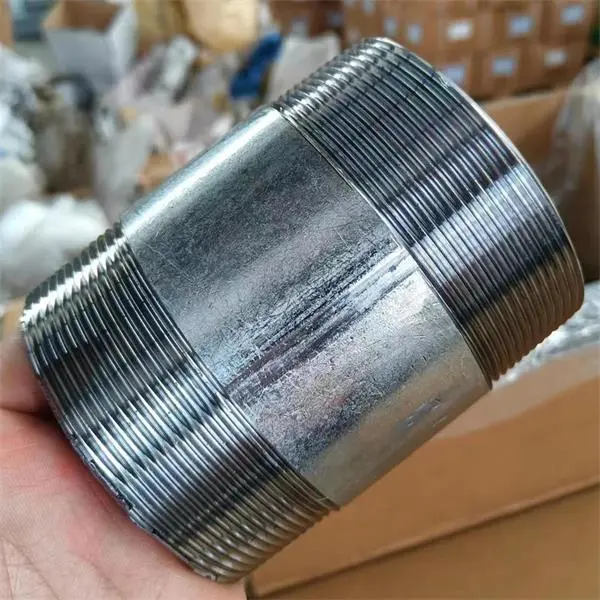
The foundational material for welded steel pipe is typically carbon steel, although alloy steels (including low-alloy steels, stainless steels, and chromium-molybdenum steels) are employed for specialized applications demanding enhanced properties. Carbon steel’s properties are determined by its carbon content; increased carbon generally increases strength and hardness but reduces weldability and ductility. Common grades include A53, A106 (carbon steel), and 304/316 (stainless steel). Raw material in the form of steel coils or plates undergoes forming through processes like roll forming. This process shapes the steel into the desired cylindrical form. The core manufacturing step involves welding the longitudinal seam. Common welding processes include Electric Resistance Welding (ERW), Submerged Arc Welding (SAW), and High-Frequency Induction Welding (HFI). ERW, widely used for smaller diameter pipes, uses electrical current to generate heat and forge the seam. SAW is employed for thicker-walled, larger diameter pipes, utilizing a submerged arc to create a robust weld. HFI utilizes electromagnetic induction to heat the edges. Critical parameters include welding current, voltage, travel speed, and shielding gas composition (where applicable). Post-welding, pipes undergo non-destructive testing (NDT) – including radiographic testing (RT), ultrasonic testing (UT), and magnetic particle inspection (MPI) – to verify weld integrity. Hydrostatic testing is then performed to confirm pressure containment. Surface treatments, such as galvanizing, epoxy coating, or polyethylene coating, are applied to enhance corrosion resistance.
Performance & Engineering
Performance of welded steel pipe is largely governed by its ability to withstand internal and external pressure, axial loads, bending moments, and torsional stresses. Force analysis relies on established formulas from mechanics of materials, considering Young's modulus, Poisson's ratio, and yield strength of the steel. The weld seam represents a critical stress concentration point; therefore, weld quality directly impacts structural integrity. Environmental resistance is paramount. Corrosion can occur through various mechanisms – including uniform corrosion, pitting corrosion, galvanic corrosion, and stress corrosion cracking – depending on the environment (e.g., saltwater, acidic solutions, soil). Coatings provide a barrier against corrosive agents. Compliance with industry standards (detailed in the footer) dictates minimum requirements for material properties, welding procedures, and testing protocols. For high-pressure applications, the ASME Boiler and Pressure Vessel Code Section IX provides detailed guidelines for welding qualifications and procedures. Finite Element Analysis (FEA) is frequently employed to model stress distribution under complex loading scenarios, optimizing pipe wall thickness and support structures. Furthermore, the cyclic nature of loads (fatigue) requires careful consideration, with fatigue life prediction based on S-N curves and stress amplitude.
Technical Specifications
| Parameter | ASTM A53 Grade B (Carbon Steel) | ASTM A106 Grade B (Carbon Steel) | ASTM A36 (Structural Steel) | 304/304L (Stainless Steel) |
|---|---|---|---|---|
| Yield Strength (MPa) | 250 | 250 | 250 | 205 |
| Tensile Strength (MPa) | 400-530 | 400-530 | 400-550 | 517-724 |
| Elongation (%) | 22 | 22 | 20 | 30 |
| Wall Thickness (mm) | 2-25 | 2-25 | 3-50 | 1-10 |
| Outside Diameter (mm) | 1/2" - 8" | 1/2" - 8" | 1" - 12" | 1/4" - 4" |
| Corrosion Rate (mm/year - Saltwater) | 0.1-0.5 | 0.1-0.5 | 0.2-0.8 | <0.01 |
Failure Mode & Maintenance
Welded steel pipe is susceptible to several failure modes. Corrosion, as previously mentioned, is a primary concern, leading to material loss and eventual perforation. Fatigue cracking can occur under cyclic loading, initiating at weld defects or stress concentrators. Hydrogen embrittlement, particularly in high-strength steels, can lead to brittle fracture. Weld defects, such as porosity, inclusions, and incomplete fusion, significantly reduce strength and corrosion resistance. Erosion, caused by abrasive particles in fluids, can erode the pipe wall. Stress Corrosion Cracking (SCC) occurs when tensile stress and a corrosive environment combine. Maintenance strategies include regular visual inspections for signs of corrosion or damage, periodic NDT (ultrasonic testing, radiographic testing) to assess weld integrity and wall thickness, and application of protective coatings. Cathodic protection (sacrificial anodes or impressed current) can mitigate corrosion in buried pipelines. For internal corrosion, chemical cleaning or pigging operations can remove deposits and inhibit corrosion. Repair of minor defects may involve grinding and re-welding, followed by NDT to ensure weld quality. Complete replacement is necessary for severely corroded or damaged sections.
Industry FAQ
Q: What is the primary difference between ERW and SAW welded steel pipe, and how does it affect application suitability?
A: Electric Resistance Welding (ERW) is faster and more economical for smaller diameter, thinner-walled pipes. However, the weld zone tends to have a narrower heat-affected zone (HAZ) and can be more susceptible to defects if process controls are not stringent. Submerged Arc Welding (SAW) is ideal for larger diameter, thicker-walled pipes, providing a deeper penetration weld with superior mechanical properties. SAW typically produces a wider HAZ but offers better weld integrity for high-pressure applications and structural support where robustness is critical. Consequently, ERW is often used for low-pressure fluid conveyance, while SAW is preferred for pipelines and structural components.
Q: How does the carbon equivalent (CE) of the steel impact weldability?
A: The carbon equivalent (CE) is a calculated value that estimates the weldability of a steel based on its chemical composition. A higher CE value indicates a greater tendency for hardening in the weld HAZ, increasing the risk of cracking. Lower carbon steels generally have lower CE values and exhibit superior weldability. For critical applications, preheating and post-weld heat treatment (PWHT) are employed to reduce CE-related cracking risks.
Q: What are the key considerations when selecting a coating for welded steel pipe intended for buried pipeline applications?
A: Selection of a coating for buried pipelines depends on the soil characteristics (pH, resistivity, presence of chlorides/sulfates), operating temperature, and potential for mechanical damage. Common options include fusion-bonded epoxy (FBE), polyethylene (PE), and polypropylene (PP). FBE provides excellent adhesion and corrosion resistance, but can be brittle. PE and PP offer superior impact resistance and flexibility. Cathodic protection is typically used in conjunction with coatings to provide redundant corrosion protection.
Q: How does hydrostatic testing validate the integrity of welded steel pipe, and what acceptance criteria are typically applied?
A: Hydrostatic testing involves filling the pipe with a fluid (typically water) and pressurizing it to a specified level, significantly exceeding the normal operating pressure. This test verifies the pressure containment capability and detects any leaks or structural weaknesses in the weld seam. Acceptance criteria typically specify a holding time at the test pressure with no visible leakage or permanent deformation. The test pressure is often 1.5 times the design pressure, and a pressure drop exceeding a specified percentage during the holding time indicates failure.
Q: What role does Non-Destructive Testing (NDT) play in ensuring the quality of welded steel pipe?
A: NDT is crucial for identifying defects without damaging the pipe. Radiographic Testing (RT) uses X-rays to detect internal flaws. Ultrasonic Testing (UT) utilizes sound waves to detect subsurface defects and measure wall thickness. Magnetic Particle Inspection (MPI) detects surface and near-surface defects in ferromagnetic materials. Liquid Penetrant Inspection (LPI) detects surface-breaking cracks. Each NDT method has its strengths and limitations, and a combination is often used to provide comprehensive quality assurance.
Conclusion
Welded steel pipe remains a cornerstone material in numerous industries due to its versatility, cost-effectiveness, and adaptability. A thorough understanding of the material science – specifically the impact of steel composition and weld metallurgy – is crucial for selecting the appropriate grade for a given application. Manufacturing processes, particularly welding techniques and associated parameter control, significantly influence the structural integrity and corrosion resistance of the finished product. Diligent adherence to industry standards and rigorous quality control through NDT are essential for mitigating failure risks and ensuring long-term performance.
Looking forward, advancements in welding technologies (e.g., laser welding, friction stir welding) are poised to further enhance weld quality and reduce manufacturing costs. The development of novel coatings with improved corrosion resistance and self-healing capabilities will also extend the service life of welded steel pipe in harsh environments. Continuous monitoring of pipelines using sensor technologies and data analytics will facilitate proactive maintenance and prevent catastrophic failures, solidifying the role of welded steel pipe in critical infrastructure for decades to come.